
A failing sensor messes with fuel delivery and leaves you guessing at the dash. The symptoms of a bad oxygen sensor include a check engine light, rough idle, and weaker acceleration. Mileage drops and you may smell raw fuel.
Catching it early saves the catalytic converter.
Manufacturer data puts typical sensor life at 50,000 to 100,000 miles. Federal clean air rules require the computer to hold the mixture in range or the car fails inspection. As of 2026 those OBD-II monitors still set the codes you read.
The next sections show which signs matter and what to do next.
Symptoms of a Bad Oxygen Sensor
A bad oxygen sensor feeds the computer a false voltage. The check engine light usually comes on next. The engine then idles rough at a stop.
Fuel economy drops on your normal routes. Related trouble codes then store in the computer.
Common Signs Like Check Engine Light and Rough Idle
You'll see the light before anything else. Rough idle shows up when the sensor sticks rich or lean. You feel a stumble when you press the pedal.
Soot plus oil on the plugs can show the same rich mix.
Upstream vs Downstream Failure Patterns
An upstream oxygen sensor sits before the catalytic converter and sets fuel trim. A downstream oxygen sensor sits after the converter and checks its efficiency. Upstream failure hurts mileage and power first.
Downstream failure more often flags a tired converter.
Core Causes and How Oxygen Sensors Fail
Narrowband vs Wideband and Heated Element Issues
Narrowband units flip between lean and rich voltages. Wideband units report the real ratio, so tuned engines rely on them. The heater brings the tip up to temperature in under a minute.
A failed heater keeps the system in open loop and wastes fuel. In our research, heated sensors on stock engines often reach 100,000 miles. Cold weather makes a weak heater show up on short trips.
Image source: Wikimedia Commons / Zuzu (CC BY-SA)
Contamination Risks from Fuel or Oil
Fuel ash, coolant, and oil coat the sensing tip. Silicone sealer near the bung does the same damage. Response then stretches past the normal quick window.
An exhaust leak, sealed with sound exhaust manifold seals, fakes a lean signal. Lead or high silicone fuel shortens sensor life fast.
Risks and Consequences of a Failing O2 Sensor
Catalytic Converter Damage and Emissions Violations
Running lean from a stuck sensor raises exhaust temperature fast. That heat can melt the catalytic converter substrate. Converter replacement often costs several times the sensor price.
You may also fail an emissions test. Don't keep driving hard if the light flashes. A flashing light means the mixture is damaging the converter right now.
Fuel Economy Drop and Engine Performance Loss
Fuel use can rise 10 to 20 percent while trims stay maxed out. Power drops on grades and during passing. Extra fuel can wash the cylinder walls and raise oil use.
A hard start is not a cue for a shot of starting spray in the plug hole. That spray will not repair the sensor.
Step-by-Step Diagnosis and Testing Process
Look at the connector, the harness, and the sensor body first. Cracked wires or heavy soot already tell you a lot.
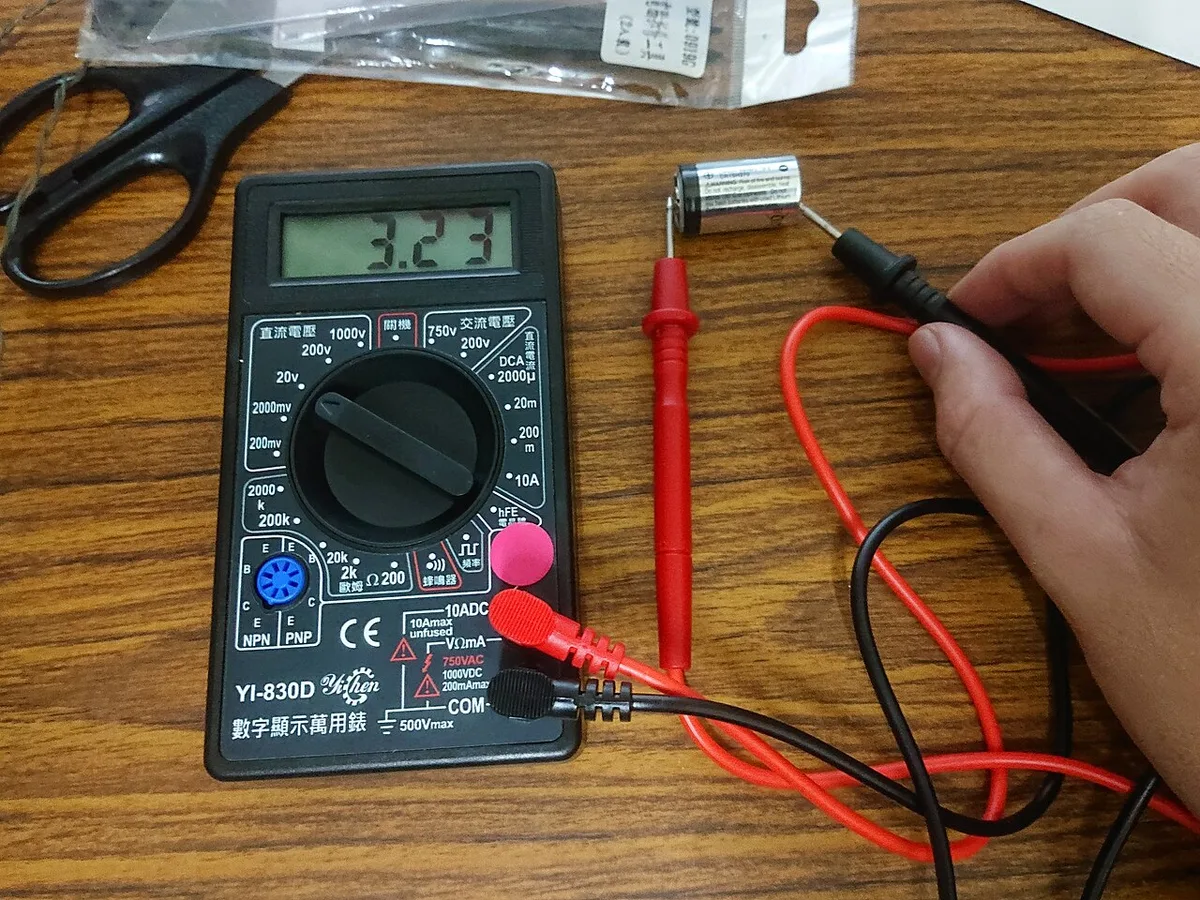
Image source: Wikimedia Commons / Jiazheng0609 (CC BY-SA)
Visual Inspection and Multimeter Voltage Checks
A multimeter on the signal wire should show a moving voltage. Healthy narrowband output swings from about 0.1 to 0.9 volts. A flat line near 0.45 volts means the sensor is lazy or dead.
| Test | Pass | Fail |
|---|---|---|
| Signal voltage | Swings 0.1 to 0.9 V | Stuck flat |
| Heater circuit | Within spec ohms | Open or short |
| Fuel trim | Near zero | Beyond 10 percent |
Scan Tool DTC Reading and Air-Fuel Ratio Verification
A basic code reader shows P0130 through P0167 plus live trim. Trims beyond 10 percent mean the computer is correcting hard. High positive trim can also come from leaking fuel nozzles.
Fix wiring first, then replace the sensor, then road test. Clear codes only after the repair holds.
Replacement Process, Costs, Safety Warnings, and Next Steps
When to Replace vs Call a Mechanic
Replace the sensor if voltage stays stuck or the heater circuit is open. The same code returning after a wiring repair is another clear sign. Parts often cost $20 to $150 each.
Labor climbs when the bung is rusted into the pipe. If a downstream code remains after a new sensor, have a shop test the converter. Check open recall records if your model had early sensor failures.
Expert Prevention Tips and Long-Term Monitoring
Torque to the service spec and skip extra anti-seize unless the maker calls for it. Keep silicone away from the threads. After the swap, watch short term fuel trim on a mixed drive.
Trims should settle near zero within a few trips. Change oil on time so ash stays out of the exhaust. Fix exhaust leaks before they fool the next sensor.
Frequently Asked Questions
Can you drive with a bad oxygen sensor?
You can manage a short trip if the light stays steady and the engine still pulls. A flashing light means the mix is overheating the converter. Stop and get it checked.
Extra fuel and heat pile up fast on a long drive.
How do you tell an upstream failure from a downstream one?
Upstream trouble shows as weak mileage, a rough idle, and fuel trims stuck high. Downstream trouble more often stores a catalyst efficiency code. The car may still feel normal.
Live data on a scan tool separates the two positions.
Will this fail an emissions test?
Yes. A stored oxygen sensor code fails most state inspections. An incomplete readiness flag fails the same way.
Repair the sensor and finish a mixed drive cycle before you schedule the retest. Cold short trips often leave the monitor incomplete.
How long does an oxygen sensor usually last?
Most units last 50,000 to 100,000 miles on a stock engine. Oil burning and coolant leaks cut that short. So do lots of cold starts.
A tight exhaust and regular oil changes push service life toward the high end.
Final Recommendation
Test before you buy parts. A flat signal or an open heater circuit means the sensor is done. Parts often land between $20 and $150.
A rusted bung is what drives the labor up.
After the new sensor is in, watch fuel trims on a mixed drive. They should fall back near zero. If a downstream code comes back, have the converter checked before you keep driving.
That code left alone can turn a small repair into a large one.
