
If you notice a spongy brake pedal or the car pulling to one side, you're likely seeing symptoms of a bad wheel cylinder. These components sit inside drum brakes and control piston pressure, so a leak or seized piston can quickly degrade stopping power. Ignoring the issue can lead to longer stopping distances and uneven tire wear.
In this guide we'll break down what to look for and how to fix it.
Per SAE J1703, the maximum allowable bore wear for a wheel cylinder is 0.010 in, and exceeding this indicates replacement. Most manufacturers recommend inspection at 60,000 mi, but rust‑prone coastal driving can shorten that interval. Below is a quick rundown of the tell‑tale signs you’ll see, followed by a step‑by‑step repair process.
Symptoms of a Bad Wheel Cylinder
Spongy pedal feel is one of the symptoms of a bad wheel cylinder. The vehicle may pull left or right during braking. Fluid leaks from the drum indicate a seal failure.
A seized piston reduces stopping power and creates noise.
How a Wheel Cylinder Works and Why It Fails
The wheel cylinder sits inside the drum and pushes the brake shoes outward when hydraulic pressure arrives. When the piston sticks, wears, or the seal cracks, pressure escapes and braking suffers. As of 2026, SAE J1703 still defines the wear limit.
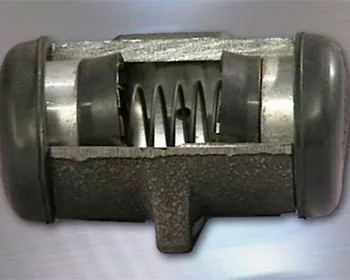
Image source: Wikimedia Commons / Nimal Kumar (CC BY-SA)
- Cast‑iron or aluminum housing
- Primary and secondary pistons
- Nitrile or PTFE‑filled seals
- Brake fluid inlet/outlet ports
Common failure modes and their cues:
| Failure type | Typical symptom |
|---|---|
| Piston wear | Spongy pedal, reduced stopping |
| Seal crack | Fluid leak onto drum |
| Rust scoring | Uneven braking, pulling |
| Stuck piston | No pedal travel, brake drag |
Understanding these parts helps you spot failure early and replace the cylinder before damage spreads.
Step-by-Step: Diagnosing and Replacing a Bad Wheel Cylinder
Start by parking on a level surface and securing the vehicle. Before lifting, build sturdy ramps per the guide on building car ramps. Remove the wheel and drum, then inspect the cylinder bore with a micrometer.
If the bore exceeds 0.010 in, replace the cylinder.
| Step | Action | Tip |
|---|---|---|
| 1 | Loosen lug nuts, jack up car | Use jack stands for safety |
| 2 | Remove wheel and drum | Tap drum gently to free |
| 3 | Measure cylinder bore | Compare to spec in service manual |
| 4 | Install new cylinder | Apply new seals, torque bolts |
| 5 | Reassemble and bleed brakes | Use DOT 4 fluid for better performance |
Gather tools: socket set, micrometer, brake bleeder kit, new cylinder, and a clean rag. After installation, bleed the system using a brake bleeder kit; see choosing a diagnostic scanner if ABS light stays on. Finally, test drive at low speed to confirm pedal firmness.
Common Mistakes to Avoid and Safety Warnings
Do not reuse old seals or pistons; they can leak again. Avoid over‑torquing cylinder bolts; use an impact wrench to apply proper torque. Never work under a car supported only by a jack; always use jack stands.
Per FMVSS 105/106, brake pedal travel must be ≤ 0.5 in before full application.
- Skipping bore measurement leads to unnecessary replacements.
- Reusing contaminated brake fluid causes seal degradation.
- Ignoring rust scoring on the drum can damage new shoes.
- Working on an uneven surface increases risk of vehicle shift.
- Forgetting to check brake fluid level can mask cylinder issues.
When mounting accessories like a light bar, follow mounting accessories safely to avoid interfering with brake components.
FAQs About Wheel Cylinder Issues
Why does my brake pedal feel spongy after replacing the wheel cylinder?
A spongy pedal usually means air is still in the line or the new cylinder seal is not seated. Bleed the system again and ensure the cylinder is fully actuated before driving.
Can a bad wheel cylinder cause the ABS light to stay on?
Yes. A leaking cylinder reduces hydraulic pressure, triggering the ABS sensor. Connect a diagnostic scanner to read codes and confirm the cylinder is the source.
How often should I inspect drum brake components?
Inspect at every 30,000 mi or once a year, especially in coastal or wet climates where corrosion accelerates wear.
Is it safe to drive with a leaking wheel cylinder?
No. A leak reduces braking effectiveness and can cause sudden pedal drop. Replace the cylinder before driving any distance.
What are the signs of a seized piston?
A seized piston shows no pedal movement, brake drag, and a hot drum after driving. Replace the cylinder immediately to restore proper function.
