
So why is the master warning light on? It is a combined alert, not a verdict on one failed part. Some other lamp, a dash message, or a stored code turned it on.
What you do next depends on the color and the company it keeps.
Per FMVSS 138, the tire-pressure telltale has to warn you at a 25 percent drop below placard pressure. That low reading often wakes the master lamp too. US light-duty cars have used OBD-II since 1996, so a scan can name the code.
As of 2026 you still match the lights, then stop, drive, or scan.
Why Is the Master Warning Light On
Why is the master warning light on? A linked system just stored a fault. The lamp is a combined alert, not the failed part.
Red with oil, heat, or brakes means stop. Amber with tires or a check engine usually means scan soon.
The Master Warning Light Is a Combined Alert, Not One Fault
The master warning light is one symbol tied to many control units. Those units watch oil pressure, coolant, brakes, charging, tires, and the engine. When a value slips out of range, the module flags it on the vehicle network.
The cluster lights the master symbol so a small icon does not get missed.
Call it a doorbell. It is not the fault behind the door. On many Toyotas, Hondas, Nissans, and European cars the icon is a triangle, an exclamation point, or a car outline.
The message screen usually names the system in plain text. A blank screen does not mean a blank fault. The ECU can still hold the code.
Rules from the federal safety agency cover how telltales must look and how easy they are to see. They do not list every trigger. That logic lives in the maker's software and in the stored code.
Color, Companion Lights, and Symptoms That Change the Call
Color is the first fork. Red, or a flashing lamp, means something that can damage the car or cut your stopping power. Amber means caution.
You may reach a shop, but do not park the problem for weeks.
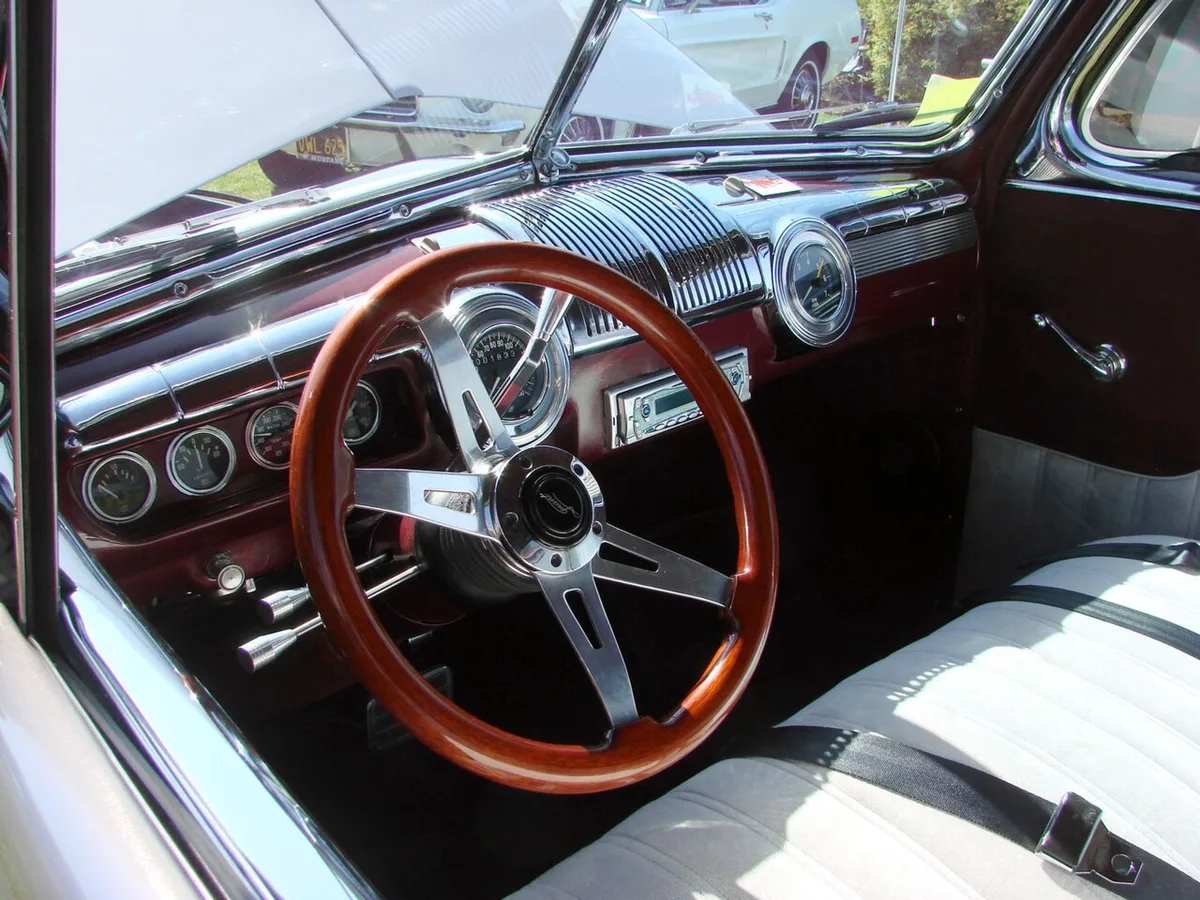
Image source: Wikimedia Commons / inkknife_2000 (7.5 million views +) (CC BY-SA)
Look beside it. Oil, temperature, or brake lamps change the job completely. A tire icon does not.
Trust smell, noise, and the gauges along with the icons. Hot smell plus a rising temp needle means stop. A tire icon on a cold morning is usually just low pressure.
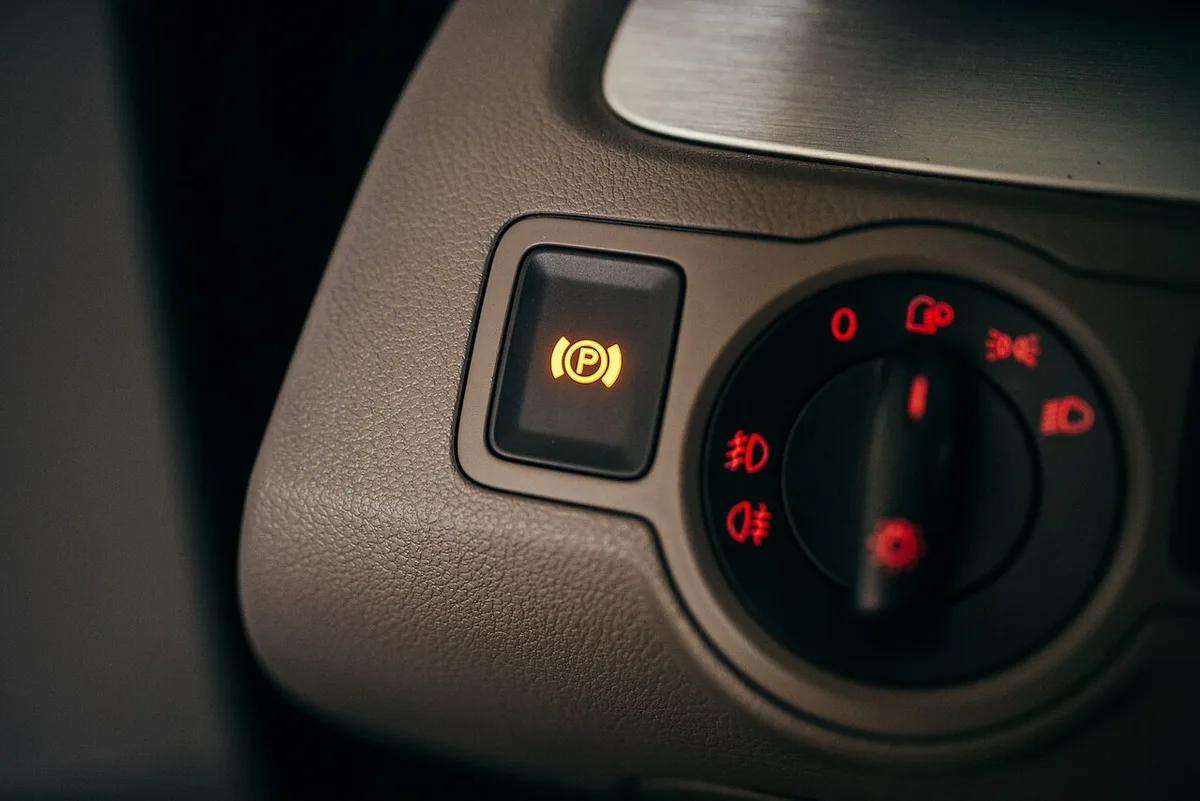
Image source: Wikimedia Commons / Shixart1985 (CC BY)
| What you see | Likely meaning | Next move |
|---|---|---|
| Red plus oil, heat, or brake | Damage or weak stopping | Pull over and shut off |
| Amber plus tire or check engine | Caution, often still drivable | Check pressure or pull codes |
| Master lamp plus a text message | Screen names the system | Follow that message |
| Lamp on, then off | Intermittent sensor or connection | Note when it happens, then scan |
If the partner is a check engine lamp, read codes with a simple code reader before you order parts. A code names a circuit. It rarely names the exact failed piece.
Some cars also tie a dead exterior bulb to this warning. Confirm the lamp-out note, then treat a fresh bulb as a parts swap, not a module failure.
Stop Now, Drive Carefully, or Scan Later
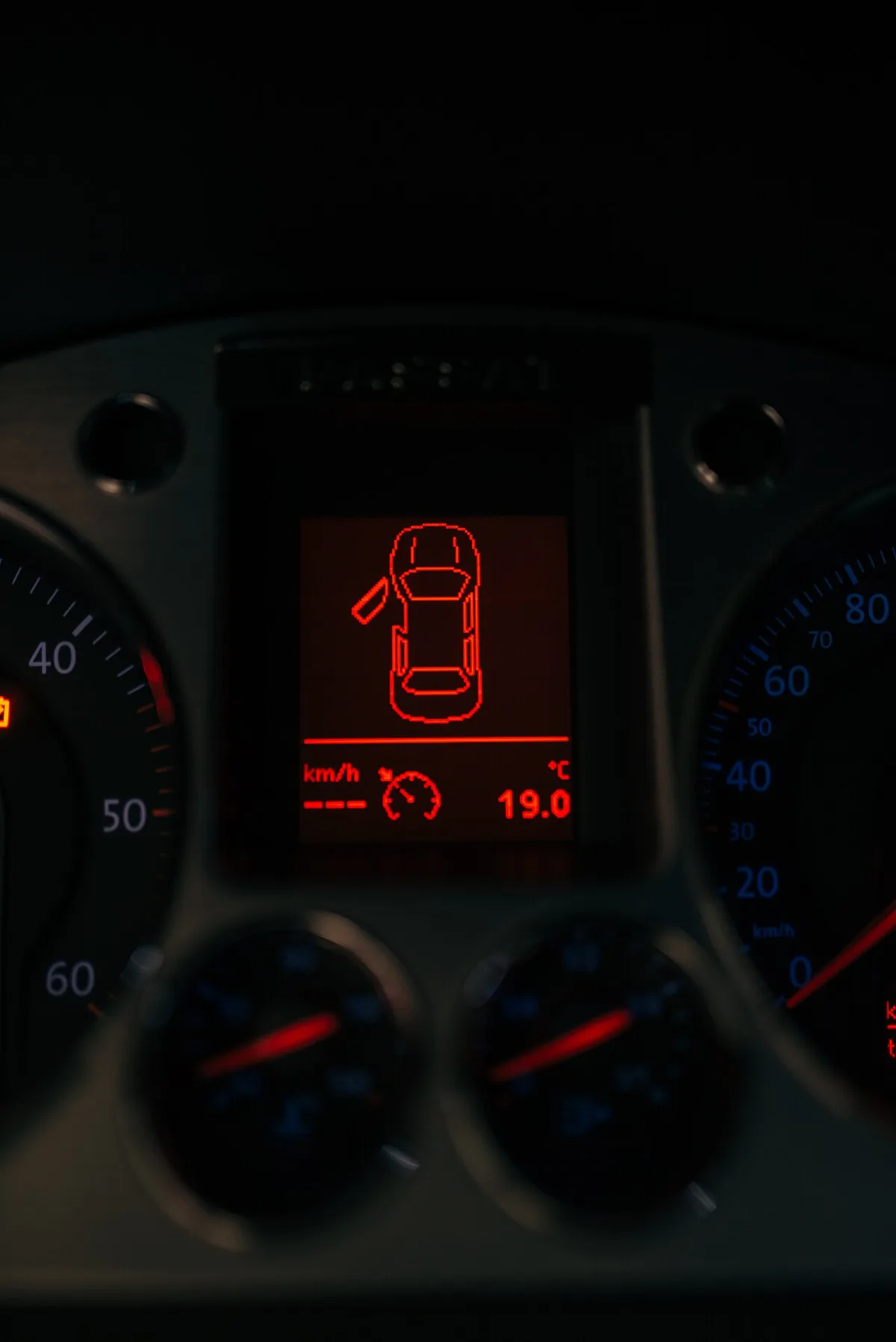
Image source: Wikimedia Commons / Shixart1985 (CC BY)
Three paths cover almost every case. Stop now, drive carefully, or scan later today. When you are unsure, take the stricter path.
Red or Flashing With Oil, Coolant, or Brake Lights
If the master lamp is red and the oil light is on, shut the engine off. Running without oil pressure can wipe bearings in minutes. That is not the same issue as wet plug threads, which points to a leak above the plug.
Steam or a buried temp gauge means pull over and shut down. A soft pedal with the brake lamp means you stop. Move the car only with a rated tow hook, not a cosmetic bumper.
Steady Amber With TPMS, Battery, or Check Engine
A steady amber lamp with a tire icon is a pressure check, not a teardown. Set the tires to the door placard. You can roll to an air hose if the tire is not collapsing.
A charge lamp beside the master light means the battery may be draining as you drive. Finish a short trip in daylight if the car runs smooth. Skip a long night drive.
If the check engine lamp is the partner and the engine is smooth, scan before you replace parts.
Light On With No Other Warning
Start with the message screen if no other icon is lit. Toggle the display. Door, hood, washer fluid, and service reminders live there on a lot of cars.
An empty screen still needs a scan of body and brake modules. The engine computer is not the only place this lamp gets its orders.
Mistakes That Turn a Dashboard Warning Into a Tow
Clearing the lamp before you read the code is how small faults get expensive. The icon goes dark. The problem stays.
A week later you are waiting on a tow.
- Do not push for the next exit on a red oil or temp light if that exit is miles off.
- Do not let one free code reading pick your parts. A misfire code can be a coil, a vacuum leak, or weak fuel pressure.
- Do not shrug off a light that shows up only when the car is hot or hits a bump. That pattern is a clue.
- Do not slide under the car on a lone jack. Use homemade drive-up ramps on flat ground, with the brake set, instead.
Reset the lamp only after the repair. If it returns on the next drive, the cause is still there.
Frequently Asked Questions
Can I keep driving if the master warning light is on?
If the lamp is red, or oil, coolant, or brakes are in the mix, no. Park and get a tow. If it is steady amber and the car feels normal, you can usually drive to a shop.
No red lamp should be lit. Listen for noise and watch the gauges. If power drops or heat climbs, stop.
Why is the master warning light on with no other warning?
The cluster is still reporting a fault. The partner icon may sit in a menu you have not opened. Washer fluid, an open door, or a service reminder can do this.
Read the message screen before you assume the worst. If that screen is blank, scan every module, not just the engine.
Is the master warning light the same as the check engine light?
No. The check engine light, also called the malfunction indicator lamp, points at emissions and engine controls. The master warning light is a summary flag for many systems.
They can glow together. They can also glow apart. A master lamp with no check engine light can still be brakes, tires, charging, or a body module.
How do you reset a master warning light?
Fix the cause first. A button sequence or a scanner clear only turns the lamp off. It does not repair the fault.
After a real fix, many cars clear the lamp after a short drive. If it returns, the code is still active. Do not pull a fuse or unhook the battery just to darken the dash.
