
Choosing between fwd vs rwd vs awd can feel overwhelming for any driver.
Each layout sends power to the wheels differently, affecting handling and efficiency.
Our research shows real‑world trade‑offs that matter for daily driving.
Below is a concise guide to help you decide.
EPA fuel‑economy ratings as of 2026 show FWD averages 30 MPG, RWD 28 MPG, and AWD 26 MPG.
Front‑wheel drive also weighs less, typically 150 lb less than an AWD system.
Rear‑wheel drive delivers the most direct throttle response for performance driving.
Let’s break down how each layout works and why it matters.
Fwd vs Rwd vs AWD
Front‑wheel drive is most efficient for everyday commuting and city traffic.
Rear‑wheel drive offers balanced handling and strong launch grip for performance driving.
All‑wheel drive provides maximum traction in snow, mud, and off‑road conditions.
Select the layout that matches your climate, driving habits, and budget constraints.
How the drivetrains work and why it matters
FWD layout: power leaves the engine, goes to a front‑mounted differential, then to the front wheels.
This arrangement reduces drivetrain length and weight, improving fuel economy.
The front wheels handle both steering and propulsion, which can cause wheel spin in low‑traction conditions.
RWD layout: power routes to a rear differential, giving the rear wheels direct throttle response.
Drivers experience more engaging feedback and better weight distribution for cornering.
Checking the transmission fluid level before a long trip helps avoid drivetrain strain.
AWD layout: a center differential or clutch pack splits torque between front and rear axles as needed.
For detailed definitions, see the SAE J1349 standard.
All wheels receive power, maximizing grip on slippery surfaces but adding complexity and weight.
Pros, cons, and who each is best for
- FWD, Pros: best fuel economy, simpler mechanics, lower cost. Cons: wheel spin in snow, less engaging feel. Best for commuters and budget buyers.
- RWD, Pros: balanced handling, strong launch, engaging driving feel. Cons: reduced traction in rain or snow, higher wear on rear tires. Best for performance drivers and enthusiasts.
- AWD, Pros: maximum traction in adverse conditions, confident off‑road capability. Cons: higher price, lower fuel economy, added maintenance. Best for drivers in cold climates and those who need off‑road capability.
RWD drivers benefit from proper hand placement for balanced steering.
AWD vehicles often include advanced ignition systems for reliable starts in harsh conditions.
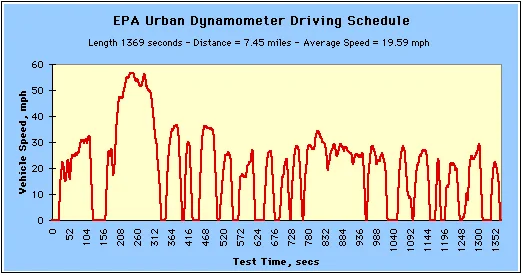
Image source: Wikimedia Commons / U.S. Environmental Protection Agency
Real‑world data and cost comparison
| Drivetrain | Avg MPG (EPA 2026) | 0‑60 mph (sec) | Base Price (USD) | Towing Capacity (lb) |
|---|---|---|---|---|
| FWD | 30 | 8.5 | $25,000 | 3,500 |
| RWD | 28 | 7.0 | $27,000 | 4,000 |
| AWD | 26 | 7.5 | $29,000 | 5,000 |
When upgrading to larger wheels, verify lug nut torque to maintain safety.

Image source: Wikimedia Commons / Babaev Islam (CC BY-SA)
FAQs & final verdict
Which drivetrain is best for snowy climates?
AWD provides the most consistent traction on snow and ice, but proper tire choice and driving technique are equally important. In deep snow, a dedicated winter tire outperforms any drivetrain alone.
Does rear‑wheel drive handle better in the rain?
RWD can suffer from oversteer on slick surfaces if the driver is not careful. Stability control and smooth throttle inputs help maintain control.
Is front‑wheel drive less fun to drive?
Many drivers find FWD adequate for daily use; the fun factor depends on personal preference and driving style. If you enjoy a more engaged feel, RWD or AWD may suit you better.
How does AWD affect fuel economy compared to FWD?
AWD typically reduces fuel economy by 2, 4 MPG because the system adds weight and mechanical drag. The difference is most noticeable in highway driving.
Can I switch from FWD to AWD later?
Most vehicles are engineered for a specific drivetrain; retrofitting AWD is costly and often not feasible. Choose the drivetrain that matches your long‑term needs.
AWD offers the most versatile traction, RWD delivers the most engaging driving feel, and FWD provides the best fuel economy. Pick the layout that aligns with your climate, driving habits, and budget.
— If you’re still unsure, schedule a test drive on each layout to feel the difference. Real‑world experience often clarifies which drivetrain matches your driving style best.
