
Ask how does 4wd work and most explanations stop at "power goes to all four wheels." True, but it skips the part you actually feel from the driver's seat. The transfer case bolted to the back of the transmission, the two driveshafts spinning out of it, the differentials splitting torque at each axle. That chain is the whole answer.
Manufacturer specifications confirm the hardware has barely changed in decades. A part-time transfer case locks the front and rear axles at a fixed 50/50 split, and low range drops in a reduction gearset of roughly 2.48:1 to 4.0:1 depending on the model. That ratio is why a truck idles up a rock face.
Once you can trace torque from gearbox to tire, every position on the selector makes sense.
How Does 4wd Work
How does 4wd work? The engine turns the transmission, which spins a transfer case. That case sends power to front and rear axles through two driveshafts.
Differentials split torque to the left and right wheels. All four wheels pull instead of two.
Why 4WD Only Makes Sense Once You See the Power Path
Two driven wheels are always a compromise. Send power through the rear axle alone and a wet boat ramp can stall you in seconds. Add the front axle and you've roughly doubled the rubber putting torque to the ground.
That's the entire idea, and every component downstream exists to serve it.
Here's the path, in order:
- Engine and transmission: torque leaves the gearbox through the output shaft.
- Transfer case: the split point. It either passes torque rearward only (2WD) or sends it to both axles (4WD).
- Driveshafts: two propeller shafts carry torque forward and rearward to the axles.
- Differentials: one per axle, splitting torque left and right while letting wheels turn at different speeds in a corner.
- Axle shafts and hubs: the final link before the tire.
Follow that chain once and the vocabulary stops being abstract. A locker is a differential you can force shut. Low range is a second, deeper gearset inside the transfer case.
Binding is what happens when both axles are forced to turn at the same average speed on a surface that won't let a tire slip.
If you plan to crawl under the truck to inspect any of it, get the vehicle on something stable first. Our walkthrough on getting underneath safely covers wooden ramps rated for a full-size 4×4.
The Parts Doing the Work: Transfer Case, Driveshafts, Differentials, Hubs
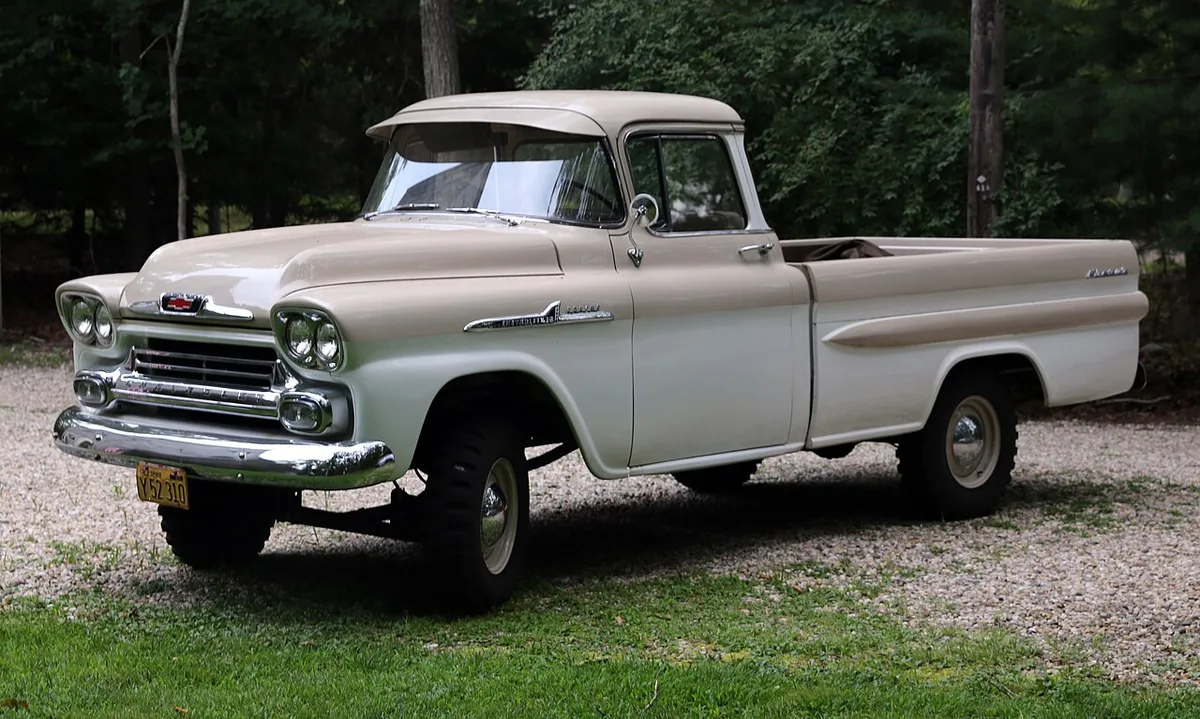
Image source: Wikimedia Commons / Mr.choppers (CC BY-SA)
Transfer case
This is the box that makes a 4×4 a 4×4. Inside, a chain or gearset drives the front output, and a planetary reduction gearset provides low range. A shift fork moves a collar to engage it, either through a floor lever or an electric shift motor mounted on the case.
Ratios vary more than most buyers expect. Jeep's Command-Trac runs 2.72:1, Toyota's case sits around 2.64:1, and the Rock-Trac in a Wrangler Rubicon hits 4.0:1. The case holds roughly 1.5 to 2.5 quarts of fluid, and routine transmission servicing habits apply here too.
Neglected fluid wears a chain faster than hard use does.
Driveshafts and joints
Two propeller shafts run from the case to the axles. U-joints and CV joints absorb the angle changes as the suspension moves, and a slip yoke lets each shaft change length. Lift the truck and those angles change with it, which is exactly where driveline vibration starts.
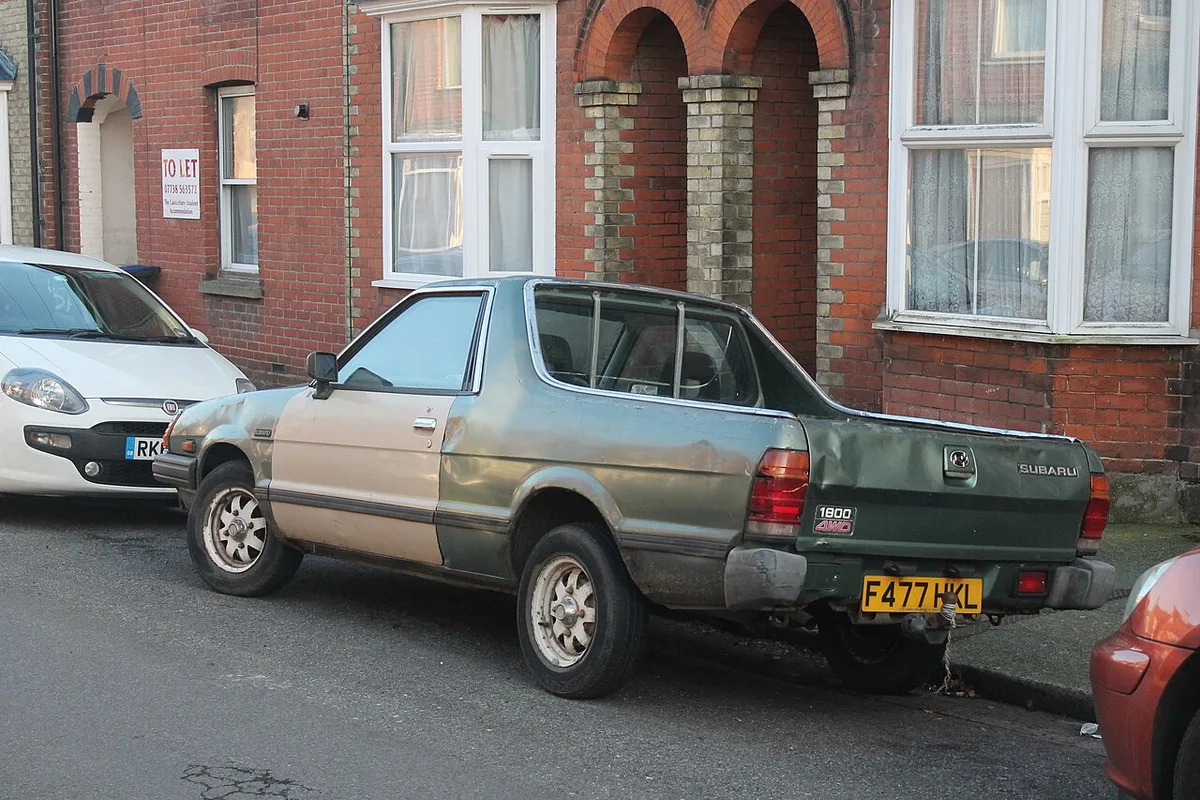
Image source: Wikimedia Commons / Charlie from United Kingdom (CC BY)
Differentials
An open differential always sends torque to the wheel with less grip. That's fine on pavement and useless on a trail with one tire in the air. Limited-slip units (clutch-type, Torsen, viscous) bias torque toward the gripping wheel.
Selectable lockers force both wheels to turn together, on demand.
Hubs and disconnects
Older trucks used manual locking hubs you turned by hand. Modern ones rely on automatic hubs, a center axle disconnect, or a vacuum actuator. Any of them can fail, and a failed one means the front axle never engages no matter what the light on the dash says.
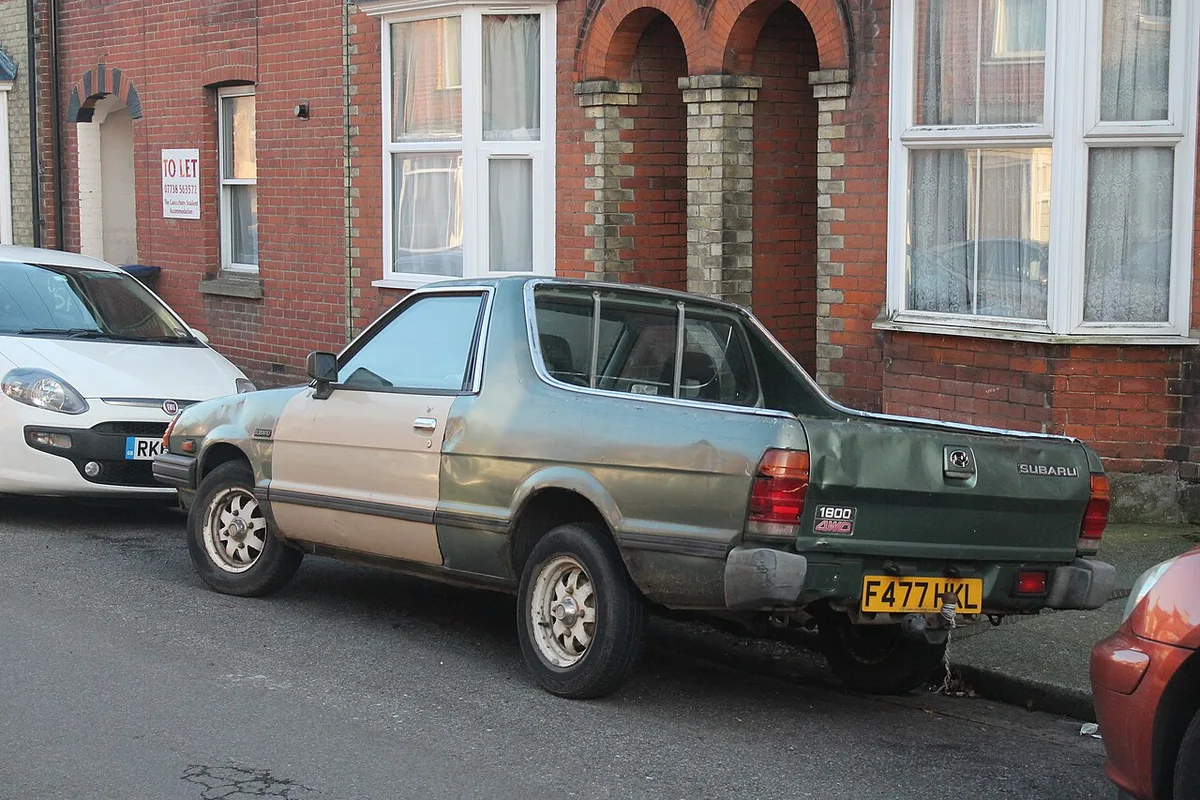
Image source: Wikimedia Commons / Charlie from United Kingdom (CC BY)
A clunk or a wander at the front end rarely comes from one part alone. Worn front-end steering parts are worth checking alongside the driveline.
Reading the Drivetrain: Visual Cues, Modes, and What You're Looking At
What does each mode actually engage?
| Mode | What's engaged | When it belongs |
|---|---|---|
| 2-Hi | Rear axle only | Dry pavement, normal driving |
| 4-Hi | Both axles, no reduction | Snow, gravel, mud at speed |
| 4-Lo | Both axles plus low-range gearset | Crawling, towing, steep descents |
| 4-Auto | Clutch pack engages the front on demand | Patchy snow, mixed surfaces |
Most manufacturers allow shifting into 4-Hi while rolling, commonly up to about 55 mph (88 km/h). 4-Lo is different. Stop or crawl, shift the transmission to neutral, then engage.
Part-time, full-time, and on-demand
A part-time case has no center differential. Front and rear are locked to the same average speed, which is brilliant off-road and miserable on dry tarmac. Full-time 4WD adds a center differential so you can leave it engaged all season.
On-demand systems use a clutch pack from BorgWarner, Haldex, or GKN and only drive the front axle once slip is detected.
What to look for underneath
- Solid front axle versus independent front suspension: durability against ride quality.
- The transfer case tag, which lists model and ratio.
- Torn CV boots, leaking pinion seals, shiny worn U-joint caps.
- Uneven tire wear, which points to alignment or a dragging brake.
Where 4WD Fights Back: Binding, Tire Chirp, and the Mistakes You Can See
Why does my 4WD chirp when I turn?
Because the axles are fighting each other. In a part-time system with no center differential, a tight turn forces the front tires to travel a longer arc than the rears. Something has to give, so a tire skips across the surface.
On dry pavement that shows up as chirping, hopping, and heavy steering.
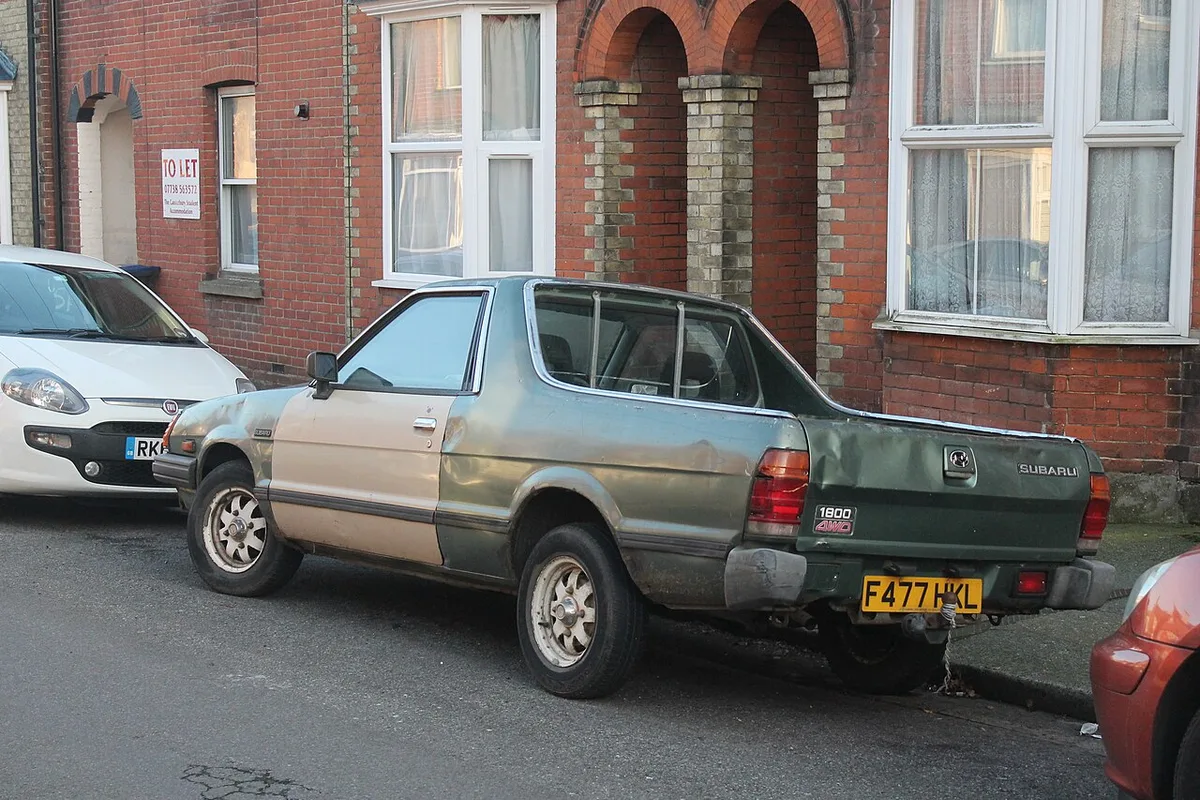
Image source: Wikimedia Commons / Charlie from United Kingdom (CC BY)
If you feel it, get out of 4WD. Repeated binding loads the transfer case chain and U-joints far harder than trail use does.
Stuck in 4-Lo
Usually tension, not failure. Stop, select reverse, and back up 10 to 15 feet in a straight line to unwind the driveline. If the light still won't change, suspect the shift motor, the dash switch, or a vacuum leak at the front axle disconnect.
A basic OBD2 code reader often pulls a transfer case code before you touch a wrench.
Mistakes that cost real money
- Mismatched tires. Differentials see a permanent speed difference. Per tire industry guidance, keep all four within roughly 2-3/32 inch of tread depth.
- Wrong fluid in the case. Automatic transmission fluid and gear oil are not interchangeable.
- Assuming 4WD shortens stopping distance. It doesn't. NHTSA's rollover and stability guidance makes the point plainly: grip for going and grip for stopping are separate problems.
- Trusting the badge on the lot. A crossover with a clutch pack is not the same machine as a truck with a lever.
- Skipping recovery gear. A rated recovery point and proper straps beat spinning tires every time.
4WD vs. AWD vs. Lockers: A Side-by-Side Reference
| System | Torque split | Dry pavement | Low range | Typical vehicles |
|---|---|---|---|---|
| Part-time 4WD | Fixed 50/50 | No | Usually | Wrangler, Tacoma, Super Duty |
| Full-time 4WD | Variable, center diff | Yes | Usually | Land Cruiser, Defender |
| On-demand 4WD | Clutch-managed | Yes | Sometimes | F-150 4-Auto, Ranger |
| Crossover AWD | Clutch-managed, front-biased | Yes | No | RAV4, CR-V, Escape |
As of 2026, most half-ton trucks still sell a part-time case with an auto option, while crossovers have gone almost entirely clutch-based. The table above is the honest split.
Best for each buyer:
- Part-time 4WD: trail use, farm work, heavy towing, anyone who wants mechanical certainty.
- Full-time 4WD: snow-belt drivers who want one setting all winter.
- On-demand 4WD: mixed commuting and weekend gravel.
- Crossover AWD: rain, light snow, school runs, no ambitions beyond that.
Differentials matter just as much. An open diff is fine for pavement. A limited-slip is the quiet upgrade for wet grass and gravel.
A selectable locker is the only thing that genuinely helps when a wheel is in the air. And tires beat all of it. Winter rubber or chains change grip in ways no drivetrain mode can.
Budget for wheel hardware costs when you swap seasonal sets, and torque them to spec every time.
Keeping It Alive: Fluids, Tire Matching, and Driveline Checks
Transfer case fluid is the most neglected item on any 4×4. Manufacturer schedules commonly land between 30,000 and 60,000 miles, and heavy towing or deep water crossings justify doing it sooner. Use the exact spec printed in the owner's manual.
Automatic transmission fluid and gear oil are not interchangeable inside that case.
| Item | Typical interval | What to check |
|---|---|---|
| Transfer case fluid | 30,000 to 60,000 miles | Correct spec, no metallic sheen |
| Differential fluid | 30,000 to 50,000 miles | Milky oil after water crossings |
| Driveline grease | Every oil change | Fittings on both shafts |
| Tire rotation | 5,000 to 7,000 miles | Even tread across all four |
Tire matching matters more on a 4WD than on anything else you'll drive. A differential sees any size difference as permanent slip, and it heats up fast. Guidance from the [U.S.
Tire Manufacturers Association](https://www.ustires.org) points the same way: keep all four within roughly 2 to 3/32 inch of tread depth. Replace in pairs at minimum, and all four if the wear gap is wide.
Rotate on schedule and check pressures cold. A tire four pounds low changes its rolling circumference just enough to keep a locker or limited-slip working overtime.
Get under the truck twice a year. Look for torn CV boots, leaking pinion seals, shiny worn U-joint caps, and loose transfer case mounts. Catch a vibration early and you're replacing a U-joint.
Ignore it and you're replacing a shaft.
Before the first snow or a trail day, run a five-minute check:
- Fluid levels in the case and both diffs
- Tire pressures and tread depth
- Hub engagement, manual or automatic
- Recovery gear, including a rated strap and shackles
If you swap wheels yourself, torque them properly rather than guessing. The same fastening habits apply whether you're rotating tires or bolting on a second set.
Frequently Asked Questions
Is 4WD better than AWD in snow?
For deep snow, steep grades, and unplowed roads, yes. A part-time or full-time 4WD with a low range gives you more control at crawling speeds. On plowed streets and slush, a modern AWD system is simpler and just as sure-footed.
Tires decide most of the outcome either way.
Can you drive a 4WD truck on dry pavement?
Not in part-time 4WD. With no center differential, the axles bind in turns and the tires scrub. Use 2-Hi on dry tarmac.
Full-time 4WD and on-demand systems are designed to stay engaged, so those are fine year-round.
When should you use 4-Lo instead of 4-Hi?
Use 4-Lo when you need torque multiplication at low speed. Rock crawling, steep descents, pulling a boat out of a ramp, and maneuvering a trailer all qualify. For snow, gravel, or mud at normal road speeds, 4-Hi is the right choice.
Low range caps your speed, usually around 25 to 40 mph.
Does 4WD hurt fuel economy?
Yes, typically 1 to 2 mpg. Extra driveline mass, spinning front components, and added friction all cost fuel. Running part-time 4WD on dry pavement makes it worse.
The EPA publishes separate figures for 2WD and 4WD versions of the same model, and the gap is usually visible there.
Can you flat-tow a 4WD vehicle behind an RV?
Only if the manufacturer allows it. Many transfer cases have a neutral position designed for flat towing. Others need a driveshaft disconnect or a trailer.
Check the owner's manual before you hook up. Towing a 4WD in gear can destroy the transfer case in a few miles.
