
Ever wondered how does a cvt transmission work? A continuously variable transmission replaces fixed gears with a sliding pulley system. It keeps the engine running in its sweet spot for better fuel economy.
This guide breaks down the mechanics in plain terms.
Manufacturer data show a typical CVT can improve city fuel use by up to 10 percent. Per SAE J1170 testing, the belt and pulleys adjust ratio continuously. Understanding the components helps you spot problems early.
Let's start with the core explanation.
How Does a Cvt Transmission Work
A CVT uses two variable‑diameter pulleys linked by a steel belt. The primary pulley grows with engine speed, increasing drive ratio. The secondary pulley shrinks simultaneously, maintaining smooth power delivery.
A hydraulic torque converter adds start‑up torque and clutch control. Thus the transmission never shifts gears, providing seamless acceleration.
Core Components: Primary Pulley, Secondary Pulley, Belt, and Torque Converter
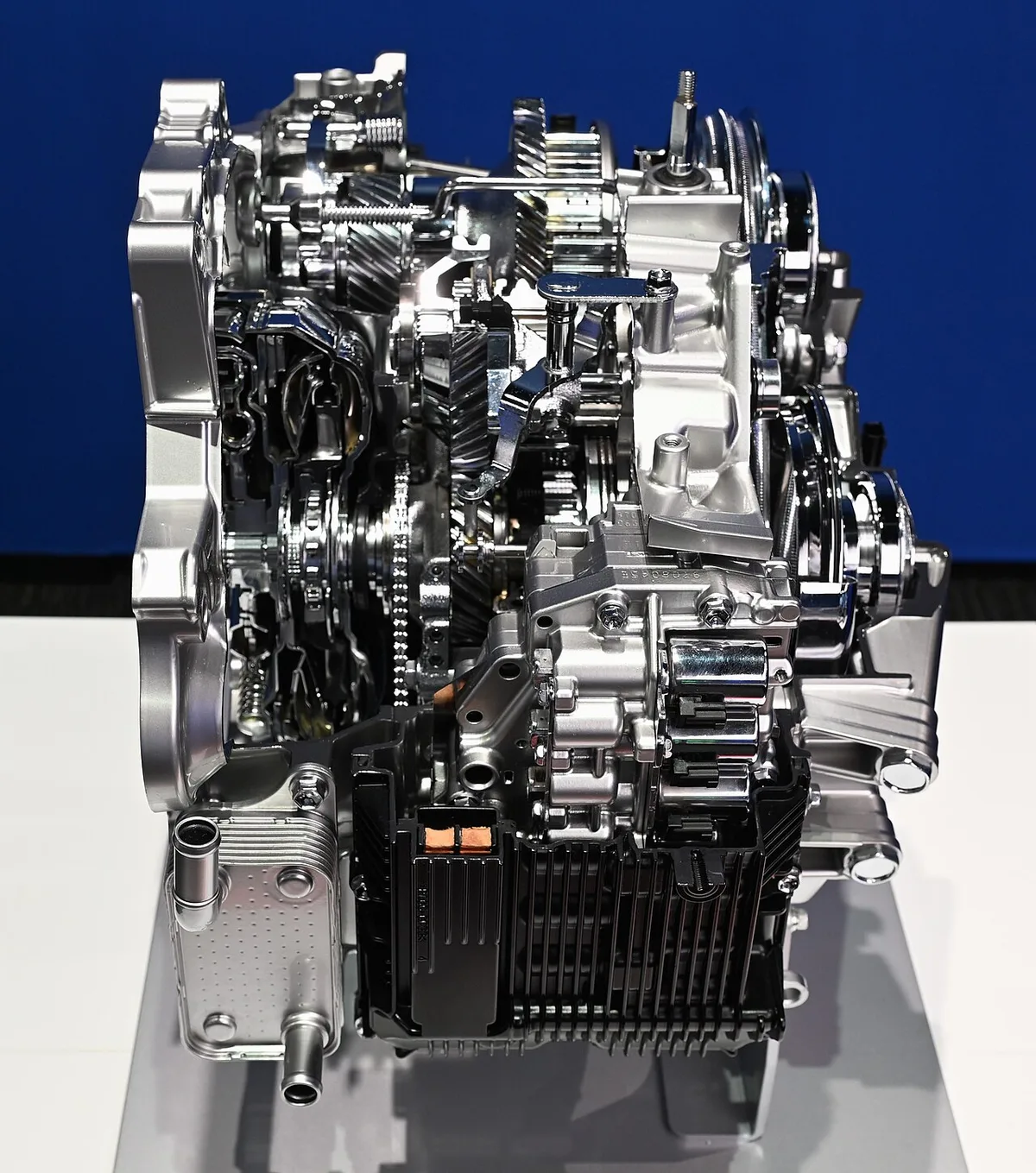
Image source: Wikimedia Commons / TTTNIS
The primary pulley is the drive side and changes diameter as engine speed rises. It uses a hydraulic actuator to expand or contract the pulley halves. The secondary pulley, or driven pulley, does the opposite to keep belt tension constant.
Together they create a seamless gear ratio that varies continuously. Keeping the belt properly tensioned is as important as maintaining the correct fluid level and clean filter to keep the mechanism reliable per SAE J1170.
- Primary pulley, expands with engine speed, controlled by hydraulic pressure.
- Secondary pulley, contracts to maintain belt tension, delivering power to wheels.
- Steel belt, reinforced with Kevlar, transmits torque without slip.
- Torque converter, provides launch torque and smooth clutch engagement.
Regular filter maintenance prevents debris from scoring the pulleys. Service intervals for belt replacement are typically 100,000 km or 60,000 mi, depending on driving conditions. Regular fluid checks and filter replacement keep the system reliable; see a fluid level check guide for details.
Why Choose a CVT – Benefits and Drawbacks
CVTs appeal to drivers who value smooth acceleration and fuel efficiency. The lack of gear shifts means power flows uninterrupted, reducing driver fatigue. Real‑world data show city fuel economy gains of up to 10 percent over conventional automatics.
That advantage is why many compact and hybrid models adopt CVTs as of 2026.
However, CVTs have trade‑offs. Belt wear can lead to costly repairs if maintenance is ignored. Some drivers report a ‘rubbery’ feel under hard acceleration, and the torque converter can overheat in heavy‑duty use.
Knowing the drawbacks helps you decide if a CVT fits your driving style.
| Metric | CVT | Conventional Automatic |
|---|---|---|
| Shift feel | Seamless, no gear changes | Distinct shifts |
| Fuel economy (city) | Up to 10 % better | Baseline |
| Maintenance interval | 100,000 km belt replacement | 150,000 km fluid change |
| Typical cost (belt) | $500‑$800 | N/A |
- Benefits
, Smooth, uninterrupted power delivery; no gear shifts.
, Up to 10 % better city fuel economy per EPA testing.
, Fewer moving parts reduces routine maintenance intervals; regular filter upkeep extends life.
, Wide gear‑ratio range keeps engine in optimal RPM band.
- Drawbacks
, Belt and pulley wear can require expensive replacement.
, Some drivers feel a loss of direct engine response under hard acceleration.
, Torque converter may overheat in heavy‑duty or high‑temperature conditions.
, Recall history includes safety bulletins; review the NHTSA recall details.
Visual Red Flags – Common Mistakes and How to Spot Them
Spotting problems early saves money and prevents failure. A cracked or glazed belt shows as uneven wear patterns on the pulleys. Stained or burnt fluid indicates overheating, often from a failing torque converter.
If you hear a high‑pitched whine during acceleration, the belt may be stretched.
Misaligned pulleys cause the belt to ride on the edge, creating a metallic squeal. Loose or missing torque converter bolts produce a rattling sound at idle; ensure all fastening hardware is tight. Regular visual checks, especially after 30,000 mi, catch these issues before they become costly.
- Belt wear: Look for cracks, fraying, or a glazed surface; replace every 100,000 km.
- Pulley scoring: Shiny or grooved pulley faces indicate belt slip; inspect during fluid change.
- Torque converter slip: Sudden loss of acceleration with high RPM suggests converter failure; check for burnt fluid.
- Fluid contamination: Milky or foamy fluid points to water ingress; flush and replace fluid per ISO 14990.
If you notice any of these signs, schedule a diagnostic scan and have a qualified technician inspect the belt and pulleys. Early intervention prevents belt breakage and costly drivetrain damage. Keep a log of mileage and fluid changes to track wear trends.
CVT FAQ – Your Top Questions Answered
How does a CVT differ from a traditional automatic?
A CVT replaces fixed gears with a continuously variable pulley system, eliminating gear shifts. Traditional automatics use discrete gear sets that create noticeable shifts. The CVT’s seamless power flow improves fuel economy and reduces driver fatigue.
Why do some drivers hear a whining noise from a CVT?
A high‑pitched whine often signals a stretched or worn belt. The belt should be inspected and replaced if wear exceeds manufacturer limits. Ignoring the noise can lead to belt failure and loss of power.
Can a CVT be repaired, or must it be replaced?
Minor issues like belt tension adjustments or fluid changes can be repaired. Severe belt or pulley damage usually requires replacement of the affected components. Always follow the manufacturer’s service intervals.
How often should CVT fluid be changed?
Manufacturer recommendations vary, but most advise fluid change every 30,000 mi or 50,000 km. Severe driving conditions may require more frequent changes. Use the specified CVT‑specific fluid for best results.
Is a CVT reliable for long‑distance driving?
Yes, many CVTs handle highway cruising well and maintain smooth acceleration. Proper maintenance and timely belt replacement are key to long‑term reliability. Regular checks keep the system in optimal condition.
Understanding how a CVT works helps you maintain it correctly and avoid costly repairs. Keep this guide handy for quick reference whenever you need it.
