
The question of how long do cars last gets ten different answers from ten different drivers. Some swear a car is finished at 100,000 miles. Others are still driving a 2004 pickup with 280,000 miles on the clock.
Both are telling the truth about their own car, and neither one is describing yours.
The fleet data helps set a baseline. Registration analysis puts the average age of vehicles on US roads at roughly 12.6 years, and federal highway counts put average annual mileage near 13,500. Multiply those and the typical car covers about 170,000 miles before it leaves the road.
That average hides an enormous spread, which is exactly why the rest of this breakdown splits the question into the variables that actually move the number.
How Long Do Cars Last
Most cars last 150,000 to 200,000 miles with normal care. Well-maintained models often reach 250,000 miles or more. The average US vehicle stays on the road about 12.6 years.
Rust and skipped maintenance end more cars than worn engines do. Condition and service history matter more than the badge on the hood.
What "How Long Do Cars Last" Actually Means
People quote lifespan numbers like they're physics constants. They aren't. A car's lifespan is an outcome, not a specification.
It's the sum of how it was built, where it lived, how it was driven, and what got fixed along the way.
That distinction matters because it changes what you do with the answer. If lifespan were fixed, you'd just look up your model and know. Since it isn't, you need to read the individual car in front of you.
The 150,000-Mile Myth and Where It Came From
Go back to the 1960s and 100,000 miles was a genuine milestone. Carburetors washed fuel past the cylinder walls, rings wore, and valve jobs were routine maintenance. Five-digit odometers physically rolled over at 99,999 miles, so a high-mileage car literally started counting again from zero.
Modern engines are a different animal. Machining tolerances tightened, bearings got coatings, and synthetic oil changed the wear math. A 2020s four-cylinder that gets its oil changed on schedule can pass 200,000 miles without the cylinder head ever coming off.
So why does the 150,000 figure stick around? Mostly because of money, not metallurgy. Lenders get nervous past 100,000 miles, extended warranty terms cluster around 150,000, and fleet operators cycle cars out on depreciation schedules rather than mechanical failure.
The number survived the engineering that made it obsolete.
Mileage-Limited Wear vs. Age-Limited Wear
Here's the concept that separates a useful answer from a lazy one. Mileage-limited wear means a part dies because it has cycled too many times. Age-limited wear means it dies because time, heat, moisture, and UV got to it while it sat.
| Component | Wears mainly with miles | Wears mainly with time |
|---|---|---|
| Rings, bearings, valvetrain | Yes | Minor |
| Brake pads and rotors | Yes | Corrosion if parked |
| Tires | Partly | Yes, 6 to 10 years even with tread |
| Timing belt | Yes | Yes, often a 7 to 10 year limit |
| Coolant hoses and belts | Partly | Yes |
| 12V battery | No | Yes, 3 to 5 years typical |
| Brake fluid | No | Yes, absorbs moisture |
| Shocks and bushings | Yes | Yes, seals dry out |
| EV battery pack | Yes, charge cycles | Yes, calendar aging |
| Exhaust and brake lines | Partly | Yes, salt and condensation |
That table explains a lot of confusing listings. A 12-year-old car with 45,000 miles has low mileage-limited wear and high age-limited wear. If it sat outside in a wet climate, the rubber, the brake lines, and the fuel system may be closer to failure than the engine is.
The reverse is also true, and it's the part most buyers miss. A five-year-old car with 150,000 highway miles has already burned through a big chunk of its mileage budget. But it also proved it can run hard without falling apart.
Why Two Identical Cars Can Differ by 200,000 Miles
Picture two 2019 sedans of the same model, same engine, same paint code. The first lives in Phoenix and commutes 90 highway miles a day. It's garage kept, oil changes land every 7,500 miles, and it's sitting at 135,000 miles.
The second lives in Buffalo and covers 4,000 miles a year. Every trip is under three miles. It parks outside, on a street the plow has salted four months a year.
If you had to bet on which one reaches 250,000 miles, take the high-mileage one. Every cold start on that Buffalo car dumps moisture into the crankcase and the exhaust. Short trips never burn it off.
The salt is eating the rocker panels from behind while the odometer barely moves.
That's the core logic of this whole topic. Mileage tells you about one clock. Age, climate, and duty cycle run on others.
The Real Average: What the Data Says About Vehicle Lifespan
Averages are blunt instruments, but they're a useful starting line. They tell you what "normal" looks like across tens of millions of vehicles, which is a decent anchor before you start adjusting for your own situation.
Average Age of Cars on US Roads
The average light vehicle in the US is now around 12.6 years old. That figure has climbed steadily for two decades, from under nine years back in the early 2000s. Two forces pushed it up: cars got more durable, and new-car prices got high enough that people started keeping them longer.
Roughly 5% of the fleet retires each year. Most of those retirements are economic decisions, not mechanical ones. A car gets scrapped when the repair quote clears the value of the vehicle, and that math tips faster on a cheap old car than on an expensive one.
How Annual Mileage Changes the Math
Federal highway data puts average annual driving near 13,500 miles per vehicle. Your number might be half that or double it, and the difference compounds fast.
| Annual miles | After 8 years | After 12 years | After 16 years |
|---|---|---|---|
| 7,500 | 60,000 | 90,000 | 120,000 |
| 13,500 | 108,000 | 162,000 | 216,000 |
| 20,000 | 160,000 | 240,000 | 320,000 |
| 30,000 | 240,000 | 360,000 | 480,000 |
The Bureau of Transportation Statistics tracks this mileage data, and the long-run trend is flat to slightly down. Remote work trimmed commutes for some households and left others unchanged.
Here's the practical read. If you drive 30,000 miles a year, a 250,000-mile lifespan arrives in eight years. If you drive 8,000, it takes three decades, and rust or age-limited rubber will likely get there first.
Same car, completely different ownership math.
What "High Mileage" Means in 2026
As of 2026, the labels have shifted. A 100,000-mile car used to be a risk. Now it's mid-life for anything mainstream.
- Under 60,000 miles: barely broken in, assuming the age-related items were checked.
- 60,000 to 100,000: the sweet spot for used buyers, with most depreciation already gone.
- 100,000 to 150,000: normal. Budget for suspension, fluids, and one or two bigger wear items.
- 150,000 to 200,000: still very usable, but service records start doing more work than the odometer.
- 200,000 plus: entirely reachable for well-maintained cars, and priced accordingly.
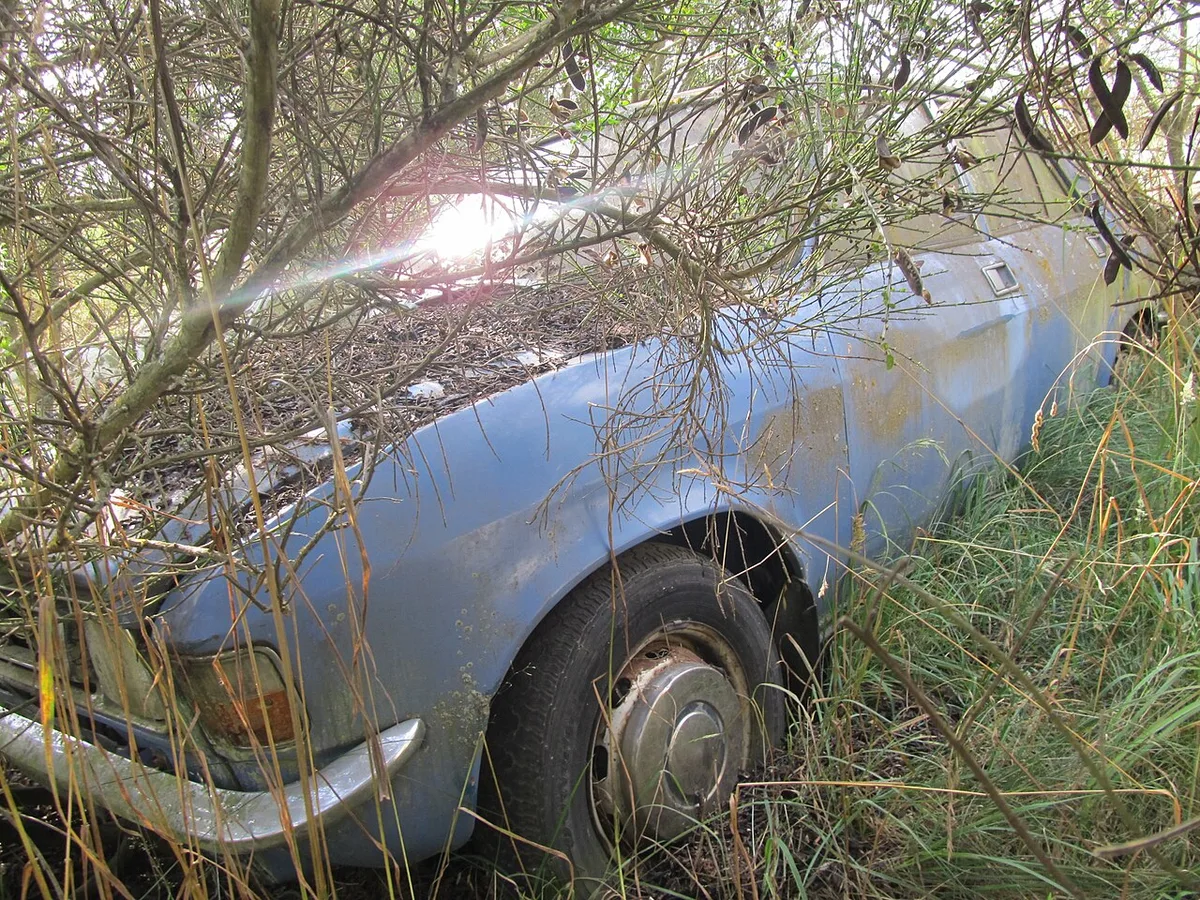
Image source: Wikimedia Commons / Riley from Christchurch, New Zealand (CC BY)
One caveat on highway miles. They're genuinely gentler. A highway mile puts far less wear on brakes, clutches, steering components, and transmission clutches than a city mile does.
A 150,000-mile highway car often has the mechanical wear of a 90,000-mile city car, minus the parking lot dings.
The Condition Variables That Decide Your Car's Fate
Five variables carry most of the weight. Score each one honestly and you'll have a far better projection than any generic mileage table can give you.
Powertrain Type: Naturally Aspirated, Turbo, CVT, Hybrid, EV
Engine and transmission architecture sets the ceiling. Not the badge, not the price tag. The architecture.
| Powertrain | Typical service life | What usually ends it |
|---|---|---|
| Naturally aspirated I4 or V6 | 200,000+ miles | Oil consumption, coolant leaks, neglect |
| Small turbocharged engine | 150,000 to 200,000 | Stretched oil intervals, carbon buildup, turbo wear |
| Traditional torque-converter automatic | 150,000 to 250,000 | Fluid neglect, solenoid wear |
| CVT | 100,000 to 150,000, wide spread | Fluid neglect, belt or chain wear, judder |
| Dual-clutch | 100,000 to 150,000 | Clutch pack wear, mechatronic unit faults |
| Hybrid with planetary eCVT | 200,000+ | Battery aging, inverter coolant leaks |
| EV | 150,000 to 200,000+ | Battery degradation, thermal management faults |
If you're thinking about adding forced induction to a base engine, understand the trade first. Forced induction raises cylinder pressure and heat, so it shortens the clock on rings, head gaskets, and oil quality. The hardware is also the cheap part.
A bolt-on turbo kit rarely stays a bolt-on project once fueling and cooling get sorted.
Climate and Road Salt: Snow Belt vs. Sun Belt vs. Coastal
If you live where the roads get salted, rust is your primary threat, not the engine. Structural corrosion kills cars that still run perfectly. A twelve-year-old car in Michigan can fail a state inspection on a rusted subframe while the powertrain has another decade in it.
Sun Belt cars are the opposite story. Arizona and Nevada bodies stay intact for decades. But heat is brutal on plastics, wiring insulation, and battery packs.
A desert car may have a flawless frame and brittle connectors everywhere.
Coastal salt air sits in between. It corrodes gradually and it attacks anything bare, from brake lines to hood latches to the grounding points your electronics rely on.
Driving Pattern: Highway Cruising vs. Short-Trip City Duty
Short trips are the quiet killer. Here's the mechanism. A cold engine runs rich, and some fuel washes past the rings into the oil.
Moisture condenses in the crankcase and the exhaust. Neither burns off unless the engine reaches full temperature and stays there for a while.
If most of your trips are under five miles, you're doing the mechanical equivalent of smoking. Do three things: shorten your oil change interval, take a longer drive periodically to burn off moisture, and get the exhaust and underbody checked for corrosion.
Maintenance History and Service Records
Service records are the single best predictor of remaining life. Better than mileage, better than brand reputation. A documented 180,000-mile car with regular fluid changes is a safer bet than an undocumented 90,000-mile car with an unknown past.
Fluids are the whole game here. Engine oil, transmission fluid, coolant, brake fluid, and differential fluid all degrade on a schedule. Skipping one doesn't fail immediately.
It quietly shortens the life of a very expensive assembly.
If you're evaluating a car yourself, pull stored fault codes before you fall in love with it. Reading them with an inexpensive scan tool takes five minutes and surfaces problems the seller may not mention. Pending codes and monitor readiness states tell you whether the car was recently cleared.
Make, Model, and Known-Issue Reputation
Model-level reputation matters, but only at the level of specific engines and transmissions. "Toyota is reliable" is too vague to be useful. "That generation's 2.4-liter had oil consumption problems" is actionable.
Here's how the if/then logic runs:
- If the model has a documented timing belt and an interference engine, then the belt service history is a hard gate.
- If the model uses a CVT with a known failure pattern, then fluid change records are the difference between 120,000 and 200,000 miles.
- If the model is known for head gasket issues, then a coolant pressure test is non-negotiable before purchase.
- If the model has a strong durability record and full records, then high mileage is a negotiating point, not a dealbreaker.
Luxury badges cut the other way past 100,000 miles. The parts don't get cheaper because the car got older. Air suspension, adaptive dampers, and complex electronics can turn a $9,000 car into a $6,000 repair bill.
How Rust Quietly Ends More Cars Than Engines Do
Nobody posts about rust. There's no warning light for it. But in salt states, structural corrosion is the number one reason a running car goes to the scrapyard.
The mechanism is simple. Road salt plus moisture equals accelerated oxidation. It starts underneath, in seams and crevices where water sits, and it works from the inside out.
By the time you see bubbles on a rocker panel, the metal behind it is often gone.
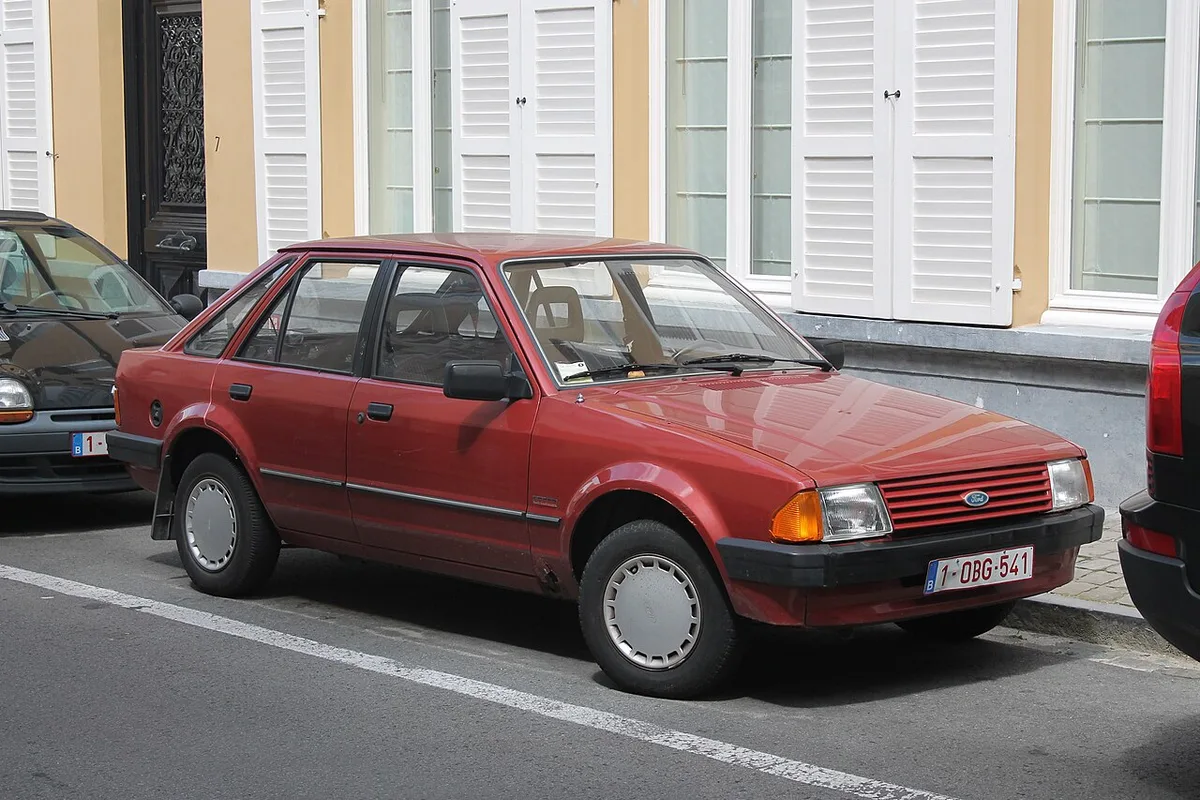
Image source: Wikimedia Commons / Charlie from United Kingdom (CC BY)
Where to Check: Frame Rails, Rockers, Subframes, Brake Lines
Get the car in the air and look, ideally before you buy. If you'd rather build a set of wooden ramps than trust a scissor jack, that's a reasonable weekend project and it makes inspection a habit instead of an event.
Check these spots in order:
- Frame rails and unibody rails: look for flaking metal, soft spots, and holes. Poke with a screwdriver. If it goes through, walk away.
- Rockers and cab corners: the classic rust belt failure. Bubbling paint means rot behind it.
- Subframes and suspension mounting points: structural. Rust here is a safety issue, not a cosmetic one.
- Brake and fuel lines: they rust from the outside in and fail suddenly.
- Strut towers and shock mounts: hidden under trim and often missed.
- Floor pans, especially under the pedals and rear footwells: wet carpets accelerate this fast.
- Rear wheel arches and tailgate or trunk lips: trap dirt and moisture.
- Radiator support and bumper reinforcements: often the first thing to go.
Manufacturers do issue corrosion-related recalls, and it's worth running any car's VIN through the NHTSA recall lookup. A free check takes two minutes and can flag a known structural or brake line issue on that exact model.
Why Sun Belt Cars Outlive Snow Belt Cars
It comes down to salt exposure hours. A car in Minnesota sees salted roads for four to five months a year. A car in New Mexico may never see salt at all.
That's why enthusiasts buy rust-free western cars and ship them east. A 15-year-old Arizona truck can have a cleaner frame than a six-year-old Ohio truck. The Arizona truck may need every rubber bushing replaced, though, because heat cooked them.
Rustproofing helps, but timing matters. Undercoating applied over existing rust traps moisture and makes things worse. Annual fluid film style treatments work better in practice, since they creep into seams and stay pliable.
Engine and Transmission: The Big-Ticket Failure Points
Most repairs are annoying. A few are decisive. These are the ones that turn a running car into a scrap value offer, so they deserve their own look.
Timing Belts, Timing Chains, and Interference Engines
An interference engine is one where the pistons and valves share the same space at different times. If the timing belt snaps, the pistons hit the valves. That's bent valves, damaged pistons, and sometimes a cracked head.
Timing belt replacement typically lands between 60,000 and 105,000 miles, or 7 to 10 years, whichever comes first. Rubber ages even when the car sits. A 12-year-old belt with 40,000 miles on it is still a grenade with the pin half out.
Cost runs roughly $500 to $1,500 depending on access and whether the water pump gets done at the same time. Do the water pump. The labor overlap makes it nearly free compared to doing it separately later.
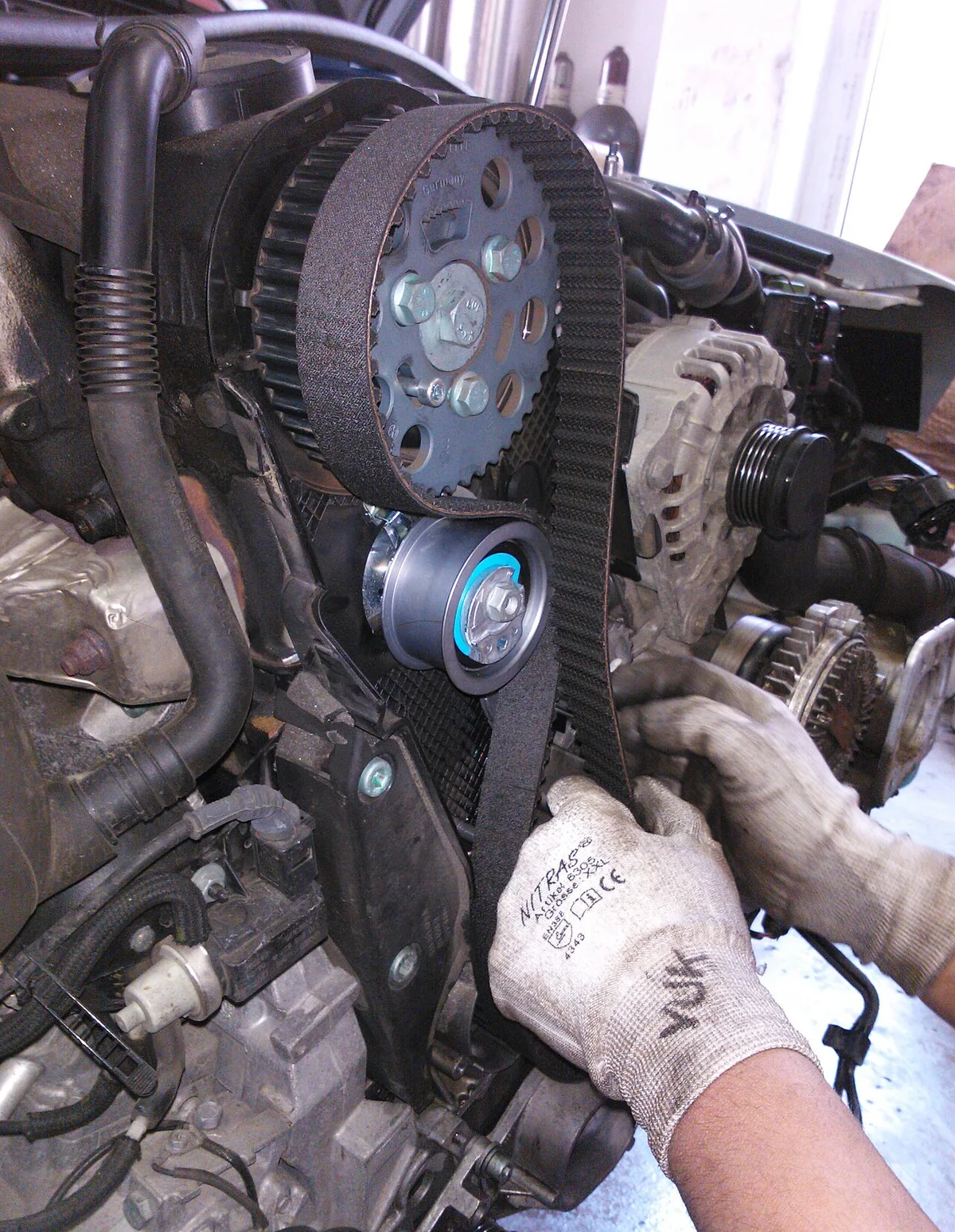
Image source: Wikimedia Commons / Petar Milošević (CC BY-SA)
Timing chains last longer, but "lifetime" is a marketing word. Chains stretch, and the guides and tensioners wear. A cold-start rattle that fades after a second is the classic warning.
A chain job often runs $1,200 to $3,000 because the front of the engine has to come apart.
Oil Sludge and Skipped Service Intervals
Sludge forms when oil breaks down faster than it's replaced. Short trips, high heat, and extended intervals all accelerate it. Once it cakes onto the valvetrain and oil passages, lubrication drops and wear accelerates everywhere at once.
Some engines are more sensitive than others. Early 2000s turbo four-cylinders and a few V6 designs from that era built reputations on it. The fix is boring and effective: change oil on the severe-service schedule, not the optimistic one printed for ideal conditions.
Watch for oil-fouled plugs and blue smoke on startup, because those point to wear that started upstream. If you pull a plug and find oil on the threads, deal with it early. That symptom rarely fixes itself.
You can't undo sludge, but you can slow it. Frequent oil changes with a quality filter, plus a proper PCV system check, is the standard approach. Flush products on a badly sludged engine can loosen debris and block oil pickup screens, which makes things worse.
Transmission Types and Their Real-World Longevity
Transmissions are where "lifetime fluid" claims cause real damage. Lifetime usually means the warranty period, not the life of the car.
A traditional automatic with regular fluid changes can clear 200,000 miles. A CVT that never had its fluid changed often starts juddering around 110,000 to 130,000 miles. Planetary hybrid units, which use no belt at all, routinely outlast the rest of the car.
A proper fluid and filter service every 30,000 to 60,000 miles is the cheapest insurance in the car. If you own a sealed unit with no dipstick, the fill procedure still exists, and it's usually a matter of following the level check procedure exactly rather than guessing.
Replacement costs run $3,000 to $7,000 for most vehicles. That's the number to weigh against the car's value when something starts slipping. And while you're under there, don't ignore clunks from the front end.
Worn uprated suspension parts are cheap to fix early and expensive to ignore, since play in a tie rod eats tires and steering response.
When a Head Gasket Bill Becomes a Walk-Away Number
Head gasket failure shows up as white smoke from the exhaust, a coolant level that keeps dropping, or chocolate-milk-colored oil. A combustion gas test on the coolant bottle confirms it in minutes.
Repair runs $1,000 to $2,500 on a simple four-cylinder. On a boxer engine or a transverse V6 with the engine halfway out, it climbs fast. And here's the part that decides the outcome: a head gasket failure often means the head is warped or cracked, and the bottom end may have taken heat damage too.
If the quote passes half the car's retail value and the car already has 180,000 miles plus rust, the math usually points to moving on. If the body is clean, the records are complete, and the car is otherwise sound, a $2,000 repair on a paid-off vehicle beats a $600 monthly payment every time.
EV and Hybrid Battery Life: The New Longevity Question
Battery packs changed the lifespan conversation in a useful way. For the first time, a major component wears on a curve you can actually measure, months before it becomes a problem. You can't pressure-test a transmission at home.
You can read a battery's state of health in about twenty minutes.
That measurability cuts both ways. It makes a used EV easier to judge than a used sedan with an unknown service history. It also means a badly treated pack shows its damage in cold, hard numbers.
Battery Chemistry: NMC vs. LFP
Nickel manganese cobalt (NMC) packs store more energy per pound. That's why they dominate long-range vehicles. Lithium iron phosphate (LFP) packs store less per pound but tolerate being charged to 100% daily and typically cycle longer.
| Trait | NMC | LFP |
|---|---|---|
| Energy density | Higher | Lower |
| Daily charge to 100% | Not ideal | Fine |
| Cycle life | Good | Better |
| Cold-weather performance | Stronger | Weaker |
| Typical use case | Long range, cold climates | Standard range, warm climates |
If you're shopping and the spec sheet says LFP, plan on slightly less range and a longer-lived pack. If it says NMC, treat the 80% charge limit as a habit, not a suggestion.
What Capacity Retention Looks Like at 8 to 10 Years
Research from the U.S. Department of Energy's national labs points to roughly 70% to 80% capacity remaining after 8 to 10 years of typical use. Translate that into range.
A car rated at 300 miles when new is realistically a 210 to 240 mile car at year nine.
That's not a failure. It's a car with a smaller fuel tank. Most owners never notice, because daily driving rarely drains the pack.
Three things accelerate the fade:
- Sustained high states of charge. A pack parked at 100% every night ages faster than one held near 60%.
- Repeated DC fast charging. Occasional road-trip sessions are fine. Daily fast charging in desert heat is not.
- Heat. Arizona summers age packs faster than Seattle drizzle. Liquid-cooled thermal management is the single biggest hardware advantage here.
If you want to check a used EV, ask for a battery health report from a dealer or run an OBD-based state-of-health reading. Anything under about 85% on a four-year-old car is a negotiating point.
Federal Battery Warranty Coverage and What It Protects
Federal rules set a floor of 8 years or 100,000 miles on EV battery packs, and the pack must retain a specified minimum capacity or the manufacturer replaces it. Hybrid high-voltage packs usually fall under the emissions warranty at 8 years or 80,000 miles, with longer terms in states that follow California's rules.
Read the warranty booklet rather than the sales sheet. Coverage varies by automaker, and the capacity threshold that triggers replacement is usually buried in the fine print.
Replacement cost is the number that decides whether an older EV is worth keeping. Packs run roughly $5,000 to $20,000 depending on size and model. That's a real fork in the road.
If a ten-year-old EV needs a $14,000 pack and the car books at $9,000, you're done. If the pack is still at 82% and the body is clean, keep driving.
One more point in favor of hybrids. Their packs live in a narrow state-of-charge window and rarely see full cycles. Aggregate owner data shows many original hybrid packs still working past 200,000 miles, which is why the rest of the car often quits first.
The 100,000-Mile Service Milestone and Beyond
The 100,000-mile mark is where maintenance stops being optional and starts being the whole story. Everything before that point was mostly oil changes. Everything after it is a list of parts with known service lives.
Miss that list and the car doesn't fail all at once. It fails in a cascade, one deferred item taking out the next.
What to Replace at 100k, 150k, and 200k
Use this as a planning grid, then check your owner's manual for model-specific intervals. Manufacturers differ, and some specify earlier service for severe duty.
| Item | 100,000 miles | 150,000 miles | 200,000 miles | Typical cost |
|---|---|---|---|---|
| Spark plugs | Replace | Replace | Replace | $80 to $400 |
| Coolant | Replace | Replace | Replace | $100 to $250 |
| Transmission fluid | Replace | Replace | Replace | $150 to $400 |
| Brake fluid | Every 2 to 3 years | Same | Same | $90 to $150 |
| Timing belt (if equipped) | Often due | Confirm records | Confirm records | $500 to $1,500 |
| Serpentine belt and tensioner | Inspect, likely replace | Replace | Replace | $100 to $300 |
| Shocks and struts | Inspect | Often due | Usually due | $400 to $1,200 |
| Control arms, ball joints, tie rods | Inspect | Often due | Usually due | $300 to $1,000 |
| Water pump | With timing belt | Inspect | Often due | $400 to $900 |
| PCV valve, filters, fluids | Replace | Replace | Replace | $100 to $300 |
Front-end work is the most commonly deferred item on that list, and the most expensive to ignore. Worn joints chew through tires, and a $400 set of budget steering components beats a $1,200 tire bill every time.
The Annual Inspection Checklist That Catches Failures Early
Once a year, put the car in the air or pay someone to. Fifteen minutes of looking prevents most roadside failures.
- Tires: tread depth, uneven wear, sidewall cracks, and the date code. Rubber past six years is suspect even with tread left.
- Brakes: pad thickness, rotor condition, and brake line corrosion.
- Fluids: level and color on oil, coolant, brake fluid, and power steering.
- Belts and hoses: cracks, glazing, soft spots, and bulges.
- Suspension: bounce test, plus a look at boots and bushings.
- Battery: voltage at rest and terminal condition. Most auto parts stores test free.
- Leaks: fresh drips under the engine, transmission, and differential.
- Underbody: rust progression at seams, rockers, and subframe mounts.
- Lights: every exterior bulb, including reverse and plate lamps.
- Cabin filter and wipers: cheap, and they make a wet drive far safer.
Log what you find with the date and mileage. That log becomes the service history that protects your resale value later.
Why Synthetic Fluids Changed the Longevity Curve
Full synthetic oil is the biggest single reason modern engines outlast 1990s engines. It resists thermal breakdown at higher temperatures, flows faster on a cold start, and holds its viscosity longer. That means less wear at the exact moment wear happens most.
Transmission fluid and coolant improved on the same trajectory. Modern coolants are formulated for longer service and better corrosion protection inside mixed-metal systems. Modern automatic transmission fluids handle far more heat than the older formulations did.
The catch is that better fluids created worse habits. Drivers stretched intervals to 10,000 miles and beyond, and some ignored transmission fluid entirely because a badge said "lifetime fill." In our research, transmission failures cluster heavily around vehicles that never had a fluid service.
Treat the severe-service schedule as the default if you do short trips, tow, sit in traffic, or drive in dust. That's most of us.
Repair vs. Replace: Running the Actual Math
This is where the decision tree stops being theoretical. At some point every owner gets a quote that costs a meaningful fraction of the car's value. The question isn't whether to feel bad about it.
It's whether the number makes sense.
Run it in three steps. Compare the repair to the car's value, compare the repair to replacement cost, then look at what the car will need next.
The 50% Rule and Its Limits
The old rule says don't spend more than half the car's retail value on a single repair. It's a decent first filter and a terrible final answer.
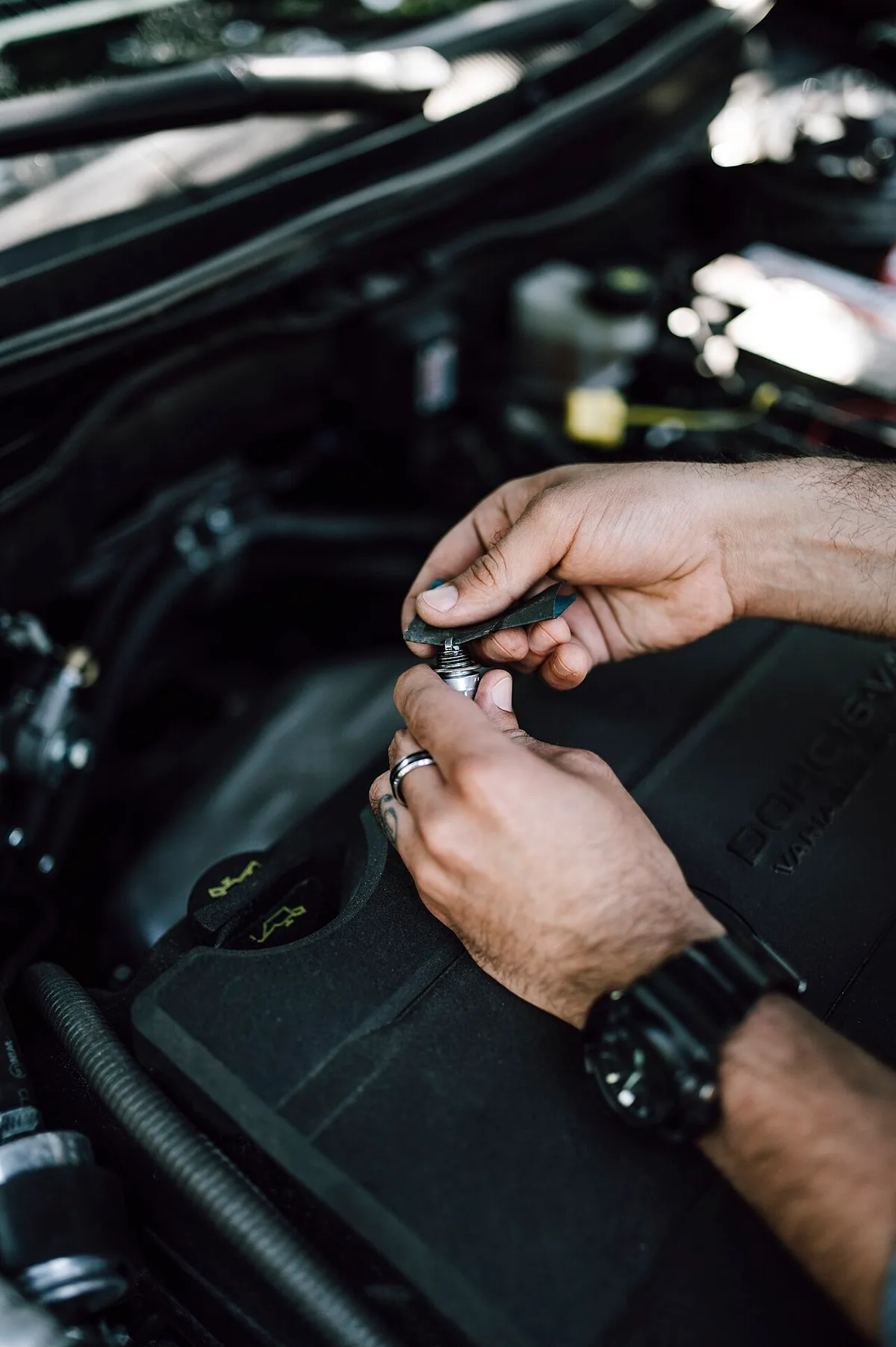
Image source: Wikimedia Commons / Shixart1985 (CC BY)
Here's where it breaks down. A $2,500 transmission job on a car worth $5,000 clears the rule exactly. But if that car has fresh tires, new struts, a clean frame, and full records, it's a much better $2,500 than a $5,000 used car with an unknown past.
Flip the scenario. A $2,000 repair on an $8,000 car passes the rule easily. But if the same car needs another $2,000 in suspension work within a year, the real number was $4,000 all along.
So use a better test:
- If the repair cost is under 25% of value and the car is otherwise sound, then fix it.
- If it lands between 25% and 50%, then check what else is due in the next 12 months before deciding.
- If it passes 50% and the car has rust or a deferred maintenance backlog, then start shopping.
- If the car has a structural rust problem, then the repair math barely matters. Corrosion ends the conversation.
Depreciation Curve and the Payment-Free Years
New cars lose roughly 20% of value in the first year and around 40% to 50% by year five. After year seven or eight, the curve flattens hard. An older car barely depreciates because there's little value left to lose.
That's the quiet financial argument for keeping a paid-off car. A $600 monthly payment is $7,200 a year. Spend $2,000 a year maintaining a paid-off car and you're still $5,000 ahead, plus lower insurance and registration in most states.
| Cost line | Paid-off older car | New car with loan |
|---|---|---|
| Monthly payment | $0 | $450 to $750 |
| Depreciation per year | $500 to $1,200 | $3,500 to $6,000 |
| Insurance (full coverage vs. liability) | Lower | Higher |
| Maintenance per year | $800 to $2,000 | $300 to $600 |
| Repairs per year | $0 to $2,500 | Warranty covered |
The older car loses on unpredictability, not on total cost. That's the honest trade. You're buying lower monthly cost with higher variance.
Insurance, Registration, and Total Cost of Ownership
Two ownership costs move in your favor as a car ages. Collision and comprehensive coverage usually cost less on a low-value vehicle, and many owners drop to liability only once the car is worth under a few thousand dollars. Registration and property taxes, in states that levy them, also fall with value.
The catch is that dropping collision coverage means an at-fault crash ends the car. If you can't absorb that loss, keep the coverage.
Add up the whole picture before you decide. Payment, insurance, fuel, maintenance, and expected repairs, divided by miles driven. That number is the only fair comparison between keeping and replacing, and it usually surprises people who assumed new was cheaper to run.
How to Vet a Used Car Before You Buy It
Buying used is where lifespan gets decided for you, often by a seller who knows more than you do. The good news is that the process is repeatable. Same steps, every car, no exceptions.
Skip a step because you love the color and you're gambling.
Pre-Purchase Inspection: What a Good One Covers
A pre-purchase inspection (PPI) is a paid inspection by an independent mechanic who has no stake in the sale. Expect to pay $100 to $250. It's the best money you'll spend in the entire process.
A thorough PPI covers:
- Stored fault codes and monitor readiness. Recently cleared codes are a red flag.
- Compression or cylinder balance test on higher-mileage engines.
- Coolant pressure test to catch head gasket issues before they show symptoms.
- Fluid condition on oil, transmission, coolant, and brake fluid.
- Underside inspection for rust, leaks, and impact damage.
- Suspension and steering play, plus tire wear patterns.
- Brake measurements at all four corners.
- Frame and unibody check for prior collision repair.
- Road test at highway speed, including braking and turning.
Ask for the written report. If the seller refuses to allow an inspection, that's your answer. Walk.
Reading a Vehicle History Report Critically
A history report is a starting point, not a clean bill of health. It catches title brands, reported accidents, and odometer inconsistencies across state lines. It does not catch repairs paid in cash, deferred maintenance, or damage that was never reported.
Read it for three things. Title branding, which tells you the car was declared a total loss at some point. Service record density, which shows whether anyone cared.
And geographic history, which tells you whether the car lived in salt country.
A car that spent eight winters in the Northeast with no undercoating deserves a much harder look underneath. A car that lived its life in Nevada is worth extra attention to rubber and plastic instead.
Spotting Odometer Rollback and Branded Titles
Odometer fraud is still common, and digital clusters made it easier in some ways. Look for these tells:
- Wear that doesn't match the mileage. A 40,000-mile car with a worn pedal pad and a shiny steering wheel has been around the block.
- Title brand mismatches. Salvage, rebuilt, flood, and lemon brands all follow the car forever. Check the physical title, not just a screenshot.
- Service sticker dates. Oil change stickers with mileage higher than the current reading are a hard stop.
- Inspection and registration records. State records show mileage at each annual event.
- Fresh interior parts on an old car. New seat covers and a new shift knob on a high-mileage body can hide wear.
Flood cars deserve a specific mention. They look clean, then the electronics start failing a year later. Check for waterlines under the seats, fogged lamp housings, and a musty smell in the trunk.
Cars That Routinely Hit 200,000 to 300,000 Miles
Some models really do go the distance, and it's not luck. It's conservative engineering, simple powertrains, and parts that were overbuilt for the job.
That said, the model matters less than the individual car's history. A neglected example of a legendary model still dies at 130,000 miles.
Mainstream Models With Proven Durability
Aggregate owner reports and long-term reliability tracking consistently point to a handful of nameplates. The pattern is telling: naturally aspirated four-cylinders, proven automatics, and conservative power outputs.
| Model type | Why it lasts | Watch for |
|---|---|---|
| Midsize sedans from Toyota and Honda | Simple engines, strong parts supply | Oil consumption on certain years |
| Compact sedans and hatchbacks from Mazda and Toyota | Light weight, low stress on drivetrain | Rust in salt states |
| Lexus ES and similar luxury-simple models | Camry bones with better sound deadening | Age-related rubber and bushings |
| Full-size trucks from Ford, Chevy, and Toyota | Overbuilt drivetrains, easy service access | Transmission service history |
| Midsize body-on-frame pickups | Simple, durable architecture | Frame rust on older examples |
| Hybrids with planetary power-split transmissions | No belt, no clutch packs | Battery aging after year 12 |
Notice what's missing. Small turbocharged engines with long oil intervals, early CVTs, and complex air suspension systems don't show up on long-life lists. Complexity costs life.
Luxury Brand Math at High Mileage
A used luxury car at 120,000 miles can look like a bargain. It isn't, unless you price the maintenance correctly.
The parts don't depreciate with the car. An air strut on a ten-year-old flagship still costs flagship money. Adaptive dampers, complex infotainment modules, and electronic parking brakes all fail on schedule, and none of them get cheaper because the car books at $11,000.
Here's the if/then version:
- If the luxury car uses conventional springs and a simple powertrain, then high mileage is workable.
- If it has air suspension, active roll bars, or adaptive dampers, then budget $2,000 to $5,000 for those systems alone.
- If you can't do your own diagnostics, then factor in dealer labor rates, which run well above mainstream shops.
The flip side is real. A well-kept luxury sedan with 200,000 highway miles often drives better than a new economy car. Just go in with your eyes open about the repair bills.
Why Maintenance Beats Badge Every Time
The single strongest predictor of long life isn't the emblem. It's a folder of receipts.
Our research keeps landing on the same pattern. A mid-tier brand with religious fluid changes and prompt repairs routinely outlasts a premium brand that ran 12,000-mile oil intervals and ignored a coolant leak. The gap isn't small, either.
It's often 100,000 miles or more.
So when you're evaluating any car, weight the records above the reputation. Ask for receipts. Ask what was replaced and when.
Ask why the last owner sold it.
A car with a boring badge and a thick folder beats a legendary badge and a shrug. Every time.
Keep, Sell, or Scrap: The Decision Tree
Everything before this point has been diagnosis. Now it's decision time, and the process is the same whether you're judging your own car or a listing you found last night.
Work through four steps in order. Score the car, run the money, weigh your situation, then take the verdict your branch points to.
Step 1: Score the Condition Variables
Score six variables from the earlier sections, 0 to 3 points each. Eighteen points are possible. Be honest with the inputs, because the tree only works if the inputs are real.
| Variable | 3 points | 2 points | 0 to 1 point |
|---|---|---|---|
| Powertrain | Proven NA engine with traditional auto or manual | Turbo or CVT with documented fluid service | Early CVT, dry dual-clutch, or unknown history |
| Underbody | Clean and dry | Surface rust, no scaling | Scaling rust, soft spots, structural rot |
| Service records | Complete folder with receipts | Partial, plausible, no major gaps | None, or claims without paper |
| Climate history | Dry Sun Belt life | Mixed exposure | Salt state or coastal air |
| Duty cycle | Mostly highway miles | Mixed use | Short trips, towing, heavy stop and go |
| Model reputation | No pattern failures | Known issue already repaired | Known issue still present |
Read the total like this:
- 15 to 18: a genuine keeper. Plan around 250,000 miles.
- 11 to 14: keep it, but budget for wear items and expect one big repair.
- 7 to 10: keep it only with a spending cap, and start planning your exit.
- 6 or below: sell it while it still starts and drives.
Structural rust is an automatic exit at any score. Once the frame rails or subframe mounts go soft, nothing else about the car matters.
Step 2: Compare Repair Cost to Replacement Cost
The 50% rule from earlier compares a repair to the car's value. That's a fine first filter, but it stops short of the real question. What would replacing the car actually cost you?
Replacement cost is bigger than the sticker. Take the purchase price and add sales tax, registration, dealer fees, and the first services on a car you don't know yet. A "$9,000 replacement" is usually $11,000 out the door, and often more once it needs tires.
Now run the comparison. A $2,500 repair against an $11,000 replacement is cheap, provided the car scored well in Step 1. That repair buys years at a fraction of the replacement price.
Then do the 12-month look-ahead, because that's where owners fool themselves. Add the repair to everything else coming due within a year. Tires, brakes, a suspension refresh, a battery.
That total is the real decision number.
Here's the if/then version:
- If the 12-month total stays under 40% of replacement cost, then repair it and keep driving.
- If it lands between 40% and 70%, then repair once, then sell before the next round begins.
- If it clears 70%, or two major systems fail at once, then the money is pointing at a different car.
One more factor never shows up in the math. You know your car's entire history. You know the water pump is new and the transmission was serviced.
On any replacement, you know none of that. Known history is worth real money, and it's part of why fixing a documented car beats gambling on a stranger's.
Step 3: Factor In Your Climate and Usage
The same scorecard produces different verdicts depending on where you live and how you drive. Weight these before you decide.
- If you drive 20,000 miles a year, then mechanical wear sets the pace. Fix mechanical items freely while the body is clean, because you're spreading repairs across a lot of miles.
- If you drive 6,000 miles a year in a salt state, then rust sets the pace on its own schedule. Sell before the frame gets bad, because a failed inspection collapses the value overnight.
- If you drive low miles in a dry climate, then almost nothing forces an exit. That combination is how people keep cars for 25 years.
- If your EV or hybrid pack is fading and the warranty clock is nearly done, then decide while you still have warranty leverage.
Timing matters more than people think. A car's value falls fastest in the gap between the first signs of a big problem and the problem being obvious to any buyer. Sell into the front half of that window.
Once the noise and the warning light are both public, your negotiating power is gone.
Step 4: Read the Verdict for Your Branch
Put the three steps together and your situation lands on one branch.
| Your branch | Verdict | What to do |
|---|---|---|
| Score 15+, one repair under 25% of value | Keep | Fix it and plan for another 100,000 miles |
| Score 11 to 14, one system aging | Keep with a cap | Budget the 12-month list and stop there |
| Score 7 to 10, still running well | Sell within a year | Private party or retail while it presents well |
| Score 6 or below, needs major work | Sell as-is or scrap | Price both paths before choosing |
| Structural rust at any score | Exit now | Scrap it or sell it as a parts project |
Know the difference between selling and scrapping. Scrap yards pay by weight, typically a few hundred dollars for a sedan. A running car with problems sells as a mechanic's special for far more, because the buyer is pricing the repair, not the steel.
Run the tree once a year, not once ever. Scores drift as parts age and rust progresses. The branch you're on this year is rarely the branch you'll be on in three.
Mistakes That Kill a Car Early
Cars rarely die of old age. They die of a decision made a year or two before the failure. The same handful of mistakes shows up in owner accounts again and again.
Four mistakes cover most early retirements. All four are cheap to avoid.
Deferring One Service and Triggering a Cascade
Expensive failures almost never arrive alone. They arrive at the end of a chain that started with one skipped service.
The chains look like this:
- Skipped coolant service, depleted inhibitors, eroded water pump seal, slow leak, one overheat, warped head, blown head gasket. A $150 service becomes a $2,500 repair.
- Skipped transmission fluid, glazed clutches, judder, circulating debris, clogged valve body, full replacement. A $200 service becomes a $4,000 job.
- Ignored ball joint play, chewed tires, thrown alignment, stressed bushings, and a steering repair that now needs three parts instead of one.
Every chain has a cheap link early and an expensive link late. The quote at the first link is always a fraction of thequote at the last one.
The takeaway isn't to become a maintenance zealot. It's to notice that the first link in each chain is cheap and boring, and the last link is expensive and memorable. Spend at the boring end.
Ignoring Coolant, Brake Fluid, and Differential Service
Everybody remembers oil. Almost nobody remembers the other three fluids, and those three quietly decide how long the expensive parts survive.
Coolant does two jobs. It carries heat away, and it keeps the inside of the cooling system from corroding. The corrosion inhibitors wear out in two to five years depending on the formula.
After that, the coolant turns acidic and starts eating the radiator, the heater core, and the water pump seal.
Brake fluid is hygroscopic, which means it absorbs moisture from the air. Moisture lowers the boiling point and rusts the internals of the ABS module and calipers. A spongy pedal after a long downhill grade is the classic symptom.
Flush it every two to three years and that symptom never shows up.
Differential and transfer case fluid gets ignored because it lives under a car nobody crawls under. On all-wheel-drive vehicles, that fluid is carrying load every single mile. Skipped long enough, the gears whine and the bearings go.
Gear oil is cheap. A rebuilt differential is not.
Here's the practical schedule for the fluids people forget:
- Coolant: 30,000 to 60,000 miles, or 5 years, whichever comes first.
- Brake fluid: every 2 to 3 years regardless of mileage.
- Differential and transfer case: 30,000 to 60,000 miles, sooner if you tow.
- Power steering (hydraulic): 50,000 to 75,000 miles.
- Cabin and engine air filters: 15,000 to 30,000 miles.
Short-Trip Driving Without Adjusting the Schedule
Short trips wear an engine harder than highway miles do, mile for mile. That's not an opinion about driving style. It's combustion chemistry.
A cold engine runs rich, because the fuel needs to vaporize in a cold intake. Some of that extra fuel washes past the rings and dilutes the oil film. Meanwhile, water vapor from combustion condenses in the crankcase and the exhaust system.
Neither burns off unless the engine reaches operating temperature and holds it for a while.
Do that five days a week for three years and the oil pan slowly fills with a fuel and water mix that lubricates badly. The exhaust rusts from the inside out, starting at the muffler and the rear pipe.
If your commute is three miles, adjust the schedule rather than the car:
- Shorten oil changes to the severe-service interval, often 5,000 miles or six months.
- Take one longer drive a week, ideally 20 to 30 minutes at highway speed.
- Change the PCV valve on schedule. It's cheap and it vents the moisture.
- Have the exhaust inspected yearly, since inside-out rust is invisible until it leaks.
Skipping Rustproofing in Salt States
Rustproofing gets dismissed as a dealer upsell, and sometimes it is. In a salt state, though, doing nothing is the more expensive choice.
Timing decides whether it helps or hurts. Undercoating sprayed over clean metal slows corrosion. Undercoating sprayed over existing rust traps moisture against the steel and accelerates the rot.
So the treatment belongs on a new or rust-free car, not as a rescue attempt on a fifteen-year-old one.
For an older car, annual creep-style treatments work better. Those oil and wax blends stay pliable, work into seams, and displace water. They need reapplying each year, which is the trade for actually reaching the places rubberized coatings can't.
Wash the underside too, not just the paint. Most car washes offer an undercarriage spray for a couple of dollars. In February, after a week of road salt, that spray does more for the car's lifespan than any wax job.
Legal, Safety, and Inspection Realities
Two things end a car's usable life faster than wear. A failed inspection and a paperwork problem. Both are worth understanding before either lands on you.
State Safety Inspection Requirements
Safety inspections vary enormously, and the variation matters when you're deciding whether to keep a high-mileage car. Some states run annual safety inspections with a defined checklist. Others run none at all.
Where inspections exist, the failure items that scrap the most cars aren't engine problems. They're structural corrosion at subframe and suspension mounting points, brake line rust, broken springs, and frame damage. A car that runs perfectly can fail on a rotted strut tower.
If your state inspects, get the car checked before the sticker expires. That gives you a season, and a season is leverage. You can repair, sell, or plan an exit instead of scrambling.
Emissions testing is a separate program in many states and it catches different problems. A failed catalyst, a bad oxygen sensor, or an incomplete readiness state after a battery disconnect will all fail a plug-in or tailpipe test. That's one more reason to scan stored codes before a test, not after.
Federal Emissions Warranty and NHTSA Recall Checks
Federal rules require emissions control components to be warranted for 8 years or 80,000 miles on the major pieces, including the catalytic converter and the engine control module. Some states that follow California rules extend certain parts to 15 years or 150,000 miles.
That coverage matters on a car that's failing emissions. A dead catalytic converter at 70,000 miles may be a warranty repair, not a $1,500 bill. Check the booklet before you authorize the work.
Recalls are the other free money in this category. Safety defects get fixed at no cost regardless of mileage or age, and structural corrosion recalls do happen. Run the VIN through the NHTSA recall lookup once a year.
A ten-year-old car can still have an open recall nobody ever told you about.
Lemon Laws, Salvage Titles, and Odometer Fraud Statutes
Three legal concepts shape what a car is worth and whether it can be sold honestly.
Lemon laws cover new vehicles with repeated unfixable defects within a set period, usually the first year or two. They rarely apply to used cars, and they never apply to a car you've owned for six years. Know what the law in your state actually covers before you assume it protects you.
Salvage and rebuilt titles are the bigger deal in the used market. A salvage title means an insurer declared the car a total loss. A rebuilt title means someone repaired it and got it re-inspected.
Both follow the car forever, cut resale value hard, and complicate insurance. Some lenders won't finance them at all.
Odometer fraud is a federal offense, and it still happens. Digital clusters made rollback easier to attempt and harder to spot. Protect yourself by checking mileage records across state inspection and title transfers, and by matching interior wear to the number on the dash.
All of this adds up to one habit. Verify the paperwork with the same rigor you apply to the mechanical inspection. A clean-running car with a branded title is still a hard car to sell later, and that belongs in your lifespan math.
Frequently Asked Questions
Is 200,000 miles bad for a car?
No. Two hundred thousand miles is normal for a maintained modern car, not a death sentence. What matters is how those miles accumulated and what's been replaced.
A highway-driven car with full service records at 200,000 miles is often a better buy than an undocumented car at 110,000.
How many miles will a car last on average?
Around 150,000 to 200,000 miles is the realistic average, which lines up with roughly 12.6 years on the road at about 13,500 miles a year. Well-maintained mainstream models regularly pass 250,000. Poorly maintained ones can be finished well before 120,000.
Do EVs last as long as gas cars?
Mechanically, often longer, because there's no oil to neglect and far fewer moving parts. The limiting factor is the battery pack, which typically retains 70% to 80% of capacity after 8 to 10 years. Federal rules require at least 8 years or 100,000 miles of pack coverage.
Is a low-mileage older car better than a high-mileage newer one?
Usually not. A 12-year-old car with 40,000 miles has spent years aging in place. Rubber, brake lines, hoses, and fluids degrade whether or not the car moves.
A newer car with higher highway miles has already proven it runs, and its age-limited parts are younger.
When is a car not worth repairing?
When the repair clears roughly half the car's retail value and the car already has structural rust or a backlog of deferred work. Add up what's due in the next 12 months, not just the current quote. If that total passes about 70% of what a replacement would cost, the money points elsewhere.
How long can a car sit before it starts to suffer?
Months, not years, before problems start. Fuel goes stale in about six months, the battery self-discharges in weeks, and tires flat-spot. Rodents chew wiring, and brake rotors rust where the pads sit.
If a car must sit, use a battery tender, add fuel stabilizer, and drive it occasionally.
Your Car's Lifespan Is a Choice, Not a Coin Flip
There's no single number waiting to be looked up. Your car will last as long as its weakest clock allows, whether that clock counts miles, winters, heat cycles, or skipped fluid services.
The useful skill isn't memorizing an average. It's knowing which clock is running fastest on your particular car right now. Rust in a salt state.
A timing belt with an unknown history. A CVT that never had its fluid changed. A battery pack heading into year ten.
Find the fastest clock and you've found your answer.
Then act on the branch that fits. Fix what's cheap and preventive. Spend real money only when the body is sound and the records back it up.
Sell into strength, not after the failure is obvious. And when the numbers say move on, move on without guilt.
Plenty of cars hit 300,000 miles. Plenty die at 130,000 with clean paint and a full tank. The difference is almost never luck.
It's a folder of receipts, a yearly look underneath, and a willingness to spend $200 now instead of $2,500 later.
