
Ask ten people how many miles is too many for a used car and you'll get ten confident answers, most of them wrong. The number on the dash isn't a verdict. It's one input among several, and often not the loudest one.
What actually decides whether a car has life left in it is how those miles were accumulated, how faithfully it was serviced, and how long you need it to keep running.
Here's a reality check before you walk onto a lot. The average light vehicle on US roads is now well past 12 years old, and millions of them are north of 150,000 miles and still doing daily duty. A documented 140,000-mile commuter car routinely outlasts a neglected 70,000-mile one.
So forget hunting for a cutoff number. You need a way to test each car on its own evidence, and that's exactly what the sections below walk you through.
How Many Miles Is Too Many for a Used Car
There's no universal answer to how many miles is too many for a used car. For most buyers, 100,000 miles is not a problem. Condition and records matter more than the number.
A 150,000-mile car with full service history can be a smart buy. A 90,000-mile car with no records is usually the bigger risk.
Why Mileage Alone Won't Tell You If a Used Car Is a Bad Buy
An odometer counts distance. It doesn't count wear. That gap is the whole problem with treating mileage as a pass/fail test.
Picture two identical sedans, both showing 120,000 miles. One did 30-mile highway runs at steady speed with oil changes every 5,000 miles. The other did four-mile school runs in stop-start traffic, idled in drive-through lines, and skipped two services.
Same number on the dash. Very different repair bills ahead.
Mileage does one thing honestly: it sets price. Buyers pay a premium for lower numbers, lenders cap loans by them, and resale value slides as the odometer climbs. That's market behavior, not mechanical reality.
What the odometer tells you and what it hides
| The number reliably tells you | The number hides |
|---|---|
| Roughly how much depreciation is left | Whether oil changes happened on time |
| What lenders and insurers will do | Whether the miles were highway or city |
| Where the car sits in the market | Engine idle hours and cold-start cycles |
| Whether a CPO program will cover it | Rust, flood damage, or a branded title |
| Ballpark wear on consumable parts | How the previous owner drove it |
The gap between those two columns is where most bad used-car decisions happen. A low number feels safe, so buyers stop asking questions. That's the trap.
The average-mileage benchmark, and why it's only a starting point
Industry tracking and manufacturer service schedules generally assume around 12,000 to 13,500 miles a year. A ten-year-old car "should" show somewhere near 120,000 to 135,000 miles. Here's the useful part: that figure is a comparison tool, not a limit.
If a five-year-old car shows 110,000 miles, it was driven hard. That's fine if the service records match the pace. If a twelve-year-old car shows 60,000 miles, ask why.
Short trips, long storage, or a rollback all leave traces, and a genuine low-mileage older car often has its own problems: dried seals, flat-spotted tires, stale fluids.
The three things that actually predict remaining life
Strip away the marketing and used-car longevity comes down to these:
- Maintenance adherence. A car serviced on schedule at 150,000 miles is a better bet than a neglected one at 80,000.
- Usage pattern. Steady highway miles wear components far more gently than short city hops.
- Design durability. Some powertrains are built for 250,000 miles. Others are engineered to survive the warranty and little more.
Everything else, including the number you're staring at, is secondary. As of 2026, used inventory is packed with well-documented high-mileage cars, and the good ones sell fast to buyers who know how to read the paperwork.
Variable 1: How the Miles Were Earned (Highway vs. City, Idle Hours, Short Trips)
This is the single most underrated variable in the whole decision. A highway mile and a city mile are not the same unit of wear, even though the odometer treats them identically.
Highway miles mean the engine reached operating temperature and stayed there. Transmission shifts were few. Brakes were used lightly.
Suspension traveled over smooth surfaces at constant load. City miles mean the opposite: constant shifting, frequent braking, steering inputs, and an engine that spends much of its life warming up.
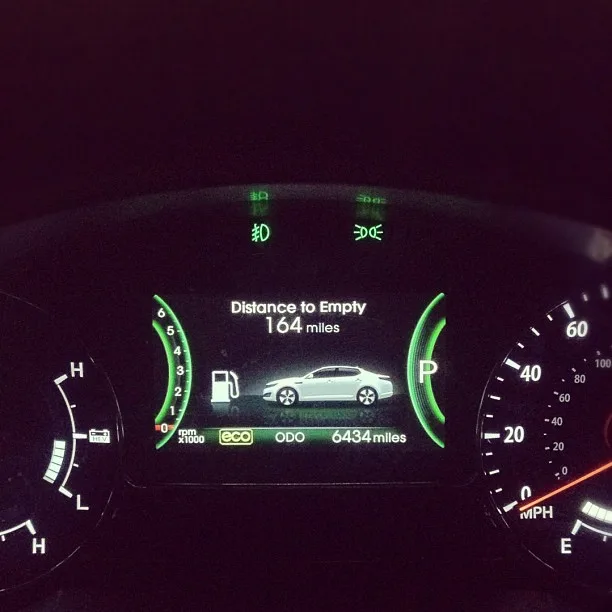
Image source: Wikimedia Commons / Tony Webster (CC BY-SA)
Where the wear difference shows up
| Wear factor | Highway-heavy miles | City-heavy miles |
|---|---|---|
| Engine | Steady temp, low thermal cycling | Frequent cold starts, more condensation |
| Transmission | Fewer shifts, cooler fluid | Constant shifting, hotter fluid |
| Brakes and rotors | Long life | Worn much earlier |
| Suspension and bushings | Gentle wear | Potholes, curbs, speed bumps |
| Starter and battery | Fewer cycles | Endless short cycles |
| Emissions hardware | Cleans out properly | Carbon buildup, clogged EGR |
| Exhaust system | Fully heated, moisture burned off | Moisture sits, rust starts early |
A 130,000-mile highway car can genuinely be in better mechanical shape than an 80,000-mile city car. That isn't a sales tactic. It's how metallurgy, lubrication, and heat cycles work.
Engine hours beat miles for some vehicles
Fleet operators learned this decades ago. A pickup that idles eight hours a day at a job site can show 60,000 miles and 6,000 engine hours. That's the wear equivalent of roughly 200,000 road miles.
Most consumer cars don't display engine hours, but many fleet and commercial vehicles do, and a scan tool can often pull the data from the ECU. If the car has a history as a work vehicle, ask. Hour meters don't lie the way odometers can be rolled back.
Short trips are the quiet killer
Ten-minute drives never let the engine fully warm. Moisture condenses in the crankcase and exhaust. Oil degrades faster.
Carbon builds on intake valves, especially in direct-injection engines. The catalytic converter never reaches the temperature it needs to burn off deposits cleanly.
So the if/then logic looks like this:
- If the car was a long-commute highway car with records, then high miles are a mild concern, mostly about price.
- If the car was a city runabout with 90,000 miles and a spotty service file, then treat it like a 150,000-mile car in your offer.
- If the car idled heavily in commercial or police service, then discount the odometer heavily and inspect the cooling system, transmission fluid, and idle-hour components closely.
- If you can't establish usage pattern at all, then let the pre-purchase inspection and the price carry the decision.
How to figure out how a car was driven
You can usually reconstruct the pattern without much detective work:
- Average annual mileage. Divide total miles by vehicle age. Big spikes in one year suggest rideshare, delivery, or long-distance commuting.
- Owner history. One owner in a rural zip code with a long commute reads very differently from four owners in a dense city.
- Wear surfaces. A 70,000-mile car with a shiny, worn brake pedal pad and a sagging driver's seat has done more stop-and-go work than the dash suggests.
- Service intervals in the records. Frequent short-interval oil changes often point to a careful short-trip owner who knew their usage was hard on the car.
One warning while you're underneath: never crawl under a car supported only by a jack. Solid safe lifting ramps or properly rated stands are the only acceptable way to inspect an undercarriage.
Variable 2: Service Records and the Paper Trail That Changes the Price
Service records are the closest thing a used car has to a medical history. They don't guarantee a healthy car, but a missing file is a genuine red flag rather than a neutral one.
A car with 130,000 documented miles and a folder of invoices is a known quantity. A car with 75,000 miles and no paperwork is a guess. You're paying for certainty either way, so price the uncertainty in.
Image source: Wikimedia Commons / George (CC BY-SA)
What counts as real proof
Not all documentation is equal. Rank it like this:
| Record type | What it proves | Trust level |
|---|---|---|
| Dealer service invoices with VIN and mileage | Work done, at what mileage | High |
| Independently stamped service book | Scheduled maintenance happened | Medium to high |
| Carfax or AutoCheck entries | Reported events, often dealer-sourced | Medium |
| Owner-kept receipts for parts and oil | DIY work, plausible but unverified | Medium |
| Verbal assurance ("my guy took care of it") | Nothing | Low |
A gap of 30,000 miles between recorded services is a real concern. So is a file where every entry is an oil change and nothing else. Fluids, filters, belts, and brake work tell you whether the owner maintained the car or just kept it running.
The service items that matter most on a high-mileage car
- Transmission fluid. Many "lifetime fluid" claims are marketing. Fluid degrades, and a neglected unit is the most expensive repair on the sheet. Knowing the correct fluid level and service history on the unit you're buying is worth more than any other single check.
- Cooling system. Coolant, thermostat, water pump, and hoses. Overheating is what kills high-mileage engines.
- Timing belt or chain. A belt is a scheduled expense. A chain that's rattling is an impending four-figure bill.
- Spark plugs and ignition components. Worn plugs misfire, and persistent misfires destroy catalytic converters. If you spot oil-fouled plugs during an inspection, walk or renegotiate hard.
- Brake and suspension work. These are normal wear items, so what you want to see is evidence they were done, not that they're original.
Verify, don't just read
Order a vehicle history report by VIN before you fall in love with the car. Then check for open safety recalls through the National Highway Traffic Safety Administration, which lets you search by VIN for free. A dealer who won't run a VIN or provide the Buyers Guide required by the Federal Trade Commission's used car rule is telling you something important.
Then bring a scanner. Even a basic scan tool reads stored and pending codes, plus readiness monitors that reveal whether someone recently cleared the computer to hide a fault. That last trick is common, and it's easy to catch.
What a thin file should do to your offer
If records are missing, don't walk automatically. Adjust instead.
- Assume the transmission fluid, coolant, brake fluid, and plugs are all overdue.
- Budget a full baseline service immediately after purchase, including fresh fluid and a filter if the unit is serviceable.
- Deduct the cost of that work from your offer, then deduct a bit more for the unknown.
Dealers know buyers pay for documentation. That's why a one-owner car with a dealer-stamped file commands a premium. It's also why a clean-looking car with no history sits on the lot.
Variable 3: The Model Itself (Reliability Records and Known Failure Points)
Two cars with identical mileage and identical records can have wildly different futures. The badge on the hood matters as much as the number on the dash.
This is where general advice falls apart. A 150,000-mile Toyota Camry is a reasonable daily driver. A 150,000-mile large luxury sedan with air suspension and twin-turbo plumbing is a financial commitment.
Same miles, entirely different risk profile.
A rough longevity map by category
| Vehicle category | Typical outlook past 150,000 miles | Main watch-outs |
|---|---|---|
| Mainstream Japanese sedans and SUVs | Strong, often 200,000+ | Rust in salt states, CVT service history |
| Full-size American trucks | Strong, often 250,000+ | Transmission service, differential and transfer case fluids |
| Japanese compact and mid-size hybrids | Strong, battery age is the wildcard | Hybrid battery degradation, brake actuator wear |
| European luxury sedans and SUVs | Mixed, repair costs climb fast | Air suspension, turbo and direct-injection carbon, electronics |
| Small turbocharged economy cars | Fair, depends on oil discipline | Timing chains, carbon buildup, turbo wear |
| Diesels (well maintained) | Strong, high initial complexity | Injectors, emissions hardware, fuel system contamination |
| Performance and modified cars | Unpredictable | Tune history, clutch and driveline stress, aftermarket forced induction |
None of this is a knock on any brand. It's cost math. A $900 repair on a $9,000 car is a decision.
The same repair on a $40,000 luxury car is often $2,500 because of parts and labor rates.
Match the model to your ownership timeline
Ask one question before anything else: how long do you need this car to last?
- Two to three years, low annual miles. Buy the cheapest well-documented car you can find. Long-term durability barely matters.
- Five to seven years, average miles. Prioritize models with cheap parts and a deep independent mechanic network.
- Ten years or 200,000 miles. Buy on reputation and records. Pay more upfront for a boring, proven drivetrain.
That single answer eliminates half the cars on your shortlist faster than any mileage cutoff.
Known failure points to research before you buy
Every model has them. A few minutes of research on the specific year, engine, and transmission saves thousands:
- CVT transmissions in certain compact and mid-size models, particularly early generations, where fluid service was neglected.
- Timing belts on interference engines, where a snapped belt bends valves and turns a $900 job into a $3,000 one.
- Turbocharged direct-injection engines, prone to intake valve carbon buildup that shows up as rough idle and lost power.
- Air suspension on luxury models, where struts fail predictably somewhere past 100,000 miles.
- Worn steering linkage and bushings, which are cheap to diagnose and easy to miss on a short test drive. Quality varies here, and budget suspension parts rarely outlast the originals.
- Hybrid battery packs, where age matters more than mileage, and replacement cost is the whole calculation.
Search for the exact model year plus "common problems" and read owner forums, not marketing copy. Recall history and technical service bulletins are public, and both tell you what tends to break.
Certified Pre-Owned changes this variable
A CPO car usually carries a mileage ceiling and an inspection requirement. That's the manufacturer putting its own money behind the car's condition. If a high-mileage car you like qualifies, the coverage can offset much of the risk.
It also sets a useful benchmark. If the manufacturer won't certify a car past a certain mileage, that's a strong signal about where the risk curve steepens for that model.
Variable 4: Drivetrain Design (CVT vs. Automatic, Timing Belt vs. Chain, Turbo vs. Naturally Aspirated)
The drivetrain decides whether 150,000 miles counts as midlife or old age. Two cars can wear the same badge and face opposite futures, because what's bolted between the engine and the wheels sets the repair odds more than the odometer does.
Start with the transmission. It's the most expensive single component that fails at high mileage, and replacement routinely costs more than the resale value of the car around it.
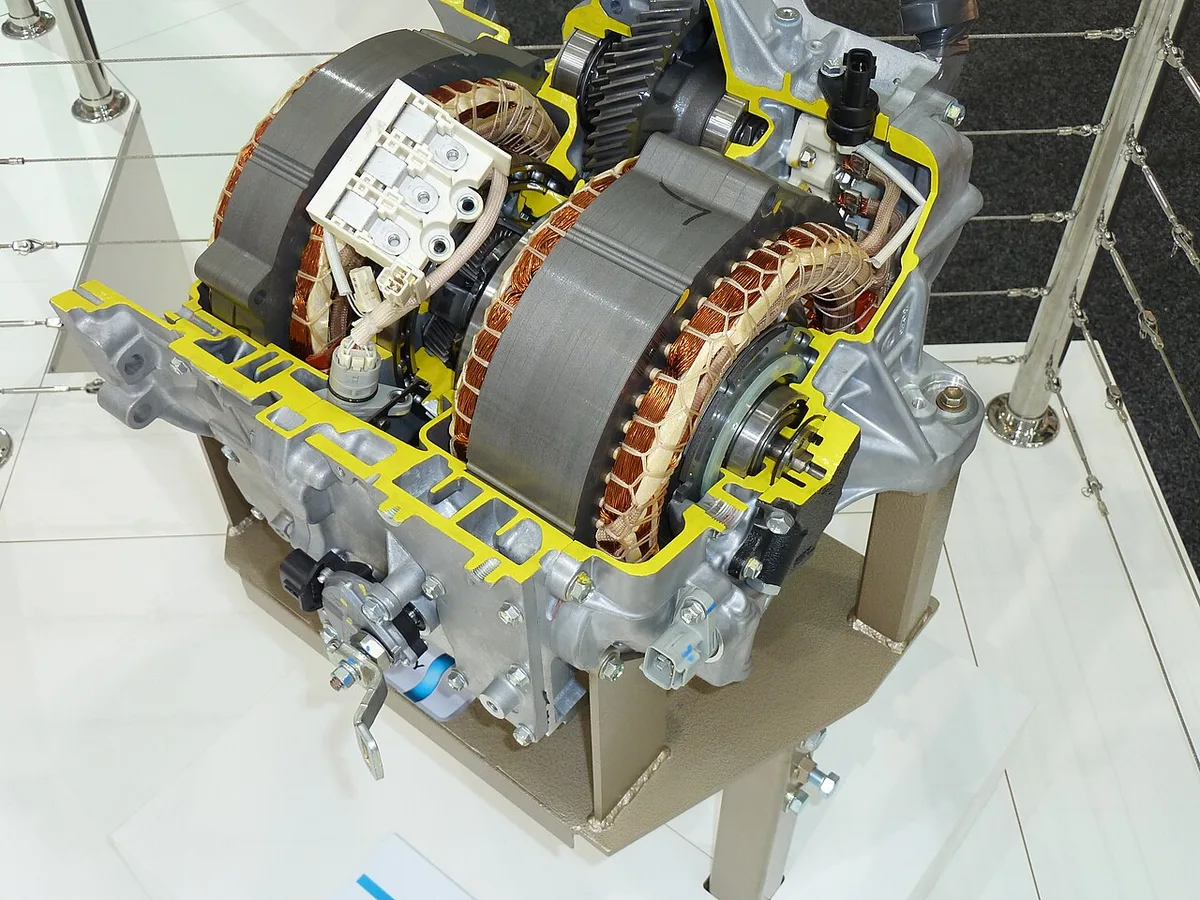
Image source: Wikimedia Commons / OSX
| Transmission type | Realistic lifespan | Replacement cost | High-mileage verdict |
|---|---|---|---|
| Conventional automatic | 200,000+ with fluid service | $2,500 to $5,000 | The dependable choice |
| CVT | 150,000 to 200,000 | $3,500 to $5,500 | The records decide it |
| Manual | Often outlasts the car | $1,200 to $2,000 clutch | Fine, just budget the clutch |
| Hybrid e-CVT | 250,000+ | Rarely fails | The best high-mileage bet |
How CVTs behave past 100,000 miles
A continuously variable transmission (CVT) replaces fixed gears with a belt or chain riding on variable pulleys. It's efficient and smooth. It also works its fluid harder and hotter than a conventional automatic ever does.
Manufacturer service schedules for Honda, Nissan, and Subaru CVTs call for fluid changes in the 30,000 to 60,000 mile range on severe-duty schedules. A CVT with documented fluid service at 150,000 miles is a reasonable bet. The same transmission with no fluid history is a coin flip, and losing costs $3,500 to $5,500.
There's one big exception. Toyota and Lexus hybrids use a planetary power-split device, often called an e-CVT, with no belts and no clutches in the drive path. Those units routinely clear 250,000 miles.
The hybrid battery is the wildcard there, not the gearbox.
Manual gearboxes are nearly immortal. The clutch isn't. An original clutch somewhere in the 100,000 to 150,000 mile window is a $1,200 to $2,000 line item, so check how it engages and how the previous owner drove it.
Timing belt or timing chain?
A timing belt is a scheduled expense, and a timing chain is a built-for-life part with wear-prone guides. That single distinction changes the math on any high-mileage car.
Belts are rubber with a deadline. Manufacturer intervals run 60,000 to 100,000 miles, or roughly 7 to 10 years, whichever comes first. Age kills belts on low-mileage cars, which surprises buyers who only watch the odometer.
If the engine is an interference design, a snapped belt bends valves and destroys the engine. Always ask whether the specific engine is interference type before buying a belt-driven car past its interval. A belt job runs $500 to $1,500, and no record of one at 130,000 miles means you're funding it.
Chains are metal and meant to last the engine's life. The weak links are plastic guides and hydraulic tensioners. A rattle lasting more than a second on cold start is the classic symptom, and the repair lands between $1,000 and $2,500.
- If the car is belt-driven, past interval, and has no replacement record, then deduct the full belt job from your offer.
- If the chain rattles audibly on cold start, then treat it as a failing component, not a personality quirk.
- If you don't know which one the engine has, then look it up by engine code before spending another minute on the car.
Turbo or naturally aspirated?
Naturally aspirated engines are the safer high-mileage buy. Turbos buy performance with heat and pressure.
A turbo forces extra air into the engine, and the tax lands on the oil. Turbos demand the correct synthetic at the correct interval, because oil that cooks in the bearing housing turns to sludge and kills the shaft. Turbo replacement runs $1,200 to $3,000 installed.
Add direct injection and you get intake valve carbon buildup past 100,000 miles, which shows up as rough idle and hesitation. Port-injected, naturally aspirated engines largely avoid that problem and shrug off an owner who stretched an oil change.
Where diesels fit
Diesels earn their longevity reputation, but the fuel system carries the risk. On a heavy-duty diesel, a full injector set can run four figures on its own, and contaminated fuel or neglected filters destroys pumps just as fast. Emissions hardware like the DPF filter and DEF system adds complexity and cost on newer trucks.
Variable 5: Your Ownership Timeline (How Long You Actually Need the Car to Last)
Here's the question most buyers skip: how many miles will you personally add? The same odometer reading is a bargain for one owner and a mistake for another.
Run the subtraction. Take the realistic lifespan for the model, then subtract the current odometer. A documented Camry-class sedan routinely reaches 250,000 miles.
Buy one at 150,000 and you have roughly 100,000 expected miles left.
At 8,000 miles a year, that's more than a decade. At 25,000 miles a year, it's four years, and you'll be holding the keys when the expensive repairs arrive.
| Your plan | What to prioritize | What to check hardest |
|---|---|---|
| 2 to 3 years, light driving | Cheapest documented car, easy resale | Accident history, cosmetics, tires |
| 3 to 5 years, average driving | Proven drivetrain, one repair budgeted | Fluid records, suspension play |
| 5 to 10 years | Top reliability tier, full paper trail | Compression, rust, model failure points |
| Run it into the ground | Boring, high-volume, NA or e-CVT powertrain | Everything, plus a real repair fund |
Think about your exit before you enter. A car bought at 90,000 and sold at 130,000 is easy to move. A car bought at 170,000 leaves your hands near 200,000, where private buyers get nervous and dealers won't resell it.
- If you drive 20,000 miles a year or more, then the odometer genuinely matters, because you burn remaining life at nearly double the average pace.
- If you drive 6,000 miles a year, then even a 180,000-mile car can outlast your interest in it.
- If you're reselling inside three years, then buy what the market rewards, not just what lasts.
Variable 6: Price vs. Remaining Life (The Math That Settles the Deal)
Once you can estimate remaining life, you can price any car honestly. The tool for that is effective price: what you pay, plus what the car needs immediately.
Effective price means asking price plus imminent maintenance plus your repair reserve. Compare candidates on that number, never on the sticker alone. Here's the same math applied to three real-world-style listings.
| Car A | Car B | Car C | |
|---|---|---|---|
| Year | 2019 | 2015 | 2012 |
| Miles | 58,000 | 118,000 | 168,000 |
| Asking price | $17,900 | $10,500 | $6,800 |
| Needs now | Nothing documented | Tires, brakes, fluids ($1,300) | Belt, struts, battery ($2,600) |
| Effective price | $17,900 | $11,800 | $9,400 |
| Life left to 230,000 miles | 172,000 | 112,000 | 62,000 |
| Effective price per remaining mile | $0.10 | $0.11 | $0.15 |
Car A wins on cost per remaining mile, and that surprises people. The high-mileage discount has to be steep enough to pay for both the shorter runway and the repair risk. When it isn't, the newer car is simply the better deal.
Depreciation flips the math in raw dollars, though. Car C might be worth $4,500 in three years, a $2,300 loss. Car A might be worth $12,500, a $5,400 loss.
Cheap high-mileage cars bleed slowly in absolute dollars even when their per-mile cost is worse.
So the real question is cash flow versus efficiency. If minimizing lifetime cost per mile is the goal, favor the lower effective price per remaining mile. If minimizing monthly outlay matters more, the cheap car wins even when the math is uglier.
Never negotiate on adjectives. Negotiate on line items. Tires worn to 4/32 inch are a $600 to $800 expense.
Brake pads at 3 millimeters are $350 to $500 per axle. A missing timing belt service is the full job. Present those as documented deductions and the conversation becomes arithmetic instead of opinion.
- If a seller won't adjust for documented imminent costs, then the price is wrong and the car isn't special.
- If the high-mileage option genuinely beats the newer one per remaining mile, then the miles don't matter much.
- If a surprise $1,500 repair would wreck your month, then buy fewer miles or keep shopping.
The Decision Tree: What to Do at 60k, 100k, 150k, and 200k+ Miles
Here's the whole decision compressed into mileage brackets. Each bracket changes what you inspect, what you pay, and what ends the deal.
Under 60,000 Miles: Paying for Someone Else's Depreciation
At this range, mileage isn't the risk. Price is. You're paying a premium for a near-new car, so the real question is whether a new or Certified Pre-Owned alternative beats it.
Check accident history and paint meter readings first, because lease returns and early trades sometimes carry hidden repairs. Also confirm the first major services, since a 6-year-old car with 40,000 miles may still be running its original fluids, and age degrades fluids just like miles do.
- If the asking price sits within roughly 15 percent of a new or CPO equivalent, then the used discount isn't doing its job.
- If it's a genuine low-mileage older car, then inspect tires, battery, and seals for age wear rather than wear wear.
60,000 to 100,000 Miles: The Sweet Spot and Its Hidden Service Bills
The bulk of major scheduled services cluster in this window. Iridium spark plugs often fall due between 60,000 and 120,000 miles. Transmission fluid, coolant, and brake fluid all come due somewhere in this stretch too.
A car here with the big services done is the best value in used cars, full stop. One with none of them done is a sweet spot on paper only, and you'll be funding the backlog yourself within a year.
- If the 90,000-mile service is missing from the file, then price it into the offer at full shop rates.
- If the records show it done, then you've likely found the strongest cost-per-mile buy on the market.
100,000 to 150,000 Miles: Where Records Matter More Than the Odometer
Depreciation has done its worst by this point, which is why this bracket hides the best cost-per-mile deals around. The filter is paperwork.
Three things carry the decision: documented fluid history, the model's reliability record, and pre-purchase inspection findings. Budget one repair event of $1,000 to $2,000 somewhere in your ownership and you'll rarely be blindsided.
- If fluid records exist and the model is proven, then buy on condition and negotiate hard on the mileage stigma.
- If the file is empty, then treat the car as 40,000 miles worse than the dash claims, as we covered in the recordsfolder, and let the inspection findings settle the rest.
150,000 to 200,000 Miles: Buying on Condition, Not Miles
Past 150,000 miles, the market stops pricing miles and starts pricing condition. That works in your favor if you're the buyer with a flashlight and a checklist.
Financing gets harder here too. Many banks and credit unions won't write a standard auto loan on a vehicle past 150,000 miles, or they'll cap the term or raise the rate. Insurance is usually fine, but a collision claim can total the car for damage that would be a cheap repair on a newer one.
Check your lender's mileage limit before you fall for a car you can't fund.
What decides these cars is mechanical evidence, not paperwork alone:
Rust. Rocker panels, rear wheel arches, brake and fuel lines, subframe mounts, and the leading edge of the hood. Structural rust ends the deal, full stop, no matter how well it runs.
Transmission behavior. A firm, clean shift when cold and hot. Any slipping, shuddering, or delayed engagement is a repair you can't price confidently.
Coolant and oil consumption. Ask how much oil gets added between changes. A quart every 1,000 miles is a worn engine, not a topping-up habit.
Suspension play. Push down on each corner and listen. Clunks over bumps mean bushings, struts, or sway bar links, all normal at this mileage but all negotiable line items.
Electronics. Windows, locks, seats, cameras, and every button. Module failures on older cars can cost more than the mechanical stuff.
If the car passes all five of those checks, then a 180,000-mile example with full records is a genuinely sensible buy.
If two or more fail, then you're looking at a project, and projects need project pricing.
If the seller blocks an inspection at this mileage, then stop. There's no car worth buying blind at 160,000 miles.
Past 200,000 Miles: When the Price Has to Be Almost Free
At this point you're not buying a car. You're buying transportation for a defined number of months, and the price has to reflect that.
Resale value is effectively gone. A 210,000-mile sedan might trade privately for $2,000 to $4,000 depending on model and region, and a dealer won't put it on the front line. That's fine if you plan to drive it until it dies.
It's a trap if you think you'll sell it in a year.
The math that makes these cars work is simple. Pay $3,000, spend $1,200 on a catch-up service, drive it 20,000 miles, and your cost is about $0.21 per mile. Compare that to a $450 monthly payment on something newer and the old car wins on cash outlay, provided nothing major breaks.
That "provided" is doing a lot of work. This is where DIY ability pays off enormously. If you can do your own brakes, fluids, and suspension, a 200,000-mile car is a sound financial move.
If every job goes to a shop at $150 an hour, the same car can quietly cost you more than a lease.
- If you're buying a high-mileage car as a second vehicle, a work truck, or a first car for a teenager, then it can be excellent value.
- If it needs to be your only car and you can't afford a surprise $1,500 bill, then this bracket isn't for you.
- If the seller wants $6,000 for a 220,000-mile compact, then walk. The market doesn't support it, and neither should you.
The disqualifiers that override any mileage bracket
Some findings end the conversation regardless of what the odometer says. Keep this list where you can see it during the test drive:
| Finding | Why it ends the deal |
|---|---|
| Salvage, rebuilt, or flood title | Resale and insurance become a problem, and hidden damage is common |
| Structural rust on frame, subframe, or suspension mounts | Safety issue that can't be economically repaired |
| Odometer discrepancy on history report | Possible federal odometer violation, and the true mileage is unknown |
| Coolant in the oil or oil in the coolant | Head gasket or cracked head, a four-figure job on most engines |
| Transmission slipping or shuddering | The single most expensive common failure |
| Seller refuses an independent inspection | You lose all visibility, and honest sellers rarely object |
| No VIN available before the visit | It usually means a branded title or a curbstoner |
The Buying Workflow: VIN Check, History Report, Cold-Start Test Drive, Pre-Purchase Inspection
This is the sequence that turns a mileage question into a decision. Work it in order, because each step is cheap and each one can save you from the next.
| Step | What you do | Typical cost | What it catches |
|---|---|---|---|
| 1 | Get the VIN before you drive out | Free | Wrong trim, wrong engine, curbstoner listings |
| 2 | Run a vehicle history report | $25 to $45 | Title brands, mileage gaps, accident reports |
| 3 | Check open recalls by VIN | Free | Unrepaired safety defects |
| 4 | Cold-start the car yourself | Free | Chain rattle, lifter noise, blue smoke, hard starting |
| 5 | Test drive 20 minutes, highway included | Free | Shift quality, vibration, alignment, overheating |
| 6 | Scan codes and readiness monitors | Free to $100 | Cleared codes, pending faults, emissions problems |
| 7 | Independent pre-purchase inspection | $100 to $200 | Compression, rust, brakes, leaks, suspension |
| 8 | Price the findings and negotiate | Free | Thousands in avoidable cost |
Two details matter in step 4. Insist the engine is stone cold when you arrive, because a warmed-up engine hides cold-start noises. And put your hand near the tailpipe at first start.
Blue smoke that clears after a minute points to worn valve guides or rings.
For step 5, drive it the way you'll actually drive it. A five-minute loop around the block tells you almost nothing. Get it on a highway on-ramp at full throttle and feel for hesitation or a slipping torque converter.
Reading a Vehicle History Report Without Over-Trusting It
A vehicle history report is a record of what got reported. That's the whole limitation. It is not a maintenance log, and a clean report doesn't mean a clean car.
A report from Carfax or AutoCheck pulls title events, insurance claims, service visits from participating shops, emissions inspections, and auction listings. It misses work done at home, work done at shops that don't feed the database, and anything nobody bothered to report. Two identical cars can generate wildly different reports based on where they were serviced.
What you should actually look for:
- Title brands. Salvage, rebuilt, flood, lemon, or junk. These follow the car forever and destroy resale.
- Mileage inconsistencies. A jump from 88,000 to 42,000 is a rollback signal. So is a long stretch with no mileage entries at all.
- Location pattern. A car that lived its life in a road-salt state deserves a harder look underneath than a desert car.
- Service frequency. Regular dealer visits suggest a maintained car. One oil change in four years suggests otherwise.
- Auction and fleet history. Cars that ran through a wholesale auction or a rental fleet had many drivers and often minimal care.
Cross-check the title against NMVTIS, the national title database the Department of Justice oversees, since state-reported brands don't always land in commercial reports. Then pull the recall status from NHTSA using the same VIN.
One more trick: compare the report's event timeline against what the seller told you. If they claim one owner and the report shows three, you've learned something about the seller that matters more than the car.
What a Pre-Purchase Inspection Should Actually Cover
A pre-purchase inspection is the best $150 you'll spend on a used car. Not all of them are equal, though, and a quick "looks good" from a buddy isn't one.
Book an independent shop, not the dealer selling the car. Ask by name for a compression or cylinder leak-down test, a lift inspection of the undercarriage, and a scan of all modules, not just the engine computer. Transmission and body control modules store codes the engine scan never sees.
Here's what a thorough inspection should tell you:
- Compression and leak-down numbers per cylinder, which reveal ring and valve condition on high-mileage engines.
- Fluid condition in the engine, transmission, cooling system, brake reservoir, and differential, with comments on color, smell, and contamination.
- Undercarriage rust with photos, especially brake lines, fuel lines, and structural mounts.
- Brake measurements in millimeters for pads and thickness for rotors, not vague reassurances.
- Tire tread depth in 32nds of an inch across each tire, plus the DOT date codes. Tires over six years old are due regardless of tread.
- Suspension and steering play at each corner, plus a check for torn CV boots and leaking shocks.
- Leak sources on the engine, transmission, and differential, with an opinion on whether each is seepage or a real leak.
- Hybrid or EV battery health, where a state-of-health report is available. On a used EV, battery capacity loss matters far more than mileage.
Ask for the report in writing with photos. Then use it. A $1,400 list of needed work is a negotiating document, and most sellers would rather discount than lose a buyer who's already paid for an inspection.
If the seller won't permit one, that's your answer. Walk, and don't feel bad about it. There are hundreds of thousands of used cars for sale right now, and the one that won't be inspected is the one you don't need.
Odometer Rollback, Branded Titles, and the Traps That Hide Behind a Clean Number
A clean history report and a tidy odometer prove one thing: nobody reported a problem. That's not the same as no problem existing. Some of the worst used cars on the market look perfect on paper because the paperwork itself was managed carefully.
Odometer fraud is a federal crime under the Motor Vehicle Information and Cost Savings Act, enforced through NHTSA. Digital clusters didn't end it. A cluster can be swapped or rewritten in minutes with the right tool.
What catches people is the physical evidence the number can't fake.
The rollback tells you can spot in five minutes
| Where you look | What fraud looks like |
|---|---|
| Brake pedal pad | Worn smooth on a car claiming 45,000 miles |
| Driver seat bolster and armrest | Collapsed foam, shiny leather, cracked vinyl |
| Steering wheel and shift knob | Polished or flaking at 60,000 claimed miles |
| Floor mats and door sill plates | Deep scuffs inconsistent with the reading |
| Service stickers under the hood | Oil change stickers showing higher mileage than the dash |
| Dash bezel and cluster screws | Scratches, missing clips, mismatched fasteners |
| Door jamb and under-hood VIN stickers | Missing, mismatched, or clearly re-applied |
| History report mileage entries | A drop, a long gap, or entries that stop years ago |
Two more checks cost nothing. Pull the title and look at transfer dates against reported mileages. Then compare the VIN on the dashboard with the sticker on the driver's door jamb and the one under the hood.
If any of the three disagree, walk away and don't debate it.
Branded titles and title washing
A branded title means a state has stamped the car's history onto the document. Salvage, rebuilt, flood, hail, lemon, and junk are the common brands. Each one changes what the car is worth and what an insurer will do with it.
Title washing is the workaround. Someone moves a branded car into a state with looser disclosure rules, retitles it, and the brand disappears from the new document. That's exactly why NMVTIS exists.
The national title database pulls records from state motor vehicle agencies and insurance carriers, and it catches brands that commercial reports sometimes miss.
- If the seller's name isn't on the title, then you're likely dealing with a curbstoner flipping cars without a dealer license.
- If the title is in a third party's name, then get a signed bill of sale from that person or walk.
- If the price is far below market for the year and mileage, then assume there's a brand, a rebuilt front end, or a flood history until proven otherwise.
- If you're buying in a private sale, then photograph the title and check the VIN against the car before money changes hands.
Flood cars deserve their own warning. They often run fine for a few months, then electronics start failing one module at a time. Musty smells, fogged lenses, silt under the carpets, and freshly detailed engine bays on an older car are all worth a second look.
What High-Mileage Ownership Really Costs (And How Much to Hold in Reserve)
Buying a 150,000-mile car is the cheap part. Keeping it on the road is where the real budget lives, and most buyers underestimate it by a wide margin.
That's not an argument against high-mileage cars. It's an argument for pricing them honestly. A car that costs $2,000 a year in maintenance and depreciation of nearly zero often beats a new car payment by a wide gap.
Typical repair costs past 150,000 miles
| Repair | Typical cost | Notes |
|---|---|---|
| Timing belt and water pump | $500 to $1,500 | Interference engines, do it together |
| Transmission replacement | $2,500 to $5,500 | Rebuilt vs. used vs. remanufactured varies widely |
| Clutch replacement | $1,200 to $2,000 | Manual gearboxes only |
| Struts or shocks, all four | $800 to $1,600 | Often due between 100,000 and 150,000 miles |
| Catalytic converter | $800 to $2,500 | CARB-compliant units cost more |
| Radiator and coolant service | $400 to $900 | Overheating is the engine killer |
| Brakes, pads and rotors, per axle | $350 to $600 | Wear item, not a failure |
| Tires, set of four | $500 to $1,200 | Check DOT date codes, not just tread |
| Alternator or starter | $400 to $800 | Normal at this age |
| Head gasket | $1,500 to $3,500 | The most common walk-away finding |
| Hybrid battery pack | $2,000 to $4,500 | Age matters more than miles |
Small parts stay cheap, too. A dead headlight is often a cheap bulb swap rather than a shop visit, which is the upside of an older, simpler car. Parts for high-volume models are everywhere, and independent shops know them well.
The depreciation-versus-maintenance crossover
Here's the trade nobody explains clearly. A newer car costs you in depreciation and a payment. An older car costs you in repairs and downtime.
| Vehicle age | Annual depreciation | Annual maintenance and repairs |
|---|---|---|
| 0 to 3 years | $3,000 to $6,000 | $200 to $500, mostly warranty |
| 4 to 7 years | $1,800 to $3,500 | $500 to $1,000 |
| 8 to 12 years | $800 to $1,800 | $900 to $1,800 |
| 13 years and up | $300 to $800 | $1,200 to $2,500 |
The total tends to flatten out. What changes is predictability. A payment is fixed.
A repair bill arrives whenever it feels like it.
How big a reserve should you hold?
Base the reserve on the odometer, then add for the model's known weak points.
- Under 60,000 miles: $500 set aside, mostly for tires and a battery.
- 60,000 to 100,000 miles: $1,000, since the big scheduled services land here.
- 100,000 to 150,000 miles: $1,500, enough for one serious repair without a panic.
- 150,000 to 200,000 miles: $2,000 to $2,500, because transmission and cooling work gets likelier every year.
- Past 200,000 miles: $2,500 to $3,000, or roughly the cost of a used engine or transmission for that model.
Two extras belong in the budget. Roadside assistance runs $60 to $150 a year and pays for itself the first time you need a tow. And a cheap code reader stays in the glovebox, so a check engine light becomes information instead of a shop appointment.
- If you can't fund the reserve in cash, then drop one mileage bracket on your shortlist.
- If the reserve would only cover one repair, then pick a model with cheaper parts and more independent mechanics.
- If a car needs two major repairs in the first year, then sell it and treat the loss as tuition.
Financing, Insurance, and Emissions Rules That Can Sink a High-Mileage Deal
You can fall in love with a car, agree a fair price, and still lose the deal to a lender's rulebook. These constraints are boring and completely real. Check them before you shop, not after.
| Constraint | Typical threshold | What it means for you |
|---|---|---|
| Lender mileage cap | 100,000 to 150,000 miles | Many banks simply won't write the loan |
| Vehicle age cap | 10 to 12 years old | Some lenders go older, at a higher rate |
| Loan term limits | 36 to 60 months on older cars | Shorter terms mean bigger payments |
| Collision coverage decision | Value under about $5,000 | Full coverage often stops making sense |
| Total loss threshold | Roughly 70 to 80 percent of value | Modest damage can total an older car |
| Emissions testing | Readiness monitors set, no check engine light | A recently cleared computer fails |
| Safety inspection | Varies by state | Rust and brake lines can fail you |
Financing a high-mileage car
Credit unions tend to be more flexible than big banks, and dealer-arranged financing is usually the easiest path on an older trade. Private-party loans are the hardest to get, so line up your money before you shop.
Run the numbers honestly. A 48-month loan on a $9,000 car with a 9 percent rate costs more per month than most people expect, and you'll still be paying when the transmission needs attention. If the rate is high and the term is short, paying cash for a cheaper car often wins.
There's a second reason to care about the loan. Lenders sometimes require full coverage, which pushes your insurance cost up on a car that isn't worth protecting that way.
Insurance on an older, high-mileage vehicle
Liability coverage is usually the smart call once a car's value drops below roughly $5,000. Full coverage premiums can approach 15 percent of the car's value each year, and a claim gets it totaled anyway.
Also understand actual cash value. Insurers pay market value for your car, not what you spent on the transmission last spring. That new $3,000 transmission adds almost nothing to a payout.
Check your state's total loss formula. Many states declare a car a total loss once damage hits 70 to 80 percent of its value. On a $4,000 car, that's a $3,000 repair, which a parking lot dent and a cracked bumper can approach.
Emissions and inspection rules that catch buyers out
Emissions testing is where high-mileage purchases fail most often, and it usually isn't the seller's fault. It's timing.
Modern tests read the onboard computer's readiness monitors. If someone cleared the codes to hide a fault, those monitors read "not ready" and the car fails automatically. The fix is to drive it, sometimes 50 to 100 miles across several trips, before testing.
Catalytic converter efficiency codes are the other common blocker. A P0420 code means the converter isn't cleaning the exhaust well enough, and a replacement can run $800 to $2,500 depending on the car and your state's rules.
- If you live in a state with emissions testing, then ask the seller for a current passing test before you buy.
- If the check engine light was recently cleared, then assume a hidden fault until a scan proves otherwise.
- If you're in a road-salt state, then confirm the car will pass a safety inspection before you count on registering it.
- If the car needs a CARB-compliant converter, then confirm the part number and price before you agree on the sale.
Mistakes Buyers Make When They Fixate on the Number
Most bad high-mileage purchases aren't caused by the car. They're caused by a decision made too fast, with the odometer doing all the thinking.
Here are the ones we see most often, and what each one actually costs.
| The mistake | What it costs you |
|---|---|
| Treating 100,000 miles as a hard wall | You skip well-documented cars and overpay for neglected low-mileage ones |
| Buying a low-mileage car with no records | You inherit every deferred service at once |
| Ignoring how the miles were accumulated | You pay highway-car prices for a city-driven car |
| Skipping the pre-purchase inspection to save $150 | You absorb a $1,500 repair you never priced in |
| Negotiating on the odometer instead of line items | You win an argument and still overpay |
| Forgetting insurance and total loss math | A fender bender retires a car you just bought |
| Expecting resale value past 180,000 miles | You discover the market is you and a scrapyard |
| Buying a cheap luxury car because the price looked low | One air strut and one electronic module erase the savings |
| Falling for a "rare" low-mileage older car | You pay a premium for a car with dried seals and stale fluids |
| Trusting a clean report as a clean bill of health | You miss flood damage, rust, or a washed title |
| Buying in a hurry because the deal feels hot | You skip steps 1 through 7 of the workflow and pay for it |
The pattern behind nearly all of them is the same. The buyer decided first and gathered evidence second.
Flip that order and the decision gets easy. Inspect, then price, then decide. If the evidence doesn't support the asking price, the car isn't special and the deal isn't hot.
There are hundreds of thousands of used cars listed right now, and another one shows up every hour.
Frequently Asked Questions
Is 100,000 miles too many for a used car?
No, not on its own. For most modern vehicles, 100,000 miles is roughly the midpoint of useful life, not the end. What matters far more is whether the scheduled services were done, how the miles were accumulated, and whether the model has a strong reliability record for that year and powertrain.
Is 150,000 miles too many for a used car?
Usually not, provided the records support it. A documented 150,000-mile mainstream sedan or truck can run well past 200,000 miles. At this mileage, get a pre-purchase inspection, confirm the transmission and cooling system are healthy, and budget a repair reserve before you buy.
What counts as high mileage for a used car?
A reasonable benchmark is about 12,000 to 13,500 miles a year. Anything meaningfully above that pace counts as high mileage for its age. A five-year-old car with 110,000 miles has been driven hard, which is fine only if the service history matches that pace.
Should I buy a car with 200,000 miles?
Only if the price reflects the risk and you can fund repairs. At 200,000 miles you're buying defined transportation, not an asset. Pay close to the bottom of the market, inspect the structure, transmission, and rust carefully, and keep $2,500 or more set aside for the first big repair.
Does high mileage raise or lower car insurance?
Mileage itself barely affects insurance rates, since premiums are based on the car's value, your record, and your location. What does change is the coverage math. On a car worth under $5,000, collision coverage often costs more over three years than the car would pay out in a claim.
Is a high-mileage car with full service records worth more?
Yes, and the market already prices it that way. A one-owner car with dealer-stamped invoices and documented fluid changes commands a premium over an identical car with no paperwork. That premium is usually smaller than the repair backlog you avoid by paying it.
