
That clunk over a driveway lip is one of the symptoms of a bad sway bar. Extra lean in a quick lane change is the other big clue. The sway bar, also called a stabilizer bar or anti-roll bar, is a steel rod linking the left and right suspension.
When one wheel rises, the bar twists and cuts body roll.
Links and bushings wear out long before the bar bends. Any free play in a ball-style end link counts as a failure on a normal suspension check. SAE vehicle-dynamics language treats this bar as part of roll stiffness, not a part you ignore.
Match the symptom to the part before you buy anything.
Symptoms of a Bad Sway Bar
Symptoms of a bad sway bar start with noise, lean, or a loose turn. A worn end link clunks over small bumps and lips. Collapsed bushings add body roll and a dull thump.
A bent bar makes one side feel stiffer in corners.
| What you feel | Most likely part | Quick check |
|---|---|---|
| Clunk on small bumps | End link on that side | Grab the link and look for play |
| More roll plus a dull thump | Sway bar bushing | Look for cracked or shiny rubber |
| Uneven lean, left versus right | Bent bar or one dead link | Compare both sides in a slow turn |
| Squeak at parking speeds | Dry bushing | Check for glaze and missing grease |
In our research, as of 2026, salt-belt cars still lose links and brackets long before the rod snaps. A knock on one corner is usually that side's end link, also called a drop link. If the noise tracks the steering instead, compare it with costlier steering joints before you order bar parts.
Front bars usually clunk near the wheels. Rear bars thump farther back, under the seat or the cargo floor.
Decision Tree: Diagnosing a Bad Sway Bar from Your Symptoms
Where and when the noise shows up decides the next test.
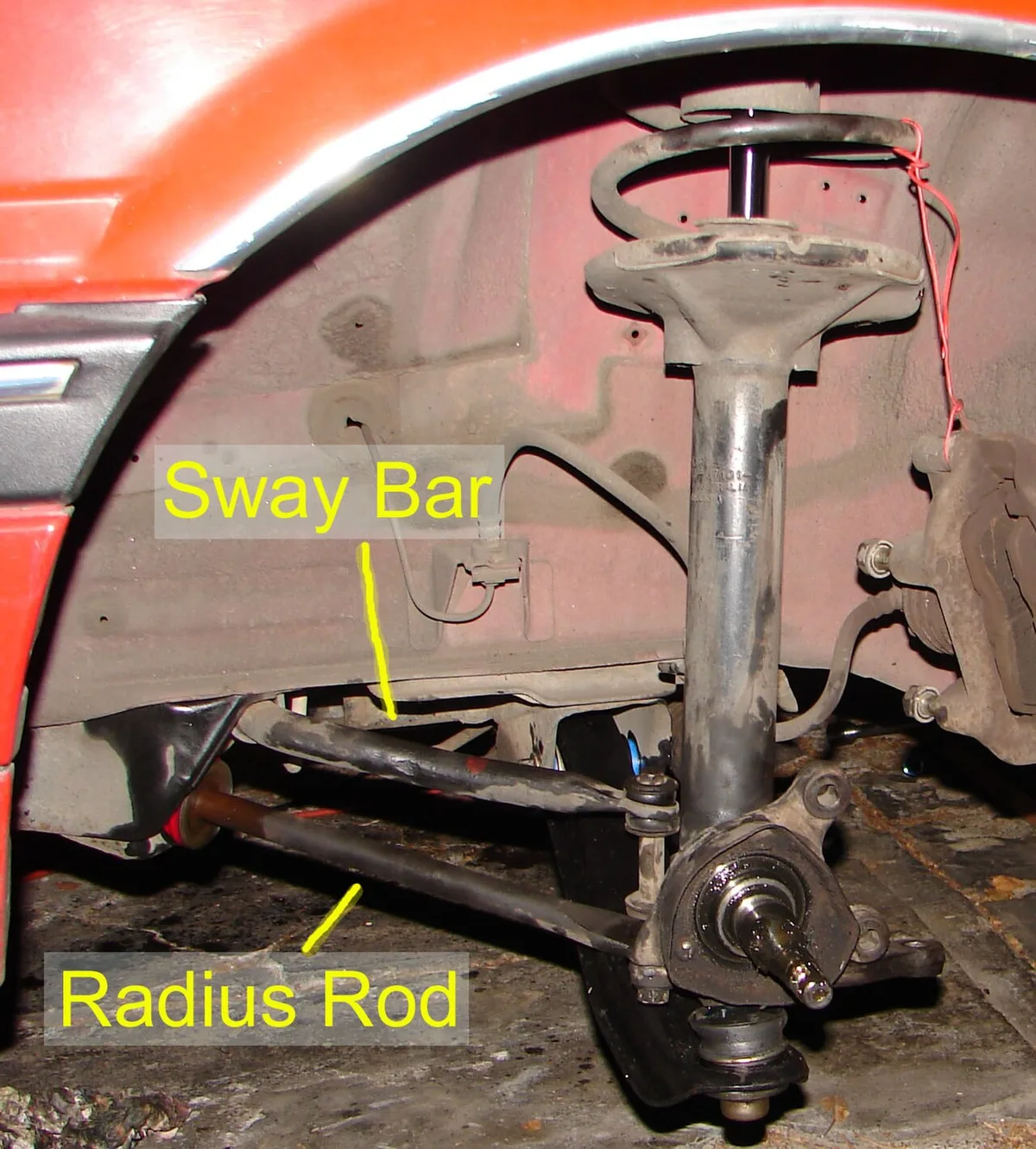
Image source: Wikimedia Commons / RB30DE
If the clunk hits in a straight line over small bumps, check the end link on the noisy side. If both sides knock, both links are often worn, so the sound seems to come from everywhere.
If the car only complains in a turn, and the hit is dull, look at the bushings and the bracket bolts. Loose bolts mimic a dead bushing. A shiny wear band on the bar means the rubber has let the rod shift.
If body roll grew and there is no knock, check for collapsed bushings or a snapped link. A free bar can hit a tire, a brake line, or the exhaust. Don't keep driving if it can touch those parts.
If the car pushes harder one way than the other, suspect a bent bar or one failed link. A code reader won't flag this. Even a basic plug-in reader only sees electronic faults.
Before you buy parts, rule out a ball joint, a strut mount, and a control-arm bushing. Also check open safety campaigns for your model. A published campaign can look like ordinary wear.
Step-by-Step Inspection and Repair Workflow
Keep the suspension loaded. A hanging wheel hides link wear.
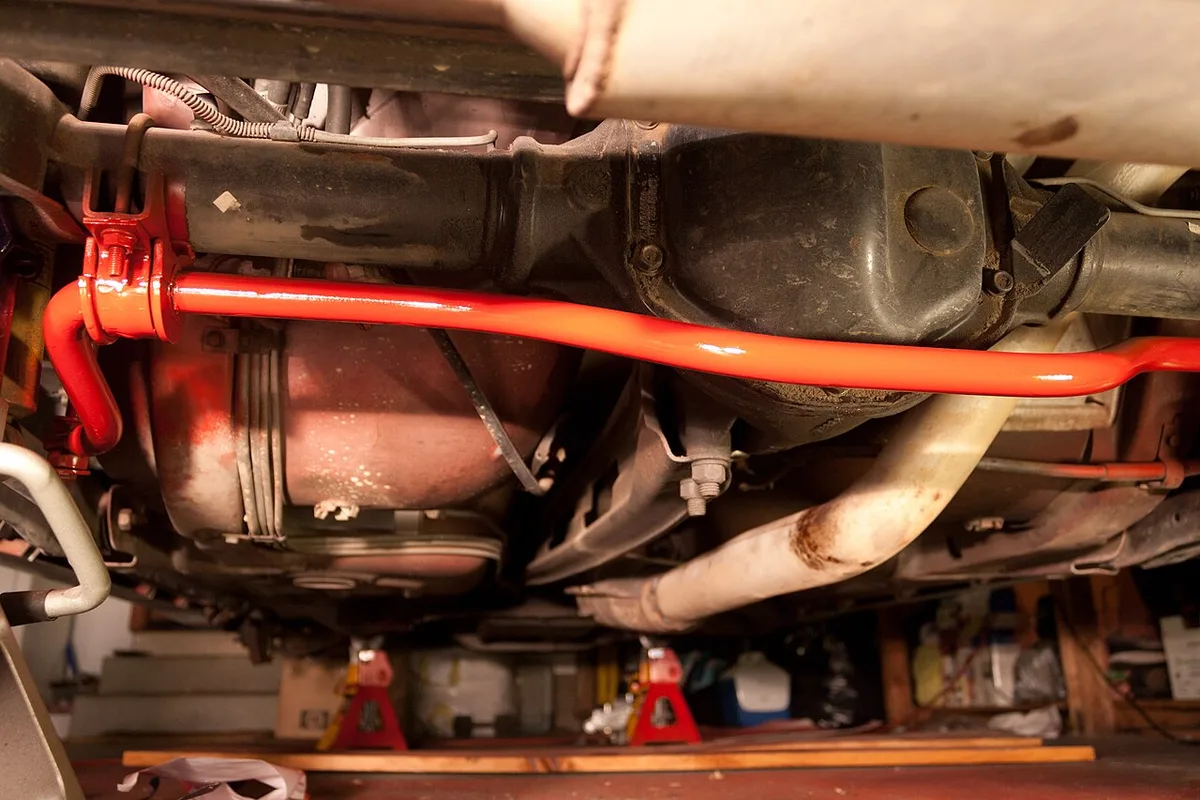
Image source: Wikimedia Commons / Nick Ares from Auburn, CA, United States (CC BY-SA)
- Repeat the speed bump, the driveway cut, and a slow figure-eight. Note the corner.
- Look for torn boots, cracked rubber, rust, and a shiny band on the bar.
- Tires on the ground, try to move the link. Any play in a ball-style link is a fail.
- Pry the link and watch the bar in the bracket. It should not shift in the clamp.
- Then support the car on jack stands. Never trust a floor jack alone.
Homemade drive-up boards can hold ride height for that wiggle test. Use stands once you unbolt a link.
Replace links in pairs. One fresh side and one worn side brings the knock back. On a lift kit or a drop, match link length so the bar sits neutral.
Torque the brackets at ride height, using the procedure for that vehicle. There's no universal number. Grease any zerk.
If the wheel must come off, a powered socket tool speeds the nuts. Don't hammer a rusty stud. It can snap.
Retest the same bumps.
Common Mistakes to Avoid When Checking Sway Bar Symptoms
Checking play with the wheels hanging is the big miss. The link can feel tight in the air and knock on the road.
Buying a whole bar when only the links are bad wastes money. The rod is usually straight. Swap the bar only if it is bent, cracked, or rusted thin.
Swapping one link and leaving the other is another trap. So is forgetting grease on polyurethane bushings. Dry poly squeaks and gets blamed on the new links.
Overtightening brackets while the suspension hangs twists the rubber. The bar then binds, and you get a thump that was not there before.
A loose bracket bolt, a heat shield, or exhaust contact can fake this noise. So can a tired tie-rod end. That part sits closer to original-equipment joints than to a drop link.
Don't drive a flopping bar into a tire or a brake hose. If the link is broken and touching anything, park it.
Frequently Asked Questions
What does a bad sway bar sound like?
A bad link makes a sharp clunk over small bumps and driveway lips. Worn bushings thump as the car rolls into a turn. A dry bushing squeaks at low speed.
The bar itself stays quiet until a link or clamp is loose.
Can you drive with a bad sway bar link?
A slightly loose link is annoying, not an instant failure. A broken link is different. The bar can swing into a tire, a brake line, or the exhaust.
Extra roll also shows up in a fast lane change. Park it if the bar moves freely.
Is the sway bar or the end link bad?
The end link or the bushing fails first, not the bar. Clunks on one side point to that link. Extra roll and a dull thump point to the bushings.
Replace the bar only if it is bent, cracked, or badly rusted.
Will a bad sway bar affect alignment?
Links and bushings alone rarely change alignment angles. Get an alignment if you also replaced arms, struts, or a bent bar. A loose link can feel darty without moving the toe reading.
Fix the noise, then measure if the car still pulls.
