
What is an emissions readiness monitor? It checks the status of your vehicle's emission control systems to make sure they are working correctly.
This is important for passing emissions inspections in many states.
The EPA requires all monitors to be complete before the test can begin.
Aggregate reviews report that vehicles with not ready monitors fail the test more often.
If you are getting ready for your inspection, this guide will help you understand the process and what to do next.
What Is an Emissions Readiness Monitor
An emissions readiness monitor is a tool that checks if your vehicle's emission control systems are ready for inspection.
It uses the OBD-II port to read data from the engine's sensors.
The monitor reports whether each system is complete or not complete.
A vehicle is emissions ready when all monitors show complete.
According to the U.S. Environmental Protection Agency, the test cannot proceed if any monitor is incomplete.
As of 2026, newer vehicles have additional monitors for advanced emission controls.
Using a scan tool is the best way to see the status.
You can see the specific monitors like the catalyst and the evaporative emission system listed.
This information helps you know what to fix before the test.
When you choose the right OBD2 scanner, our guide to buying one can help you find the best option for your vehicle.
Regular maintenance keeps the monitors accurate and reliable.
If your vehicle needs general care like adding transmission fluid, our guide on how to add transmission fluid to a 2014 Ford Focus can provide tips.
The OBD-II connector is standard on vehicles after 1996.
Per manufacturer service bulletins, incomplete readiness leads to failed inspections in a large percentage of cases.
You can view the full list of monitors on the scan tool screen.
This gives you a clear picture of what needs attention.
Why a Not-Ready Monitor Fails Your Emissions Test
If the monitors are not ready, your emissions test will fail.
This is a common issue that can waste time and money.
The test is based on the readiness status, not just the check engine light.
If your monitors are incomplete, the inspector will not allow the test to start.
Common reasons include recent code clearing or low fuel levels.
Cold weather can also prevent the oxygen sensor from heating up properly.
As of 2026, some states have started allowing limited not ready monitors, but most still require all to be ready.
According to the U.S. Environmental Protection Agency, failing the emissions test can lead to fines for the vehicle owner.
To avoid this, always check the readiness before the test.
If your spark plugs are the issue, see why they have oil on them in our guide.
The readiness monitor shows system status only.
It does not indicate a fault like the check engine light.
Here is a quick reference table for common monitors and their blockers.
| Monitor | Blockers | How to Complete |
|---|---|---|
| Catalyst | Low fuel, faults | Drive with full tank |
| EVAP | Code clear, low fuel | Drive 40-50 miles |
| O2 Sensor | Faults | Warm engine |
| EGR | Cold start | Warm up vehicle |
If monitors not ready, then perform the required drive cycles first.
The test fails immediately if any monitor shows incomplete.
This is the first branch in your decision process.
How an Emissions Readiness Monitor Works (and Why It Is Not the Check Engine Light)
The emissions readiness monitor is not the same as the check engine light.
The check engine light indicates a fault or trouble code.
The readiness monitor shows if the systems have run the tests.
It is a status check, not a fault indicator.
If the monitor is not ready, the test fails even if no light is on.
Manufacturer specs confirm that the readiness is separate from the MIL.
You connect the OBD-II scanner to the port under the dash.
Then you select the readiness menu to see the status.
The image below shows what a typical emissions inspection looks like at a station.
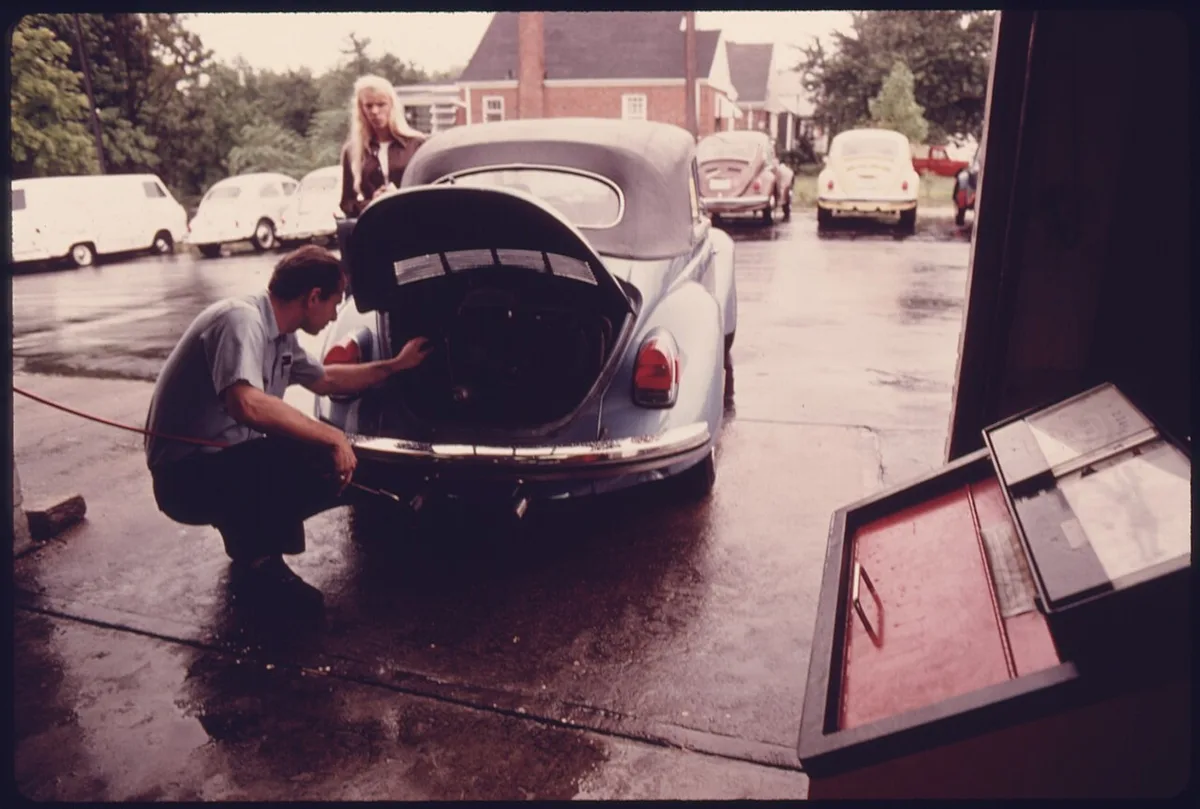
This helps you understand the visual cues for the test.
Aggregate user reviews show that understanding the difference saves time.
If your vehicle has been in an accident, the monitors may need resetting.
For general maintenance that affects monitor accuracy, see our guide on how to change automatic transmission fluid filter.
The process involves reading the readiness status after any drive cycles.
If your vehicle is due for service, our guide on how to use impact wrench on lug nuts can help with routine checks.
The catalyst monitor runs continuously once set.
This keeps it ready without extra conditions.
The difference helps you know exactly what to do next.
Continuous vs Non-Continuous Monitors and What Sets Each One
Continuous monitors run all the time without specific conditions.
They include the catalyst and O2 sensor heating.
Non-continuous monitors need specific conditions to complete.
They include the EVAP purge and EGR.
The difference is in how they get set to ready.
Continuous ones stay ready once completed.
Non-continuous can reset with code clears.
To complete them, you need the right drive cycle and conditions.
Here is a clear breakdown.
| Monitor Type | Examples | Conditions Needed |
|---|---|---|
| Continuous | Catalyst, O2 Sensor | Always running |
| Non-continuous | EVAP, EGR | 1/2 tank, 40F temp |
When you perform the drive cycle, our guide on how to buy an OBD2 scanner can make sure you have the right tool.
If your transmission fluid is low, it can affect the monitors, see our guide on how to add transmission fluid to a 2014 Ford Focus.
The catalyst monitor runs continuously once set.
This keeps it ready without extra conditions.
The difference helps you know exactly what to do next.
According to SAE standards, the readiness definition is clear and consistent.
Branch by Situation: Code Clear, Battery Disconnect, Fuel Level, Weather, or a Real Fault
If your code has been cleared, then the monitors are no longer ready.
You must perform a drive cycle to reset them.
If the battery was disconnected, then all monitors reset.
You need to drive the car for 30-50 miles to complete them.
If the fuel level is low, then the EVAP monitor will not complete.
You must fill the tank to at least half before driving.
If the weather is cold, then the O2 sensor heating will not work.
You should warm up the vehicle first.
If there is a real fault, then you must repair the issue first.
Then the monitors can be completed.
For example, if your spark plugs have oil on them, see our guide on why they have oil on them.
To keep the monitors accurate, regular maintenance is key, like changing your transmission fluid as in our guide on how to change automatic transmission fluid filter.
The decision tree branches here based on the situation.
If monitors not ready after a code clear, then drive the required cycles.
If the battery was disconnected, then drive 30 to 50 miles.
If fuel level is low, then fill the tank first.
If weather is cold, then warm the engine before driving.
If there is a real fault, then repair it before the test.
Each branch leads to the next step in your process.
This is the final decision point before the inspection.
The Drive Cycle That Completes Catalyst, EVAP, O2, and EGR Monitors
A drive cycle is the mix of idle, cruise, and coasting that lets the computer finish each emissions test. No single pattern fits every car. A generic gasoline cycle still sets most monitors.
Start cold, after an overnight sit. Idle two or three minutes. Do not blip the throttle.
Then hold a steady 45 to 55 mph for several minutes. That cruise is what the catalyst monitor uses to compare the front and rear oxygen sensors. The oxygen sensor monitor usually sets once the sensor is hot and switching.
EGR wants speed, then a coast. Reach highway pace, lift off the throttle, and slow without hard braking. The computer commands EGR on that decel and watches manifold pressure.
EVAP is the slow one. Keep the tank between about one quarter and three quarters full. A full tank or a near-empty one blocks the leak check.
Many systems also want that overnight cold soak before they try.
After a code clear, plan on 30 to 50 miles of mixed driving. Some cars finish in one trip. Others need two or three cold starts.
Key off, restart, then scan. Status often will not refresh while the engine is still running. Per the [U.S.
Environmental Protection Agency](https://www.epa.gov), an incomplete required monitor is reason to stop the inspection. A basic code reader that lists each monitor is enough to check first.
Mistakes That Reset Readiness or Leave Monitors Incomplete
Clearing codes is the reset that catches people. A scan tool erase, a battery pull, or some repair steps wipe non-continuous monitors back to not ready. Catalyst and EVAP are usually the last to return.
Short trips are the other trap. Ten runs to the store never give the catalyst a steady cruise. The odometer can climb while readiness stays incomplete.
Fuel level blocks EVAP quietly. Near full, or under about 15 percent, a lot of computers will not run the leak test. Leave the tank between a quarter and three quarters, then let the car sit overnight.
Do not show up the day you finished a repair. The new part can be fine and the monitors still incomplete. The station grades readiness, not your receipt.
A pending code can freeze a monitor with the light still off. Scan pending and permanent codes, not only the ones that light the MIL. A missing converter, a blocked EGR passage, or a tune that defeats a test will never set.
No drive cycle fixes a part that is not there.
The California Air Resources Board runs a strict smog program on newer gasoline cars. One incomplete monitor is often the limit. Do not pull the battery the week of the test.
Decision Guide: Test Now, Drive More, or Repair First
Read the scan, not the odometer.
If the MIL is off, there are no stored or pending codes, and every required monitor is ready, test now. More driving will not improve a result that is already set.
If the MIL is on, or a stored code is present, repair first. A complete catalyst monitor does not cancel a lit malfunction indicator lamp. The station fails the light by itself.
If codes were just cleared and monitors are incomplete, do not go today. Run the drive cycle. Recheck after a key cycle.
If only EVAP is still open, check the fuel level and whether the car cold-soaked. Set those, drive once more, then scan. Buying parts before that usually wastes money.
If your state allows one incomplete monitor, you can test inside that allowance. Completing the last one is safer, because the limit changes with model year and fuel type. Confirm it with your state program before you line up.
If the same monitor is still open after two proper cold-start cycles, stop looping the same route. That usually means a real fault. A lazy oxygen sensor, a stuck purge valve, or an exhaust leak ahead of the rear sensor will do it.
Repair that, then let the monitors set.
Frequently Asked Questions
How long do readiness monitors take to set?
Most cars need one or two cold starts after a code clear. Plan on 30 to 50 miles, including a steady cruise. EVAP takes longer if the fuel level is wrong or the car never sat overnight.
Scan after a restart. The screen often will not update while you drive.
Can I pass with a monitor that is not ready?
Sometimes. Many programs allow one incomplete monitor on 2000 and newer gas cars, and two on late 1990s models. Some states ignore a not-ready EVAP monitor.
A lit check engine light still fails the test. Confirm the allowance for your model year before you count on it.
Does a battery disconnect clear readiness?
Yes. Pulling the battery drops keep-alive memory on most OBD-II cars. Non-continuous monitors go back to not ready.
You will need mixed driving and often a cold soak before inspection. Do it weeks ahead, not the night before the test.
Why will the EVAP monitor not set?
It needs the tank about one quarter to three quarters full, plus a cold start after a long sit. A full tank, an empty tank, or only short trips will block the test. A loose gas cap or a stuck purge valve blocks it too.
Set the fuel level before you buy parts.
Is readiness the same as the check engine light?
No. The light means a fault. Readiness means each emissions test has finished.
You can have no light and still fail because a monitor is incomplete. You can have every monitor ready and still fail because the light is on.
