
You press the button, the throttle sharpens, the exhaust note deepens, and the car suddenly feels like it woke up. That's the short answer to what is sport mode in a car: a factory setting that remaps how the engine, gearbox, steering, and sometimes the suspension respond to your right foot. Peak power usually doesn't change at all.
What changes is how fast and how hard the car delivers it.
Manufacturer specifications confirm the pattern. On most modern cars the pedal map gets rewritten so the first third of pedal travel commands far more throttle than it does in Normal. Stability control behaviour is governed by regulation, and in the US that means the electronic stability control mandate in FMVSS 126, which stays active no matter which mode you pick.
Here's what each system actually does, and when to use it.
What Is Sport Mode in a Car
Sport mode is a factory setting that sharpens how your car responds. It remaps the throttle so the engine reacts sooner. It holds gears longer and downshifts earlier.
Many cars also firm up steering, dampers, and exhaust sound. It does not add peak horsepower or extra grip.
What Sport Mode Actually Does the Moment You Press It
You thumb the button on the console and three things happen almost at once. The pedal gets shorter, the gearbox drops a gear or two, and the car starts answering you faster. That immediacy is the entire point.
Start with the pedal. In Normal, engineers build in a long, gentle throttle curve. The first inch of travel barely opens the butterfly, which keeps the car smooth in traffic and easy to park without lurching.
Sport redraws that curve. Twenty percent of pedal travel might command 15 percent throttle opening in Normal and 45 percent in Sport, at the same engine speed and the same gear.
The engine itself hasn't changed. Your foot is simply asking for more, sooner. That's why the car feels quicker without actually being quicker on a stopwatch unless you're using launch control.
The Gearbox Moves First
Transmission calibration is where most of the visible change happens. The control unit raises upshift points under moderate throttle, so instead of grabbing fifth at 2,200 rpm it waits until 4,000 or higher. It also drops out of tall gears earlier and refuses to lug the engine.
On a trailing throttle, Sport keeps a lower gear engaged rather than upshifting for quiet cruising. That's what gives you engine braking on a descent and instant response when you get back on the power. Some cars add automatic rev matching on downshifts, blipping the throttle so the shift lands smoothly.
The Steering Weights Up
Electric power steering runs a motor on the column or the rack, and the software can dial assist up or down. Sport usually reduces assistance, which raises effort and adds weight at the rim. Some systems also tighten the ratio or recalibrate the on-centre feel.
The result is a wheel that feels heavier the moment you turn in. Small inputs go further, so how you hold the wheel starts to matter more than it does in Comfort. It's a real change in feel, though not always a change in road feedback.
Sound, Dampers, and Body Control
If your car has active exhaust valves, Sport opens them earlier and wider. Above a certain rpm or throttle load, a flap bypasses the muffler and the note hardens. Cabin speakers may add engine sound on top of that, which is worth knowing before you assume the engine got louder.
Adaptive dampers are a different story. Only cars with electronically controlled shocks can firm up the ride in Sport, and those cars typically also sharpen the anti-roll bars, the rear-wheel steering, and the throttle-off behaviour. On a car with fixed dampers, the ride quality doesn't change one bit.
| System | What Sport mode changes | What you feel |
|---|---|---|
| Throttle | Steeper pedal map, earlier tip-in | Snappier response, less pedal travel |
| Transmission | Higher upshift points, faster shifts, gear holding | Revs stay up, downshifts arrive sooner |
| Steering | Less assist, sometimes a tighter ratio | Heavier, more direct wheel |
| Dampers (adaptive only) | Firmer compression and rebound | Flatter cornering, harsher bumps |
| Exhaust | Valves open earlier and wider | Louder, harder note |
| Stability control | Later, softer intervention | Less interruption, less margin |
What Doesn't Change
Peak power and torque stay where they were. So do the speed limits, the tyre grip, and the braking distance. Sport mode reallocates how the car uses what it already has.
It doesn't give it anything new.
Mode memory is worth checking on your own car. Many vehicles revert to Normal at every restart, so the button has to be pressed again each time you drive. Some remember your last setting.
A few let you build an Individual profile that mixes a sporty engine map with a comfort ride, which is often the best of both.
What Changes Under the Hood: Throttle Map, Shift Logic, and Chassis
Underneath the button sits a network of control units that all get a new set of instructions. The engine control unit handles airflow and torque requests. The transmission control unit handles shift scheduling and clutch pressure.
The chassis controllers handle damping, steering effort, and stability thresholds.
None of them are working alone. They share a torque budget over the vehicle network, and the mode simply changes the priorities inside that budget.
Image source: Wikimedia Commons / Brian Snelson from Hockley, Essex, England (CC BY)
The Throttle Map and Torque Request
A pedal map is a lookup table. Pedal position goes in, requested torque comes out. In Normal the table is shaped for smoothness, so tiny pedal movements produce tiny torque changes.
In Sport the table is shaped for response, so the same movement produces a much bigger ask.
The curve above shows that shape difference clearly. The Sport line climbs steeply at the left edge, then flattens near the top. That's why the car feels urgent off the line and why the last inch of pedal travel does comparatively little.
There's a practical consequence here. A steeper map gives you finer control near the top of the pedal and coarser control near the bottom, exactly where you spend most of your time in traffic. In a wet car park, that coarseness is the difference between pulling away and spinning a wheel.
Shift Logic, Line Pressure, and Lockup
Automatic gearboxes run a shift schedule that maps throttle against vehicle speed. Sport moves those lines. Upshifts happen later, downshifts happen earlier, and the box becomes much more willing to kick down when you squeeze the pedal.
Shift quality changes too. Higher line pressure in the hydraulic circuit shortens the overlap between clutches, so shifts land faster and firmer. A dual-clutch box will drop from a soft, slurred change to something closer to a race shift.
Torque converter lockup may also be held off longer to keep the engine in its powerband.
Durability questions usually land here, and the answer is reassuring. Sport mode works inside the same torque limits the gearbox was designed for, which is why manufacturers can offer it with a warranty. What does wear a gearbox is neglect, so a unit due for fresh fluid and a filter is a bigger risk than a button.
Our guide to the filter change procedure covers the basics.
Dampers, Anti-Roll Bars, and Steering
Adaptive dampers use magnetorheological fluid or solenoid valves to change force within milliseconds. Sport typically raises low-speed damping more than high-speed damping, which controls body roll without turning the car into a skateboard on broken pavement. Expect a 20 to 30 percent increase in force at typical shaft speeds on many systems.
Active anti-roll bars can increase torsional stiffness at each axle. Rear-wheel steering can change its phase angle, turning the rear wheels slightly with the front at low speed and against them at high speed. Active engine mounts can stiffen to keep the drivetrain from rocking under hard shifts.
And the honest part. A tired chassis masks everything. Worn dampers and tired joints underneath will blunt the difference between modes to the point where you can't feel it.
Image source: Wikimedia Commons / Marty B from United States of America (CC BY-SA)
Stability Control and the Safety Line
Sport mode usually relaxes the electronic stability control and traction control thresholds. Intervention comes later and more abruptly, which lets an experienced driver hold a small slide without the car cutting power mid-corner. Some Sport+ and Track settings go further and allow a genuine slip angle.
What the button won't do is switch stability control off entirely, and that's deliberate. US federal rules under the FMVSS 126 standard require stability control to be fitted and functioning, and manufacturers keep a default-on behaviour even in sporty modes. Fully disabling it is normally a separate long-press sequence, and it resets at every restart.
| Parameter | Normal | Sport |
|---|---|---|
| Throttle opening at 25% pedal | Roughly 15 to 20% | Roughly 40 to 50% |
| Upshift point, moderate throttle | About 2,200 rpm | About 4,000 to 5,000 rpm |
| Shift time, torque-converter auto | 400 to 600 ms | 150 to 300 ms |
| Damper force at low shaft speed | Baseline | 20 to 30% higher |
| Steering assist | Full | Reduced by 10 to 20% |
| Stability control intervention | Early and gentle | Later and sharper |
Figures are typical ranges across mainstream systems. Your car will differ, sometimes a lot. A base trim with a throttle-only remap sits at the mild end of every row.
Why Your Sport Button Might Feel Like Nothing Happened
Plenty of drivers press the button, shrug, and never touch it again. Sometimes the car genuinely isn't doing much. Sometimes the change is real but hidden behind something else.
Your Trim Only Remaps the Throttle
This is the most common reason. On a lower trim or an older platform, the Sport button is a pedal map change and nothing more. The gearbox shifts at the same points, the dampers are fixed, and the steering is untouched.
You can't feel much because there isn't much to feel. Ten minutes of research on your own model's spec sheet will tell you which systems the button actually touches.
The Car Is Learning Around You
Adaptive transmissions build a driving profile over hundreds of miles. If you've spent months creeping through city traffic, the box has adapted to gentle inputs. Pressing Sport changes the schedule but not the learned behaviour underneath it.
Give it a few drives with varied throttle and varied speeds. The shift quality usually sharpens once the adaptation catches up.
Turbo Lag Is Masking It
A sharper pedal map can't beat a turbo that needs time to spool. On a small turbocharged engine, Sport mostly changes how quickly the request arrives, not how quickly the boost does. The gap between the two feels like nothing.
This is also where owners start chasing a bigger turbo or a remap, and the honest answer is that hardware is the only way to add real output. If you're weighing that path, our breakdown of what a forced-induction kit really costs is a sobering read.
You're Already in Individual Mode
Some cars let you configure Individual with everything set to Comfort, then leave it selected. Pressing the Sport button may cycle you into that profile rather than the factory Sport one. Check the cluster and check the sliders.
It's the S Gate, Not the Button
On a lot of cars, pulling the shifter back into S does something different from pressing the dashboard button. The gate holds gears longer and lets you use the paddles. The button changes engine and chassis response.
Confusing the two is easy, and it's why some drivers think the button is broken.
| Symptom | Likely cause | What to do |
|---|---|---|
| Steering feels identical | Fixed-ratio EPS, no variable assist | Nothing to fix, the car has no steering tuning |
| Ride doesn't change | Fixed dampers | Normal for the trim |
| Revs rise but car feels flat | Turbo lag, small engine | Expect it, or look at hardware |
| Button does nothing at all | Mode reverts at restart, or wrong profile selected | Confirm on the cluster each time |
| Throttle feels normal | Eco or Individual profile active | Cycle to the factory Sport setting |
The Conditions That Decide Whether Sport Helps or Hurts
Sport mode is neither good nor bad on its own. It's a tool, and the conditions decide whether it's the right one. Run through these if/then rules before you press anything.
- If you're merging onto a fast highway or overtaking on a two-lane road, use it. The held gear and quicker kickdown put power down when you need it, and you can drop back to Normal once you're settled.
- If you're on a mountain descent, use it. A held lower gear gives you engine braking, which keeps the brakes cool for the corner you actually need them in.
- If it's raining, snowing, or the road is gravel, leave it off. A steeper pedal map makes wheelspin easier to trigger and harder to catch.
- If you're in stop-and-go traffic, leave it off. Sharper tip-in makes the car lurch, the box hunts between gears, and fuel consumption climbs for no benefit.
- If you're cruising at a steady 70 mph, it barely matters. The gearbox is locked up, the throttle is steady, and the difference is mostly exhaust drone.
- If you're towing or carrying a heavy load, a dedicated Tow/Haul mode usually beats Sport. It holds gears under load without the aggressive downshift behaviour.
- If your tyres are cold or worn, sort that first. Mode selection can't recover grip that isn't there, and blades that clear the glass matter more than a sharper throttle in bad weather.
The variables that actually drive the decision are simple. Road type, surface grip, traffic density, ambient temperature, tyre condition, and how much fuel you're willing to burn. Everything else is marketing.
Fuel is the one people ask about most. At a steady cruise the penalty is small, often a mile or two per gallon, because the engine is working at the same point either way. In city driving the gap widens sharply, since the car spends more time in lower gears at higher revs.
The EPA fuel economy data for your specific model is the only number worth trusting here.
As of 2026, most new cars sold in the US with an automatic gearbox offer at least two modes, and a large share offer four or more. That's more choice than most drivers need, and it's why knowing the conditions matters more than knowing the label.
Sport Mode in Rain, Snow, and on Cold Tires
Wet tarmac is where Sport mode does the most damage. Not because it breaks anything, but because it removes the margin you didn't know you were using.
The mechanism is straightforward. A steeper pedal map means a small, accidental input produces a large torque request. On a dry road, the tyre absorbs that.
On a wet road, it breaks traction, the traction control light flickers, and the car stutters instead of pulling away cleanly.
Cold Tyres Are the Real Risk
Summer performance rubber loses grip well before freezing. Below roughly 45°F, or 7°C, the compound stiffens and the tread block stops conforming to the road surface. Grip drops noticeably, and it stays low for the first few miles of any drive.
Pair that with a sharp throttle and you have a car that steps sideways at the first roundabout of the morning. Warm the tyres gently for a few miles in Normal before you ask anything of them.
Winter and all-season tyres handle the cold better, but the physics don't change. Less grip plus a more aggressive map equals a smaller safety margin.
What to Do Instead
If the weather turns, switch back to Normal. If your car has a Snow, Wet, or Slippery mode, use that instead. Those settings soften the pedal map, start the car in a higher gear, and lower the traction control threshold, which is exactly the opposite of what Sport does.
Keep stability control fully on in bad weather. Some drivers disable it after a track day and forget, and that's the mistake that turns a wet corner into a recovery truck call.
A couple of practical habits help more than any mode. Leave a longer gap to the car in front, brake earlier and more gently, and keep the steering inputs smooth. Getting the basics right matters far more than the button does.
Snow, Ice, and the Mode You Want
On snow, the goal is torque control, not response. Sport works against you on both counts. A gentle pedal map lets you feed in power gradually, which is how you find grip on a loose surface.
If you're warming the car before a cold-morning drive, a remote system that fires the engine while you're still indoors is a genuine help, and the difference between starting it from the kitchen and scraping ice at 6 a.m. is real. Just don't mistake a warm cabin for warm tyres.
| Condition | Sport mode verdict | Why |
|---|---|---|
| Dry, clear mountain road | Good | Held gears, engine braking, sharper response |
| Steady highway cruise | Neutral | Little benefit, more noise, slight fuel cost |
| Heavy rain | Avoid | Easier wheelspin, smaller margin |
| Snow or ice | Avoid | Torque control beats response |
| Stop-and-go traffic | Avoid | Jerky, thirsty, no upside |
| Cold tyres, any weather | Wait | Grip hasn't arrived yet |
| Track or autocross | Good | Where the calibration was designed to work |
Mountain Roads, Highway Merges, and Stop-and-Go: Where It Pays Off
A mode's value shows up in specific situations, not in general. The same button that transforms a canyon road does nothing for you in a drive-thru queue. Here's where the payoff is real, and where you're just paying for noise.
Mountain descents: engine braking is the real payoff
On a long descent, your gearbox is a second braking system. In Normal, the box upshifts the moment you lift, so the engine stops resisting and the brakes take the whole load.
That's how fade begins. Pad and disc temperatures climb corner after corner, and DOT 4 brake fluid has a wet boiling point of roughly 311°F (155°C). Once the fluid boils, the pedal goes long and the car keeps rolling.
Sport holds the lower gear and keeps engine braking in play. If the grade is steep enough to have a warning sign, drop into the manual gate and pick second or third yourself. Brake in short, firm applications rather than dragging the pedal for a mile.
If you're descending and your brakes start to smell hot, stop and let them cool. Do not park with the handbrake on hot rear discs, and do not pour water on them. Let air do the work.
Highway merges and two-lane overtakes
If you need to close a gap quickly, Sport earns its keep. It removes the kickdown delay, that half-second pause while the box decides which gear it wants. The right gear is already sitting under the engine.
A roll-on from 40 to 65 mph on a two-lane road is where you feel it most. The car pulls without the hesitation, and the gap closes predictably. On a short on-ramp with fast traffic alongside, that hesitation is the difference between a clean merge and a lift off the throttle.
Once you're settled at cruise, drop back to Normal. The benefit is spent within ten seconds.
Stop-and-go traffic: where Sport quietly costs you
If traffic is crawling, Sport works against you. A steep tip-in map turns every small pedal movement into a lurch. Your passengers notice it, and so does the driver behind you.
Torque-converter boxes hunt between first and second. Dual-clutch units get jerky as the clutch packs slip and grab at walking pace. Heat builds in those packs at low speed, and heat is what shortens their life.
Slip in a DCT is normal. Slip plus a sharp throttle plus no airflow is not a good combination.
Switch to Normal, Comfort, or Eco in traffic. Every car on the road does this better.
Towing and heavy loads
Sport is not a towing mode, even though it holds gears. A dedicated Tow/Haul setting changes shift points under load, locks the converter more aggressively, and raises line pressure for the extra torque.
If you're pulling a trailer up a grade, Tow/Haul does the job with less heat. If your car has no Tow/Haul and you need one climb out of a valley, Sport is a reasonable stand-in. Expect harsher downshifts and more noise.
Steady cruise: mostly noise
At 70 mph with the converter locked, the engine turns the same rpm in either mode. Fuel use is nearly identical. What changes is exhaust drone, a firmer ride on adaptive dampers, and heavier steering.
If your car reverts to Normal at every restart, this is the one situation where that behaviour is genuinely convenient. You get the quiet version by default and the loud version on demand.
The scenario scoreboard
| Situation | What Sport actually gives you | Verdict |
|---|---|---|
| Long mountain descent | Held gear, engine braking, cooler brakes | Use it |
| Short on-ramp, fast traffic | No kickdown delay, gear already selected | Use it |
| Two-lane overtake | Immediate torque, predictable gap closing | Use it |
| Track or autocross session | Full calibration, later ESC intervention | Use it |
| Stop-and-go city traffic | Jerky tip-in, gear hunting, clutch heat | Skip it |
| Towing up a grade | Held gears, but no Tow/Haul logic | Use Tow/Haul first |
| Steady highway cruise | Drone, firmer ride, no real gain | Neutral |
| Wet roundabout on cold tyres | Smaller grip margin, easier wheelspin | Skip it |
The pattern underneath the table is simple. Sport pays off when you're asking for torque or engine braking and the surface can take it. It costs you when you're asking for nothing and the surface is slick.
One more scenario worth naming: engine braking on a long descent is also kinder to your suspension hardware. Repeated hard stops load the front bushes and joints far more than steady engine braking does, and tired components blunt the whole chassis. If your steering has started to feel vague, the answer is usually wear in the front-end joints rather than a mode setting.
Sport vs. Sport+, Eco, and Individual: Reading Your Mode Menu
Most cars sold today with an automatic gearbox offer at least two modes, and a growing share offer four or more. The labels are inconsistent between brands, and the depth of what each one changes varies wildly. Here's how to read the menu without a manual.
What Sport actually is, in menu terms
Sport is the middle rung of a three or four step ladder. It sharpens response without fully abandoning civility. Throttle map steepens, shifts firm up, gears hold longer, and the steering usually weights up.
It's the setting designed for a fast road, not a racetrack. That distinction matters when you step up to the next level.
What Sport+ adds on top
Sport+ is where the calibration stops being polite. Typical additions include later and softer stability control, a more aggressive damper setting, an exhaust valve that stays open at idle, and a transmission that will hold a gear against the limiter without upshifting.
Some systems add launch control at this level, and a few unlock a genuine drift or track mode. The trade is real. You get more slip angle available and less electronic help catching you.
If you're on a public road in the wet, Sport+ is the wrong tool. It removes exactly the safety margin that a wet surface needs.
What Eco really does
Eco is not just a gentler throttle map, which is what most drivers assume. It typically also upshifts earlier, limits torque requests from the climate system, reduces alternator load, and softens the accelerator pedal's response to small inputs.
On some cars it changes the automatic gearbox's willingness to kick down at all. That's why overtaking in Eco can feel like the car is thinking about it. It is.
Eco is best for steady-state highway miles and long gentle runs. It's poor for merging, towing, or anything that needs a burst of torque.
Why Individual is usually the best setting
Individual, sometimes called Custom or Personal, lets you mix and match. You can run the sporty engine and gearbox map with the comfort damper setting and a quiet exhaust.
That combination handles broken British B-roads and crumbling US city asphalt far better than full Sport does. You get the response without the crashy ride. If your car offers it, it's worth ten minutes of setup.
One caveat. Some cars will let you build an Individual profile with everything set to Comfort and then leave it selected. Pressing the Sport button then cycles you into that profile, not the factory Sport one.
That's the number one cause of "my sport button does nothing" complaints.
What the brands call it
| Brand | Sport rung | Top rung | Configurable |
|---|---|---|---|
| BMW | Sport | Sport+ | Sport Individual |
| Audi | Dynamic | Dynamic | Individual |
| Mercedes-Benz | Sport | Sport+ | Individual |
| Porsche | Sport | Sport Plus | Individual |
| Toyota GR | Sport S | Sport S+ | Custom |
| Hyundai N | Sport | N Mode | N Custom |
| Ford Performance | Sport | Track | MyMode |
The naming varies, the hierarchy doesn't. Each step up sharpens response and loosens electronic supervision.
How to confirm what's actually selected
Watch the cluster, not the button. Most cars flash a mode icon, change the gear indicator, or swap the gauge layout. Some display a small "S" next to the gear number, which is a different thing entirely from a Sport button, and that trips people up constantly.
If the icon doesn't change when you press, the button is either dead, assigned to something else, or your car reverts instantly. Check the manual for that specific model year before you assume a fault.
Who each mode is best for
- Eco suits commuters on flat, free-flowing routes and anyone chasing a fuel number.
- Normal suits most drivers most of the time, and it's the right default in rain.
- Sport suits enthusiastic drivers on dry, open roads who want response without drama.
- Sport+ suits track days, autocross, and experienced drivers who want the electronics out of the way.
- Individual suits anyone with a specific preference, which in practice is most people who try it.
The "S" Gate on Your Shifter Isn't the Sport Button
Two different controls, two different jobs, and one shared letter. Confusing them is the single most common reason drivers think their car's sport feature is broken.
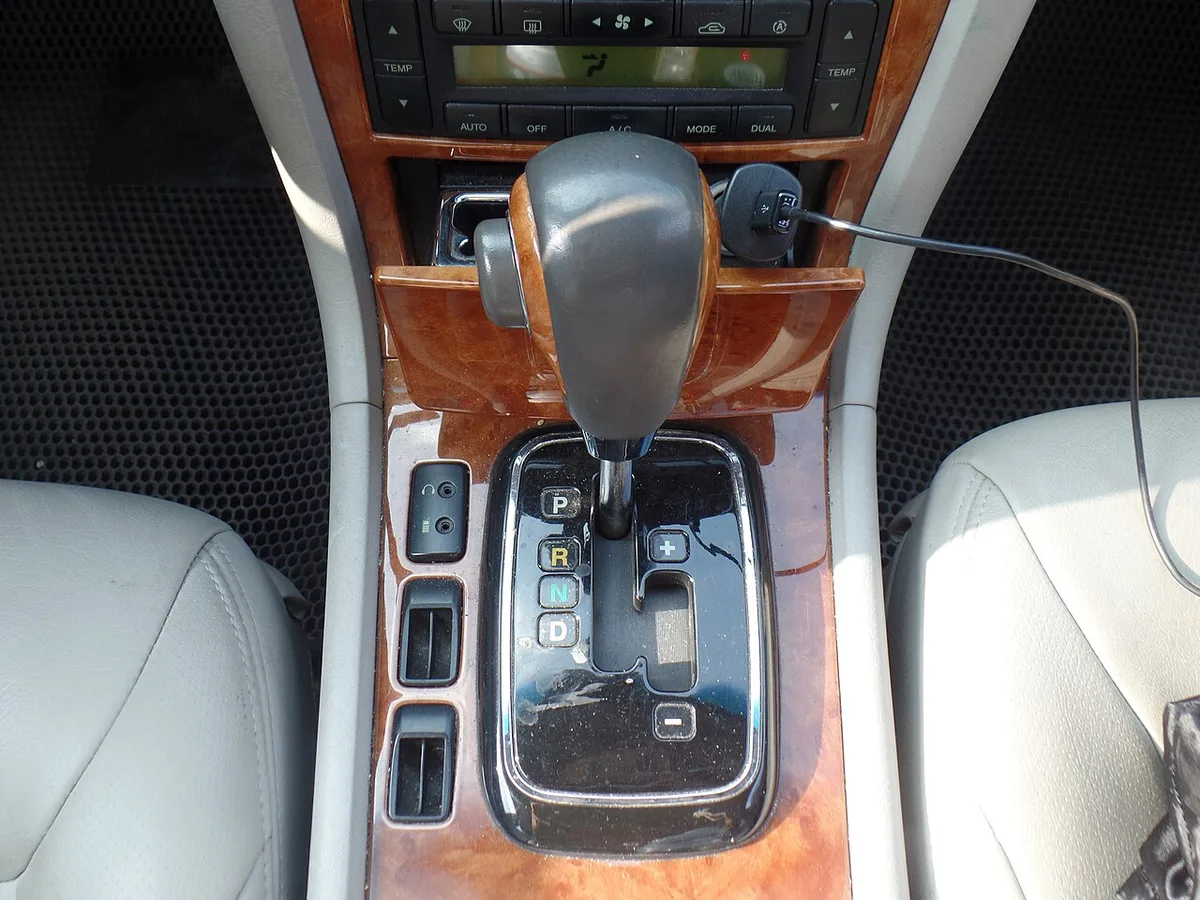
Image source: Wikimedia Commons / Jhcbs1019 (CC BY-SA)
What the S gate does
Pulling the lever back into S is a transmission instruction. It raises shift points, holds gears longer, and on most cars unlocks the manual selection path so the paddles or the +/- slot become active.
On many vehicles it does nothing to the engine map, the steering, the dampers, or the exhaust. On others it does everything, because the manufacturer wired the gate and the button to the same software switch. It depends entirely on the car.
The photo above shows the classic layout, with D forward and a separate gate to the side or below for sequential selection. The lever position is mechanical and immediate. The button is software and often delayed by a fraction of a second.
What the button does
The dashboard or console button is a software request across multiple control units. On a well-equipped car it will also move the gearbox into its sport schedule, which is why pressing it sometimes appears to move the lever's logic without moving the lever.
On a base trim, the button might only rewrite the pedal map. That's the low-cost version, and it's why two cars with the same badge can feel completely different.
| Control | Typically changes | What you feel |
|---|---|---|
| Shifter S gate | Shift schedule, manual mode access | Revs stay up, paddles go live |
| Dashboard Sport button | Throttle map, shifts, steering, dampers, exhaust | Sharper everything |
| Paddles in S | Individual gear choice | Full control, until the limiter |
| Kickdown switch under pedal | Forced downshift | Sudden, sometimes abrupt drop |
When the gate beats the button
If you're descending a pass, the gate wins. You can pick second and hold it, and the car will give you engine braking without any software deciding otherwise.
If you're setting up for a corner, the gate wins again. Select the gear before the corner, brake, turn, then get back on the power without waiting for a downshift.
If you want a sharper throttle and a firmer ride on a dry road, the button wins. It's the only one that touches chassis systems.
The refusal behaviours nobody warns you about
Both controls have limits built in. The box will refuse an upshift request at the rev limiter to protect the engine. It will refuse a downshift that would over-rev the engine, which is a genuine safety net.
It will also upshift for you if you sit on the limiter too long, and it will drop back into automatic if you stop using the paddles. Most cars revert to full auto after 30 seconds or so of steady throttle.
Kickdown is the other surprise. Push the pedal past its detent and the box will drop two gears whether you asked or not. If you're mid-corner in the wet, that's an unwelcome gift.
Fuel, Wear, and What Sport Mode Actually Costs You
Sport mode doesn't damage your car, but it does spend money. Fuel, tyres, brakes, and fluids all wear a little faster when you drive harder. The size of that bill depends almost entirely on where and how you use it.
The fuel penalty, honestly sized
On a steady cruise, the difference is small. The engine is at the same load point either way, and the converter is locked. Our read of manufacturer and owner-reported economy figures puts the gap at roughly 1 to 3 percent in that condition.
In city driving it's a different story. Higher revs, lower gears, and more frequent downshifts widen the gap considerably. Aggregate owner reports commonly show 5 to 15 percent worse economy in stop-and-go use, depending on the car and the driver.
The bigger cost isn't the mode. It's the driving style that usually comes with it. Pressing Sport tends to make people press the pedal harder, and that's where the fuel actually goes.
Tyres and brakes
Hard corner exits cost rubber. The rear tyres take the brunt, particularly on front-wheel-drive cars with an open differential. Expect measurably faster shoulder wear if you use Sport enthusiastically on a regular basis.
Brakes cut both ways. Engine braking on descents saves pad life enormously. Launch control and repeated hard stops burn through it.
A set of performance pads can go from 30,000 miles of life to under 10,000 with regular track use.
Fluid temperatures and service intervals
Sport raises operating temperatures. Engine oil, transmission fluid, and brake fluid all run hotter when the car is working. That's normal and engineered for, but it does shorten the useful life of the fluid.
If you use Sport hard regularly, shorten your service intervals rather than extending them. Gearbox fluid is the one people forget, and it's the expensive one to get wrong.
| Cost item | Typical impact of regular Sport use | How to manage it |
|---|---|---|
| Fuel | 1 to 3% worse at cruise, 5 to 15% worse in town | Use it where it pays off |
| Front tyres | Faster shoulder wear on FWD cars | Rotate on schedule, check pressures monthly |
| Rear tyres | Faster wear with hard exits | Align annually, watch inner edges |
| Brake pads | Longer life with engine braking, shorter with track use | Inspect after every track day |
| Transmission fluid | Runs hotter, degrades sooner | Shorter intervals if used hard |
| Engine oil | Higher sustained temps | Follow severe-service schedule |
What the mode itself costs
Nothing. The button is free, the calibration came with the car, and there are no consumables attached to switching modes. The expense is entirely behavioural.
That's worth saying plainly, because a lot of drivers avoid Sport on the assumption that it's mechanically abusive. It isn't. It's the same hardware doing more work.
Is Sport Mode Bad for Your Engine or Transmission?
No, sport mode isn't bad for your engine or gearbox on its own. Every manufacturer calibrates it inside the same torque and rev limits the hardware was designed for, which is why it's covered by the warranty. Wear comes from how you drive, not which label is lit on the dash.
Why the limits don't move
Modern engine control units enforce a torque ceiling and a rev limiter. Hitting the limiter cuts fuel and spark, so you can't over-rev on acceleration no matter which mode you're in.
Transmission controllers enforce a torque ceiling too. Sport changes when the box shifts, not how much torque it's rated to handle. A gearbox rated for 400 Nm doesn't see 420 Nm because you pressed a button.
The one real risk: downshift over-rev
The genuine mechanical danger is a manual downshift into a gear that would spin the engine past its limit. In a manual car, the engine can be mechanically forced past the limiter by the road speed through the wheels. That's a money shift, and it bends valves.
Most modern automatics and dual-clutch boxes block that downshift outright. Manuals don't, because the driver is in charge. If you're using the gate on a fast road, learn the speeds for each gear before you need them.
Cold oil is the bigger threat
The real enemy isn't the mode, it's high revs on cold oil. Engine oil takes several minutes to reach operating temperature, and it's thickest when it's coldest. The same applies to transmission fluid.
Oil temperature is the number to watch. Around 90 to 100°C (194 to 212°F) is normal working temperature. Sustained readings above roughly 130°C (266°F) are where oil life starts falling quickly.
If your car has an oil temperature gauge, use it. If it doesn't, a scan tool can show it live, and knowing what to look for is half the battle. Our guide on choosing a diagnostic reader covers what data matters.
Dual-clutch boxes and city traffic
DCTs are the one component where Sport use has a genuine downside, and it's not high speed. It's low speed. Crawling in traffic with the box in Sport means more clutch slip and less airflow across the housing.
That combination builds heat. Repeated heat cycles are what wear clutch packs out early. If your commute is a traffic jam, run Normal there and save Sport for open road.
The Italian tune-up myth
There's a persistent idea that revving an engine hard clears carbon deposits. On a modern direct-injection engine, it doesn't. Intake valve carbon comes from crankcase vapour and EGR, and no amount of redline shifts will scrub it off.
What hard driving does do is get the oil and exhaust hot enough to burn off moisture and light deposits. That's worth something. It's not a cure for a carbon problem.
Warranty, telematics, and the paper trail
Sport mode itself can't void a warranty. What can affect a claim is evidence of misuse, and modern cars log a lot. Many record over-rev events, launch counts, top speed, and time spent near the limiter.
If a claim gets questioned, the data gets read. Track use is often excluded by policy language, so check your own documents rather than assuming. Under US law, the Magnuson-Moss Warranty Act puts the burden on the manufacturer to show that a modification or use actually caused the failure.
EVs, Hybrids, and CVTs: How Sport Mode Changes There
An electric car has no gears to hold, so sport mode has to earn its keep somewhere else. What changes is the torque ramp, the front-to-rear split, the regen strength, and how hard the cooling system works.
In an EV, the throttle map is only the beginning
Most EVs run a single-speed reduction gearbox, so the shift-schedule story doesn't apply at all. Instead, the pedal map sharpens and the motor delivers its torque faster off the line. Peak output often doesn't move.
Dual-motor cars do something more interesting. Sport usually biases torque rearward, which makes the car rotate more willingly and feel less nose-heavy on corner exit. Some systems also loosen the stability control thresholds slightly, though never to the point of full defeat.
Regenerative braking is the change most drivers notice first. Sport typically softens the regen so lifting off doesn't scrub speed as hard. That's good for a flowing road and bad for range, since you're recovering less energy on every closed throttle.
One-pedal driving is often disabled entirely in Sport. If you rely on it in town, expect the car to coast where it used to slow.
Why your EV's power number might not appear
Plenty of EVs quote a headline figure that only exists inside a narrow window. State of charge usually needs to sit above roughly 50 percent, and pack temperature has to be in a specific band.
As of 2026, that behaviour is still common across mainstream models. Manufacturer specifications confirm the pattern, and it's why a car feels weaker on a cold morning with a half-empty battery. Sport mode can't override a thermal or charge limit.
Sustained hard use also triggers derating. The pack and motor get hot, the software pulls current back, and the car quietly gets slower. That's protection, not a fault.
Hybrids: the engine stops hiding
In a hybrid, Sport keeps the combustion engine running instead of dropping into EV mode at low load. Torque blending shifts toward the engine, and the electric motor's instant fill-in gets used more aggressively.
On a power-split hybrid, the effect is a lot of engine rpm for the road speed you're actually doing. The gearbox is constantly finding the most efficient ratio, so hard acceleration holds the engine near peak power while the car catches up.
Some drivers love that. Most find it loud without being rewarding. A parallel hybrid with a conventional gearbox behaves much more like a normal automatic.
CVTs and the rubber-band problem
A continuously variable transmission has no fixed ratios, so "sport" can only do two things. It can move the ratio map toward higher engine speeds, or it can add stepped ratios so the box feels like a conventional automatic.
Neither adds torque. Both change how the car presents what it already has. Under hard acceleration, a CVT in Sport will sit at peak power rpm and stay there, which sounds urgent and delivers steady rather than building thrust.
| Drivetrain | What Sport changes | What it can't change |
|---|---|---|
| Torque-converter automatic | Shift points, line pressure, lockup | Peak torque, gearbox rating |
| Dual-clutch | Shift speed, clutch overlap, launch rpm | Clutch heat tolerance |
| CVT | Ratio map, stepped ratios | The lack of fixed gears |
| Hybrid | Engine-on strategy, torque blend, regen | Battery power limit |
| EV | Pedal map, torque split, regen, cooling | Pack thermal and charge limits |
| Manual | Throttle map, rev matching, steering weight | Anything the driver does with the clutch |
What stays the same no matter what's under the hood
Grip doesn't change. Neither does braking distance, steering lock, or the speed limit. Every drivetrain type obeys the same rule.
Sport reallocates what the car already has.
The range or fuel penalty does vary. An EV in Sport typically loses 5 to 15 percent of its range depending on driving style, and cold weather makes that worse. A hybrid loses less, because the engine was already running most of the time.
A Step-by-Step Guide to Using Sport Mode Well
Using Sport properly is a short routine, not a technique. Find the control, get some heat into the car, pick the right moment, then switch back before the conditions change.
| Step | What you do | Why it matters |
|---|---|---|
| 1 | Locate the selector before you drive | Fumbling at 60 mph is worse than learning it parked |
| 2 | Warm the engine, tyres, and fluids | Cold oil plus high revs is the real wear risk |
| 3 | Confirm the mode on the cluster | The button lies more often than the display does |
| 4 | Match the mode to the road and weather | This is the whole decision |
| 5 | Use the gate or paddles for corners you can see | Preparation beats reaction |
| 6 | Watch oil and coolant temperature | Heat is the limit, not the label |
| 7 | Switch back when conditions change | Rain, traffic, and car parks all want Normal |
| 8 | Do a quick post-drive check | Pressures, smells, and fluid levels tell you a lot |
Step 1: Find the selector while you're parked
Spend two minutes in a stationary car working out where the control lives. It might be a console button, a rotary dial, a stalk behind the wheel, or a submenu in the touchscreen.
Then learn the order it cycles through. Pressing three times to get back to Normal at a junction is a distraction you don't need.
Step 2: Put heat into the car first
Engine oil takes several minutes to reach operating temperature, and it's thickest when cold. Tyres need a few miles of gentle driving before the compound starts working.
If the oil temperature gauge is still climbing, stay in Normal. This single habit prevents more wear than any other choice on this list.
Step 3: Confirm it on the cluster
Watch for the mode icon, the gear indicator, or a change in the gauge layout. Some cars flash a small "S" next to the gear number, which is a different thing from the Sport button and confuses a lot of people.
If nothing changes, the car may have reverted to Normal, or your Individual profile may be selected. Check the manual for your model year before assuming a fault.
Step 4: Match it to the road
Dry and open, use it. Wet, snowy, or crawling in traffic, don't. The full condition breakdown earlier in this guide is the short version of the decision.
One addition worth making. If your tyres are near the wear bars, sort them out before you go looking for a sharper throttle. No mode recovers grip that isn't there.
Step 5: Use the gate for what you can see
If a corner is visible and you know the road, select the gear before you get there. Brake, turn, then get back on the power with the right ratio already engaged.
Don't do this on blind crests or unfamiliar roads. You want the gearbox's own safety logic working for you when you can't see what's coming.
Step 6: Watch the numbers that matter
Oil temperature between roughly 90 and 100°C (194 to 212°F) is normal working temperature. Sustained readings above about 130°C (266°F) mean oil life is dropping fast.
Coolant temperature sitting higher than usual in traffic is normal in Sport. Coolant climbing while you're moving at speed is not. Back off and let it settle.
Step 7: Switch back before you need to
The best time to leave Sport is a minute before the conditions change, not a second after. Rain arriving mid-corner is not the moment to be hunting for a button.
If your car has a Snow or Wet mode, that's the better choice in bad weather. Those settings soften the pedal map and start you in a higher gear, which is the opposite of what Sport does.
Step 8: Check the car afterwards
After a hard drive, walk around and put a hand near each wheel. Uneven heat points to a dragging caliper or a binding brake.
Check tyre pressures while they're cold, not straight after a fast run. Hot pressures read high and tell you very little.
Mistakes to Avoid with Sport Mode
Most Sport mode problems come from a handful of repeated errors. None of them damage the car instantly. All of them cost money or margin over time.
- Leaving stability control off after a track day. This is the one that ends in a ditch. Full defeat normally resets at every restart, so if it doesn't, switch it back yourself.
- Using Sport in the wet on cold tyres. A steep pedal map plus low grip equals wheelspin you didn't ask for.
- Expecting more power. Sport changes delivery, not output. If you want more, you need hardware or a calibration change.
- Confusing the S gate with the button. One changes shift logic. The other touches the whole car.
- Assuming the button works on every trim. Base models often get a throttle remap and nothing else.
- Forgetting the mode reverts at restart. If your car resets, you're in Normal every morning whether you noticed or not.
- Running Sport+ in traffic. Later stability intervention plus a jerky low-speed gearbox is a bad combination in a queue.
- Towing in Sport instead of Tow/Haul. Tow/Haul manages converter lockup and line pressure under load. Sport just holds gears.
- Repeated launch control on a stock driveline. Clutch packs and halfshafts take the shock. A handful of launches a year is fine. Twenty is not.
- Ignoring oil temperature. Revs on cold oil wear an engine faster than any mode setting.
The mistake that isn't a mistake
Some drivers avoid Sport entirely because they think it's abusive. It isn't. The calibration sits inside the same limits the hardware was built for, which is why it ships with a warranty.
The genuine cost is fuel and consumables, and both scale with your right foot rather than the label on the dash.
| Mistake | What it costs you | The fix |
|---|---|---|
| ESC left disabled | Safety margin | Confirm it's on at every restart |
| Sport in rain | Grip | Normal or Wet mode |
| Launch control abuse | Clutch and driveline life | Use it sparingly |
| Cold-oil revving | Engine wear | Wait for temperature |
| Wrong mode for towing | Transmission heat | Use Tow/Haul |
| Ignoring tyre pressures | Grip and wear | Check monthly, cold |
A word on aftermarket pedal boxes
Throttle response controllers plug into the pedal harness and steepen the signal. They do exactly what a factory Sport button does on a base trim, sometimes more aggressively.
They don't add power, and they can confuse torque-based safety systems that expect a linear pedal signal. If your car already has a Sport button, you're paying for something you own.
Safety, Warranty, and Track-Use Realities
Sport mode doesn't change the law, and it doesn't change physics. It changes how quickly the car answers you, which means the consequences of a mistake arrive sooner.
The regulation that never switches off
Electronic stability control is mandatory on new cars in the US under FMVSS 126 and in Europe under UN Regulation 140. That's why no production car lets a mode button fully disable it.
Sport relaxes the thresholds. It doesn't remove the system. Fully defeating ESC is a separate sequence on the cars that allow it, and it's intended for closed circuits.
Tyre speed ratings and sustained load
Every tyre carries a speed rating, and it assumes correct pressure and a load within spec. Sustained high-speed running on a hot day pushes both.
Check the pressure cold and check it against the door jamb placard, not the sidewall maximum. Underinflation is what turns a fast drive into a blowout.
Brake fluid is the weak link
Brake fluid is hygroscopic, meaning it absorbs moisture from the air over time. That lowers its boiling point, and a boiled fluid gives you a long pedal with no warning.
Most manufacturers specify a change every two years regardless of mileage. If you use Sport hard on descents or track days, don't stretch that interval.
What your car records
Modern vehicles log a lot. Over-rev events, launch counts, top speed, time near the limiter, and sometimes location data all sit in the control units.
None of that voids a warranty by itself. It becomes relevant if a failure gets investigated, and it's worth knowing before you assume a claim is safe.
In the US, the Magnuson-Moss Warranty Act puts the burden on the manufacturer to show that a modification or a specific use actually caused the failure. That's a useful protection, but it doesn't cover excluded uses like timed track events if your policy language says so.
Insurance and track days
Standard road policies typically exclude timed events, competition, and driver training on a circuit. Some exclude any use on a track at all.
Tell your insurer before you book anything. A specialist track policy for the day costs far less than discovering the exclusion after the fact.
Track-day preparation that actually matters
- Check tyre tread and pressures, and set them cold to the placard figure.
- Verify brake pad thickness and fluid age before you go, not at the gate.
- Get the wheel torque right with a calibrated wrench rather than guessing, and our notes on torque wrench technique cover the order and the re-check.
- Bring a torque wrench and re-check after each session while the hubs are warm.
- Know where the car's recovery points are before a marshal needs to hook up, and this explainer on the car's recovery points is worth ten minutes.
- Take a cool-down lap. Never park with hot brakes and never set the handbrake on hot rear discs.
- Watch how you hold the wheel under load, because a death grip at ten and two tires your arms and dulls your inputs, and there's a reason how you hold the wheel gets drilled into every instructor's students.
The one rule that covers everything
Drive to the conditions, not to the mode. A car in Sport on a wet road is still a car with four contact patches the size of your palm. The button can't add any more.
FAQs About Sport Mode in a Car
Does sport mode give you more horsepower?
No. Peak power and torque stay the same. Sport remaps the throttle so the engine responds sooner, and it holds gears longer so you spend more time in the powerband.
It feels faster because the car answers your foot faster, not because it makes more output.
Is it bad to leave sport mode on all the time?
It won't damage anything, but it costs you. Expect slightly worse fuel economy, a firmer ride on adaptive dampers, more exhaust drone at cruise, and a jerkier low-speed manners in traffic. Most drivers are better served by Normal for daily use and Sport when the road opens up.
Should I use sport mode in rain?
No. A steeper pedal map makes it easier to break traction with a small, accidental input, and the relaxed stability thresholds give you less help when it happens. Use Normal, or a dedicated Wet or Snow mode if your car has one, and keep stability control fully on.
What's the difference between sport mode and the S gear?
The S gate on the shifter is a transmission instruction. It holds gears longer and unlocks manual selection. The dashboard Sport button usually changes the throttle map, shifts, steering, dampers, and exhaust together.
On some cars they're wired to the same software, which is why the confusion persists.
Why does my sport button feel like it does nothing?
Three common reasons. Your trim may only remap the throttle, with no chassis changes at all. Your car may revert to Normal at every restart.
Or an Individual profile set to Comfort may be selected instead of the factory Sport setting. Check the cluster display before assuming a fault.
Does sport mode use more fuel?
A little at a steady cruise, typically 1 to 3 percent, because the engine sits at the same load point either way. In stop-and-go traffic the gap widens to roughly 5 to 15 percent, since the car runs lower gears at higher revs. The bigger factor is usually your right foot.
