
One second the wheel is light in your hands and the next it feels like you're dragging a shopping cart with a stuck caster. Knowing what to do if your power steering fails starts with one calm fact: the car still steers. You have not lost control.
You have lost the hydraulic or electric help that normally does most of the work for you.
Hydraulic systems on most passenger cars run roughly 1,000 to 1,500 psi at full lock, and that pressure does nothing to change the physical connection between the wheel and the front tires. What changes is how much muscle you supply. How much muscle you supply depends entirely on which system just quit, so let's start there.
What to Do If Your Power Steering Fails
Here's what to do if your power steering fails. Keep both hands on the wheel and hold your lane. Do not brake hard.
Never switch off the ignition. Signal early and ease onto the shoulder. You still have steering, just far heavier effort.
What Power Steering Failure Actually Means, and Why the Next 30 Seconds Matter Most
Power steering is a helper, not the steering itself. A rack and pinion (or a recirculating-ball gearbox on older trucks) still links the wheel to the front tires through tie rods. Kill the assist and that link stays intact.
The right mental model is reduced assist, not failed steering. You will work harder at the rim, especially at parking speed, but the front tires still answer the wheel. That single fact is why most assist failures end with a roadside stop instead of a crash.
True steer-by-wire is the exception. A handful of cars have replaced the mechanical path with software and a motor, and when that faults the vehicle is usually designed to slow itself down rather than hand you a dead wheel. Rare, but worth knowing it exists.
How the failure usually presents
| What you feel | Likely cause | How urgent |
|---|---|---|
| Heaviness all at once, plus a battery or temperature light | Serpentine belt gone | Pull over now |
| Heavy at parking speed, lighter once rolling | Low fluid, slipping belt, tired pump | Drive gently, check today |
| Assist cutting in and out with a flickering light | EPS sensor, voltage, or connector fault | Book diagnostics, avoid long trips |
| Heavy steering that eases after ten minutes | Cold, thickened fluid, cold EPS components | Verify fluid spec and level |
| Vague, wandering steering with play at the rim | Worn tie rod ends, U-joint, or rack mounts | Not an assist failure, inspect soon |
Why the first thirty seconds decide the outcome
The heavy wheel is rarely what hurts people. The correction is. Drivers feel the weight, assume the car is turning itself, and haul the rim an extra quarter turn.
Then they stab the brake. Now you have a car pointed off-line with the weight transferred forward, and the tires have less grip for steering.
Assist loss also feels worst when you need it most. Boost is highest at parking speeds and tapers off as you go faster, which is why a dead system at 70 mph is startling but genuinely steerable. At 3 mph it feels like the wheel is welded.
And it isn't always the assist. Stiff steering shows up with severely underinflated tires, a binding intermediate-shaft U-joint, or worn tie rod ends that have chewed through their grease. Budget replacements like these commonly available tie rod ends are fine for a daily driver, but only when they're fitted and torqued correctly.
Hydraulic vs Electric Assist: Two Failures That Feel Nothing Alike
Hydraulic power steering (HPS) uses an engine-driven vane pump to push fluid through a reservoir, a pressure line, and a return line into the rack. Electro-hydraulic (EHPS) swaps the belt-driven pump for an electric one, common on hybrids and some EVs. Electric power steering (EPS) removes the fluid entirely and uses a torque sensor, a motor on the column or rack, and a control module to decide how much help to give you.
They fail differently, and the difference changes what you do next. As of 2026, EPS is the default on nearly every new passenger car sold in the US and UK, so the intermittent warning light scenario is far more common today than a snapped belt.
| Aspect | Hydraulic (HPS/EHPS) | Electric (EPS) |
|---|---|---|
| What provides the boost | Engine-driven pump, or an electric pump on hybrid and EV models | Electric motor on the column or rack |
| Typical failure trigger | Belt, hose, seal, pump bearing | Torque sensor, motor, module, wiring, low voltage |
| How it arrives | Whine and slow fade, or instant loss if the belt lets go | Intermittent dropouts, often with a warning light |
| First thing to check | Fluid level, fluid color, belt condition | Battery voltage, grounds, connectors |
| Common repair range | Pump $500 to $1,000 installed, rack $900 to $2,000+ | Sensor or module $400 to $1,500, column assembly higher |

Image source: Wikimedia Commons / PattayaPatrol (CC BY-SA)
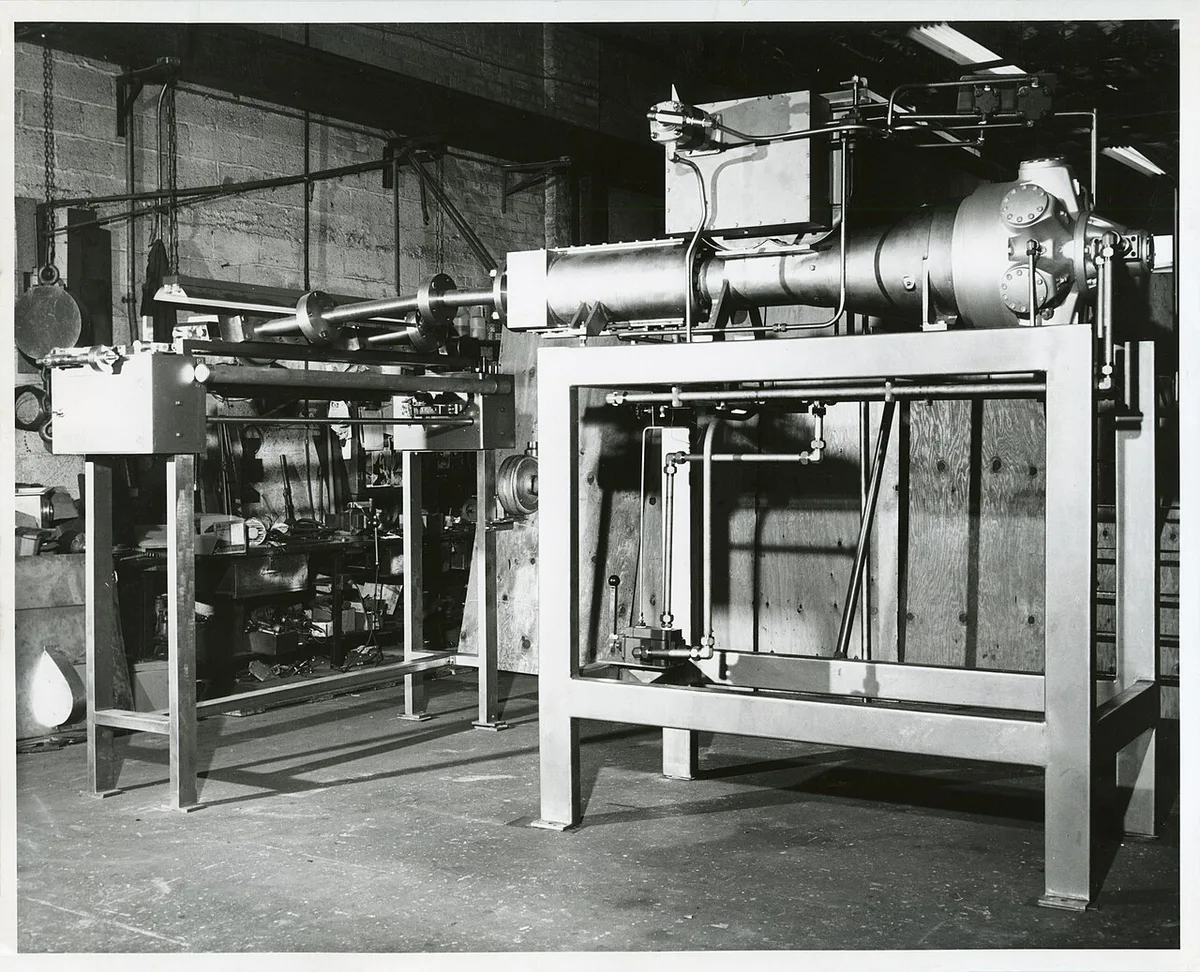
Image source: Wikimedia Commons / Leonard J. DeFrancisci (copyright holder) (CC BY-SA)
The belt detail that catches people out
On a hydraulic car, one serpentine belt usually drives the power steering pump, the alternator, and the water pump. When it lets go, you don't just lose assist. You lose charging and coolant flow at the same time.
So watch the dash. A battery light plus a climbing temperature gauge plus a heavy wheel means stop now, not in two miles. Our research into belt failures keeps turning up the same pattern: owners notice the steering first, ignore the temperature needle, and turn a tow into a head gasket.
EHPS is the calmer version. The electric pump sits out of the belt path, so its failures are usually a fuse, a relay, a wiring fault, or a pump that quits quietly.
Electric assist fails in flickers, not snaps
EPS problems rarely announce themselves with one clean break. A tired battery, a corroded ground strap, or a failing alternator can drop assist for half a second and hand it straight back. That's why the wheel goes heavy on the same cold morning the starter sounds lazy.
Water intrusion is the other big one. Racks sit low in the engine bay, connectors corrode, and the module starts throwing codes before it stops working entirely. Heat makes it worse, so a long climb on a hot day often brings the light on first.
A basic reader may not see the steering module at all. If you want to pull codes yourself, it pays to know how to choose a scan tool that reads chassis modules, not just engine codes. Per ISO 26262, the functional safety standard that governs EPS design, these systems are built with fail-safe behaviour in mind, which is why a fault usually degrades assist instead of locking the wheel.
The First Ten Seconds: What to Do the Moment the Wheel Goes Heavy
The wheel goes light, then heavy, and your first instinct is to correct. Don't. Here's the sequence that keeps the car pointed where you want it.
- Take both hands and hold your lane. Grip at 9 and 3, thumbs outside the rim. If you've never thought about where your hands should actually sit, now isn't the moment to experiment.
- Keep the throttle where it is. Lift off smoothly, don't snap off. A sudden throttle change shifts weight to the front and makes a heavy wheel feel twitchy.
- Leave the ignition alone. No key twist, no start button. You need the engine running for brake assist, airbags, and whatever steering help is left.
- Look further ahead than usual. Your correction inputs get bigger as speed rises, and looking down the road keeps them small.
- Plan your exit early. Pick the shoulder, the lay-by, or the next off-ramp while you still have speed to work with.
If/then, by situation
- If you're on a straight highway at speed, hold your speed, indicate, and drift right over several hundred feet. Don't brake first and steer later.
- If you're mid-corner, keep the arc you're already on. Unwind gently as the road straightens. Adding steering input is what spins cars.
- If you're in a parking lot, relax. You have space, low speed, and plenty of time. Turning the wheel at a crawl will feel brutal, so take it in small shuffles.
- If the wheel genuinely locks, stop treating it as an assist problem. Hazards on, brake firmly and progressively, get off the road as fast as the car allows.
- If the brake pedal also goes hard, check whether you're in a hydro-boost vehicle. Heavy-duty diesel trucks often run brake assist off the power steering pump, so one failure takes out both. Two feet on the pedal, plan a long stopping distance.
What Not to Do: The Moves That Turn a Stiff Wheel Into a Crash
Most of the damage in these situations is self-inflicted. These are the moves our research keeps finding in crash narratives and owner forums alike.
- Don't switch off the engine to "reset" the steering. On older cars the key comes out and the column locks. On newer ones, push-button systems will happily shut down at speed and cost you brake assist and airbag readiness.
- Don't slam the brakes. Full pedal mid-corner with no steering finesse is how a heavy wheel becomes a spin.
- Don't saw at the wheel. Left-right corrections get bigger, not smaller. Pick a line and hold it.
- Don't drive one-handed while you reach for a phone. You need both hands and both arms, and the shoulder isn't going anywhere.
- Don't touch the electronic parking brake at speed. It's not a brake pedal, and on some cars it engages hard enough to lock the rear wheels.
- Don't roll onto soft grass or gravel at highway speed. A heavy wheel plus a soft shoulder equals a rollover invitation. Slow first, then leave the lane.
- Don't keep driving to "see if it comes back." With a snapped belt, the engine is overheating the whole time. With EPS, you're one module fault away from no assist at all.
- Don't assume a full reservoir means a healthy pump. A pump can be full of fluid and still be cavitating, aerating, or seconds from seizing.
The one-handed death grip
There's a specific failure mode worth naming. Drivers grab the top of the wheel with one hand and pull, elbow locked, shoulders up by their ears. It feels stronger.
It isn't.
Your steering authority comes from small, smooth inputs made with both hands and a relaxed grip. One arm fighting a heavy wheel gives you less control, slower corrections, and a very tired shoulder at exactly the wrong moment.
Getting Off the Road: Speed, Braking, and Where to Actually Stop
Get the speed down before you leave the lane, not after. Brake progressively while you're still travelling straight, then make one deliberate steering input to move right. Two things happen if you reverse that order: the car gets upset, and you run out of shoulder.
Expect the last 10 mph to be the hardest. Boost is highest at low speed, so the wheel gets heavier the slower you go. If you're aiming for a tight gap on the shoulder, give yourself more room than feels necessary.
Where to actually stop
- As far right as the surface allows, wheels straight ahead. Wheels turned left at a standstill makes the car harder to move if someone needs to push it.
- Hazard lights on immediately, before you start slowing. Everything else can wait.
- A warning triangle if you carry one and traffic gives you a safe gap to place it. Never walk into a live lane to set it out.
- Prefer an off-ramp, lay-by, or car park over a live shoulder if you can coast or crawl that far. A shoulder is a last resort, not a destination.
- Call for recovery and say "steering assist failure," not "weird noise." Dispatch sends the right truck the first time.
Towing and getting it moved
Flatbed is the default for all-wheel-drive, low-clearance, and EV models. Dolly towing an AWD car can destroy a transfer case in a few miles. If a winch operator needs to pull the car, point them at properly rated recovery points on the chassis, not at a tie rod or a subframe brace.
One more thing: if the failure happened fast and loud, treat the car as undriveable until someone looks at it. A seized pump can snap a fresh belt in minutes, and a rack that's puking fluid will finish the job on the way home. NHTSA's recall lookup is worth a check by VIN before you pay for anything, since loss-of-assist campaigns do happen and the fix is free when one applies.
After You're Stopped: the Five-Minute Roadside Check
Safety first, diagnosis second. Hazards on, wheels straight, parking brake set. If you have a reflective vest, put it on before you open the door, and get out on the traffic-free side.
Then let the car sit for a minute. On a hydraulic system the fluid needs to settle back into the reservoir, and a hot pump will burn you through a glove. Check the level with the engine off and the car on level ground, because a slope throws the reading off by more than most people expect.
If you can't find a reservoir or a dipstick at all, stop looking. You have electric power steering, and there's nothing under the hood to top off.
Fluid level, color, and smell
Pull the dipstick, wipe it, reseat it, then read it. Most passenger cars hold under a quart of fluid in total, so a level sitting at the "add" mark means you've lost a meaningful share of a very small system.
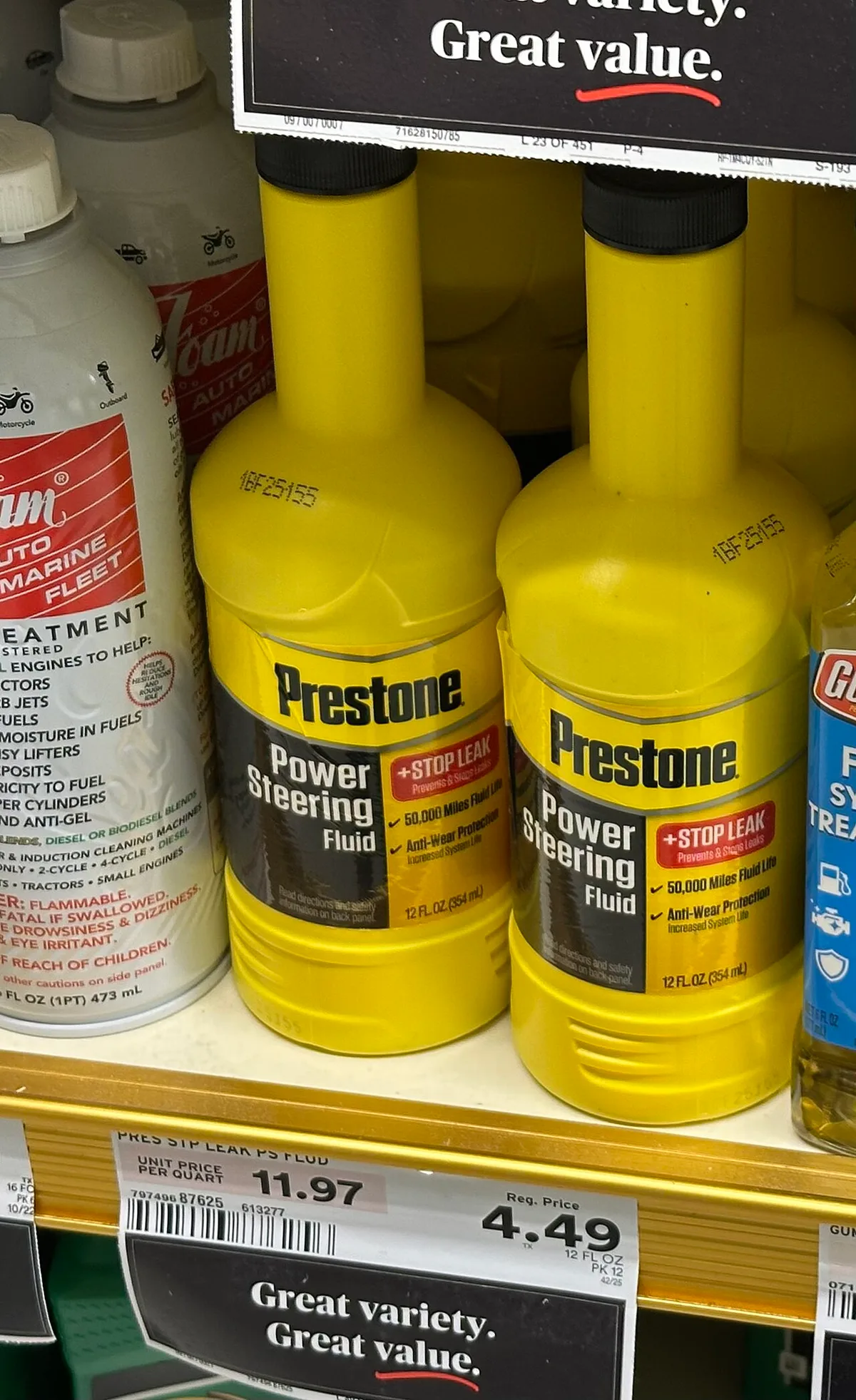
Image source: Wikimedia Commons / Jonathan Schilling (CC BY-SA)
Now smell it and look at it against a white rag. Fluid condition tells you more about pump health than the level does.
| What you see or smell | What it usually means | What to do |
|---|---|---|
| Clear amber or light brown, no smell | Healthy fluid | Top off if low, find the leak |
| Dark brown or black | Overheated, oxidized fluid | Flush the system, inspect the pump |
| Burnt, acrid smell | Pump running hot or starving for fluid | Pressure test before replacing anything |
| Milky or cloudy | Water or air mixed in | Find the leak source, bleed properly |
| Foamy, with bubbles on the dipstick | Aeration from low level or a restricted return line | Stop driving, diagnose the suction side |
| Metallic shimmer | Pump or rack shedding material | Plan for replacement, flush the lines |
A full reservoir with foamy fluid is the classic trap. The level looks fine, so owners assume the pump is healthy. In reality the pump is pulling air, and the assist you're feeling is intermittent because the fluid is half air.
Belt, tensioner, and leak trace
On a hydraulic car, follow the serpentine belt around the pump pulley. Look for glazing, cracks across the ribs, or a shiny edge where the belt has been slipping. Press the belt between two pulleys.
More than about half an inch of deflection points at a tired tensioner.
Then trace for leaks, working from the top down:
- Pump shaft seal, behind the pulley. Look for fluid flung outward in a ring.
- Pressure line fitting at the pump outlet. These see the full system pressure.
- Return line and cooler loop, often routed low behind the bumper where road salt does its work.
- Rack ends and boots. A boot full of fluid means the rack seal has failed, not the boot.
- Reservoir cap and vent. An overfilled system pukes fluid out of the cap and looks exactly like a leak.
A flashlight and a phone camera will get you most of the way. If you want to look properly underneath, use a safe way to get the car up rather than a jack alone.
Reading the Warning: Steering Lights, Reduced Assist, and Limp Mode
The warning light is telling you how urgent this is, and the color is the clue. Amber means the system has detected a fault and reduced assist. Red, or an amber light paired with a heavy wheel, means stop driving.
The icon itself is usually a steering wheel with an exclamation mark beside it. Some cars spell it out instead, with messages like "Steering Assist Reduced," "Service Power Steering," or "Power Steering Fault." Same message, different wording.
What the different messages actually mean
- "Steering Assist Reduced" means the module has limited motor output on purpose. You still have steering, but expect heavier effort and no lane-keep help.
- "Service Power Steering Soon" is a stored fault the car is tolerating for now. Book diagnostics, avoid towing and long highway runs.
- "Power Steering Fault, Stop Safely" means pull over at the first safe place. Don't finish the journey.
- A light that appears only on cold starts and fades usually points at low voltage or a battery on its way out, not a failed rack.
Limp mode is the system protecting itself. On EPS cars, the module can cut assist to a fraction of normal and, on some models, cap vehicle speed. That feels dramatic.
It's also the reason a fault rarely hands you a completely dead wheel.
Why the light sometimes comes on for no real reason
Battery replacement is the big one. On many cars the steering angle sensor loses its learned center after a disconnect, and the module flags a fault until the relearn is done. Drive a few hundred yards at low speed and the car often sorts itself out.
If it doesn't clear, don't assume the module is dead. Voltage first, then grounds, then connectors, then codes. Our research into EPS complaints keeps landing on the same order of checks, because a module swap on a car with a weak ground fixes nothing.
Diagnostic Trouble Codes: P0550, P0551, U0131 and What They Point To
Codes point at circuits, not parts. That distinction saves money. A P0550 doesn't mean "buy a sensor," it means the module isn't seeing what it expects from that circuit.
| Code | What it flags | Where to look first |
|---|---|---|
| P0550 | Power steering pressure sensor circuit malfunction | Sensor connector, wiring harness, sensor itself |
| P0551 | Pressure sensor circuit range or performance | Sensor signal quality, actual system pressure |
| U0131 | Lost communication with the power steering control module | Module power, ground, CAN bus wiring |
| U0126 | Lost communication with the steering angle sensor | Sensor connector, clock spring, module power |
| C0051 | Steering wheel position sensor fault | Sensor, alignment of the wheel, calibration |
| P0562 | System voltage low | Battery, alternator, grounds, belt condition |
Why a cheap reader won't show these
U-codes and C-codes live in chassis and body modules. A basic engine-only reader often won't see them, which is why owners report "no codes" on a car with a steering light on the dash. You need a tool that scans all modules, and it helps to know what separates a capable scan tool from a toy before you buy.
Freeze frame data matters here too. If a U0131 shows up at 14.1 volts and again at 11.8 volts, you have a power supply problem, not a module problem. Same code, completely different repair.
If/then, by code
- If you see P0550 or P0551 with a normal-feeling wheel, check the pressure sensor circuit and keep driving short trips. The assist is still working.
- If you see U0131 alongside other U-codes, suspect a shared ground or a chafed harness before you suspect the module.
- If you see C0051 after suspension or steering work, you likely need a steering angle relearn, not a new sensor.
- If the only code is P0562, stop looking at steering. Test the battery and charging system first.
- If there are no codes at all but the wheel is heavy, treat it as a mechanical fault and go back to fluid, belt, and rack checks.
Hydraulic Failures: Pump, Belt, Lines, Rack, and the Fluid Everyone Blames
Hydraulic systems fail in a handful of predictable ways, and the noise usually arrives before the heaviness. A vane pump that's starving for fluid whines. A pump with a worn bearing growls.
A slipping belt squeals, especially at full lock when pressure demand peaks.
Cavitation is the one owners misread most. The pump pulls air instead of fluid, the vanes hammer, and you get a moan that sounds expensive. The fix is often a ten-dollar O-ring on the suction side or a return line that's collapsed internally.
Symptom to cause, quickly
| Symptom | Most likely cause | Cheap test first |
|---|---|---|
| Whine that rises with rpm | Low fluid, air in the system, worn pump | Top off and bleed, then recheck |
| Groan only when turning | Pump under load, restricted return line | Inspect return hose for collapse |
| Squeal at full lock | Belt slip, glazed belt, weak tensioner | Belt and tensioner inspection |
| Heavy steering when cold, fine when warm | Thick fluid or a tired pump | Verify fluid spec, check for the right fluid |
| Assist drops after 20 minutes of driving | Fluid overheating, cooler blocked | Check cooler fins and fluid color |
| Fluid puking from the cap | Overfilled reservoir or aeration | Correct the level, bleed the system |
The fluid spec fight
This is where a lot of money gets wasted. Manufacturer specifications indicate that many European cars want a dedicated hydraulic fluid such as Pentosin CHF 11S or CHF 202, while plenty of American and Japanese models specify automatic transmission fluid, often Dexron or Mercon. GM has its own numbered spec, and Honda historically wanted its own formulation.
Put ATF in a system that wants CHF and the seals can swell and soften. Put CHF in a system that wants ATF and you can lose the friction characteristics the pump expects. Neither failure shows up immediately, which is what makes it nasty.
If you're already comfortable with fluid work like a routine fluid and filter change, the same discipline applies here: right spec, right level, no shortcuts.
Bleeding a hydraulic system properly
Air in the system causes most of the "new pump still whines" complaints. Bleed it correctly and the noise usually goes.
- Get the front wheels off the ground so you're not scrubbing the tires.
- Engine off, reservoir at the correct level.
- Turn the wheel lock to lock slowly, ten to fifteen times. Pause at each stop.
- Recheck the level and top off. It will have dropped.
- Start the engine, let it idle, and repeat the lock-to-lock cycle.
- Shut down, let it settle, and check for foam. Foam means more bleeding.
Rack and line failures
The rack is the expensive end of the system, and it's often blamed for a pump problem. A rack leaking at the ends shows up as wet boots. A rack with worn internal seals gives you heavy steering in one direction or a delay before assist arrives.
Steel pressure lines corrode from the outside in, especially in road-salt regions. A pinhole leak there sprays fluid onto hot exhaust and creates a genuine fire risk, which is why any wet line under the car deserves immediate attention rather than a top-off.
Electric Power Steering Failures: Battery, Torque Sensor, Motor, and Module
EPS faults are electrical before they're mechanical. The motor can pull 60 to 80 amps in a hard parking maneuver, so a battery at 70 percent health and a tired alternator will show up as steering trouble long before they show up as a no-start.
That's why the first test isn't the steering system at all. Load-test the battery, check charging voltage at idle and under load, and inspect the ground straps between the engine, body, and subframe. Corroded grounds cause more EPS faults than failed motors do.
Torque sensor: the most common single point of failure
The torque sensor measures how hard you're turning the wheel and tells the module how much assist to add. When it drifts, you get uneven assist, a light that flickers, and steering that feels different turning left versus right.
Sensor replacement is usually a column or rack job depending on the design, and it needs a calibration afterward. A rebuilt unit with a fresh sensor is often the better value on an older car, provided the shop does the relearn.
Motor, module, and water intrusion
The assist motor lives on the column or the rack. Column-mounted motors are easier to reach and cheaper to replace. Rack-mounted dual-pinion units are more expensive and typically need the whole assembly.
Water is the enemy. Racks sit low, connectors face downward, and road spray finds every weak seal. Corroded pins create resistance, resistance creates heat, and heat kills modules.
If you're chasing an intermittent fault, unplug the connectors and look for green crust before you spend anything.
The EPS check order that actually works
- Battery and charging system. Load test, voltage drop test, belt condition.
- Grounds and power feeds. Engine-to-body strap, module ground, fuse and relay condition.
- Connectors. Rack and column plugs, looking for corrosion, pushed pins, or chafed loom.
- Codes from all modules. Chassis codes included, with freeze frame data.
- Live data. Steering angle, torque sensor voltage, motor current while turning.
- Component tests. Sensor sweep, motor resistance, module communication.
- Replacement and calibration. New part, then steering angle reset and ADAS recalibration if the car has lane-keep.
Skipping to step seven is the expensive mistake. Aggregate shop data keeps showing the same thing: modules replaced on cars that only needed a ground strap or a connector clean.
One last point on calibration. Any steering work that disturbs the angle sensor leaves lane-keep, adaptive cruise, and stability control working from bad reference data. Per ISO 26262 thinking, these systems are built to fail safe, so they'll disable themselves rather than steer wrongly.
That's a warning light, not a fix.
Cold Starts, Mountain Heat, and Road Salt: How Conditions Change the Diagnosis
The same fault can feel completely different depending on where you park and what the weather is doing. A pump that's fine in July can whine through a January cold start. An EPS rack that works all winter can fault on the third switchback of a hot climb.
That's not the car being temperamental. It's fluid viscosity, battery chemistry, and thermal protection doing exactly what they were designed to do. Knowing which one you're dealing with keeps you from paying for the wrong fix.
| Condition | What changes physically | What to check first |
|---|---|---|
| Cold snap, first start of the day | Fluid thickens, battery cranking amps drop, belts stiffen | Fluid spec and level, battery load test, belt glazing |
| Long mountain climb, hot day | Fluid oxidizes and foams, pump heat soaks after shutdown | Fluid color and smell, cooler fins, reservoir cap vent |
| Stop-and-go city driving | Constant low-speed maneuvering keeps boost demand high | Pump noise under load, fluid temperature |
| Road-salt winters | Steel pressure lines and fittings corrode from the outside in | Wet lines under the car, fitting condition, rack boots |
| High altitude | No direct effect on hydraulics, but thinner air cuts engine vacuum on some brake boosters | Not a steering issue, but it changes how the car stops |
| Desert heat plus dust | Dust past the reservoir cap, grit in the pump | Reservoir cap seal, fluid cleanliness |
Why cold mornings make everything feel worse
Two things happen at once. Power steering fluid gets thicker and harder to pull through the suction side, and a lead-acid battery loses a big share of its cranking capacity. On a hydraulic car that means a loud pump for thirty seconds.
On an EPS car it means the module may briefly limit assist while voltage sags.
If the heaviness clears within a minute, you're usually looking at a tired battery or the wrong fluid. If it never clears, the pump or the assist motor is genuinely done. Aggregate owner reports keep drawing the same line: clears when warm equals marginal, stays heavy equals failed.
One more cold-weather detail. Serpentine belts harden with age and slip more when cold, which is why a marginal belt squeals on the first start and behaves all afternoon. A belt that squeals only when cold is telling you it's due.
Why mountain heat is the underrated killer
Climbing a pass under load keeps the pump at high pressure for minutes at a time. Fluid temperature climbs, oxidation accelerates, and the fluid starts to varnish the inside of the rack. Shut the engine off at the summit and the pump heat soaks with no coolant flow.
EPS has its own version of this. The module watches motor temperature and pulls assist back as it climbs, which is why some drivers feel the wheel go heavy near the top of a long climb and then recover on the descent. That's thermal protection working.
Repeated derating on a normal commute is not.
Road salt, corrosion, and the leak you can't see
Salt doesn't eat fluid. It eats the steel around it. Pressure lines routed low behind the bumper and along the subframe rust from the outside, and a pinhole can spray fluid onto a hot exhaust manifold.
Any wet line deserves a proper look rather than a top-off. Clean the area, drive a short loop, and see where the fluid reappears. If the wet spot sits above the exhaust, stop driving until it's fixed.
Terminology also shifts by market in ways that matter when you're buying parts. In the UK you'll see "bonnet," "tyre," and often a dedicated hydraulic fluid listed rather than ATF. Right-hand-drive versions of the same model sometimes route the rack plumbing differently, so a part number that fits a US car won't necessarily fit its UK twin.
What the Repair Really Costs and How to Avoid Paying for the Wrong Part
Prices vary by region, vehicle, and how buried the rack is, but the ranges below hold up across our research into shop estimates and parts pricing in the US and UK. Labor rates commonly run $100 to $200 an hour depending on where you live.
| Job | Parts | Labor time | Typical installed total |
|---|---|---|---|
| Belt and tensioner | $25 to $120 | 1 to 2 hours | $180 to $400 |
| Fluid flush and bleed | $12 to $30 | 0.5 to 1 hour | $100 to $200 |
| Hydraulic pump | $150 to $500 | 2 to 4 hours | $500 to $1,000 |
| Pressure or return line | $40 to $150 | 1 to 3 hours | $200 to $500 |
| Steering rack | $400 to $1,200 | 4 to 8 hours | $900 to $2,000+ |
| EPS torque sensor or column | $300 to $900 | 2 to 5 hours | $600 to $1,500 |
| EPS control module | $400 to $1,200 | 1 to 3 hours | $700 to $1,800 |
| ADAS recalibration after steering work | Not applicable | About 1 hour | $150 to $400 |
| Diagnostic fee | Not applicable | About 1 hour | $100 to $175 |
| Local tow | Not applicable | Not applicable | $75 to $200 |
Retail pricing on small components swings more than people expect. Even a simple bulb purchase can differ by a third between chains, so it's worth pricing the pump or sensor at two or three sources before you approve a job.
The misdiagnosis that costs the most
Rack replacement is the single most over-prescribed steering repair. A leaking rack boot, a noisy pump, and a wet line fitting can all look like "the rack is gone" to a quick inspection.
Here's the pattern our research keeps surfacing. The car comes in with a whine and a low reservoir. Someone quotes a rack.
The actual problem was a five-dollar O-ring on the suction side letting the pump pull air. The whine was cavitation, not a worn rack.
Ask for the diagnostic evidence before you approve a big ticket. Specifically:
- What code was stored, and was it pulled from the chassis module?
- Was system pressure tested, and what did it read?
- Where exactly is the leak, and was the area cleaned and rechecked?
- Was the fluid level checked with the engine off on level ground?
A shop that can answer those four questions is diagnosing. A shop that can't is guessing with your money.
Cheap now, expensive later
Two shortcuts bite back. The first is a used rack from a salvage yard with unknown mileage. It can work fine, but you're paying the same four to eight hours of labor to install it, and a second failure doubles that bill.
The second is skipping the alignment after rack or tie rod work. You've just disturbed the only thing setting your front wheel angles. A $120 alignment protects a set of tires that costs four times as much.
Then there's the recalibration. Any steering work that moves the angle sensor needs a relearn, and cars with lane-keep or adaptive cruise usually need a camera recalibration too. Per FMVSS 126, stability control reads steering angle as a primary input, so bad reference data quietly degrades a safety system you can't see working.
DIY vs Independent Shop vs Dealer: Picking Your Level of Help
Match the job to your tools and your time, not your confidence. Fluid, belts, and diagnosis are realistic for a careful owner. Racks, modules, and calibrations generally aren't.
| Option | Best for | Cost level | Watch out for |
|---|---|---|---|
| DIY | Fluid top-off, flush, belt and tensioner, code reading, visual leak trace | Lowest | Missing a calibration step, wrong fluid spec, no lift |
| Independent shop | Pump and rack replacement, pressure testing, hydraulic line work | Middle | Ask whether they can do the steering angle relearn |
| Dealer | EPS module faults, warranty and recall work, ADAS recalibration | Highest | Diagnostic fee, and a strong bias toward factory parts |
| Mobile mechanic | Fluid work and belt swaps at your home | Middle | Confirm they carry the correct fluid and can bleed properly |
When DIY genuinely makes sense
If the wheel is heavy but the car still steers, and the reservoir is low, a top-off with the correct spec fluid gets you moving. Same for a squealing belt you can reach from the top of the engine bay.
The limit is anything requiring the car off the ground with the wheels free. Bleeding a hydraulic system properly means turning lock to lock with the front end raised. A set of sturdy wooden ramps handles that safely.
Wheels hanging free is better still, but that needs a proper lift.
Buying parts online saves real money on pumps and sensors. It rarely saves money on a rack you've never fitted.
When an independent shop is the smarter call
Independent shops win on hydraulic work. They do pumps, lines, and racks often enough to have the flare nut wrenches, the pressure gauge, and the patience for a corroded fitting that wants to round off.
Ask one question before booking: can you do the steering angle sensor reset and, if needed, the ADAS recalibration? If the answer is no, you'll be paying two shops for one job.
When the dealer earns the premium
Go to a franchised dealer when the fault is in the EPS module, when the car is under warranty, or when a recall applies. Module programming, security access, and calibration procedures are manufacturer-specific, and aftermarket tools often can't complete them.
Dealers also have the service history that matters if you're chasing goodwill coverage on a car just outside warranty. Our research into out-of-warranty repairs suggests a full dealer service record is one of the few things that reliably moves that conversation.
Recalls, Warranty Rights, and the Maintenance That Prevents Most of This
Before you pay for anything, check whether somebody else should. Loss of assist has led to real recall campaigns, and the remedy is free when one applies to your VIN.
Run your VIN through the NHTSA recall lookup first. It takes two minutes and covers safety defects the manufacturer has already admitted to. In the UK, the equivalent check sits with the Driver and Vehicle Standards Agency.
What the standards actually cover
- FMVSS 203 governs impact protection for the driver from the steering control system.
- FMVSS 204 limits rearward movement of the steering column in a crash.
- FMVSS 126 requires electronic stability control, which depends on accurate steering angle data.
- ISO 26262 sets the functional safety framework for EPS design, including fail-safe and degraded-mode behaviour.
These aren't trivia. They explain why a steering fault usually degrades rather than locks, and why a botched recalibration is a safety problem rather than a comfort problem.
Your warranty rights in plain terms
Bolting on aftermarket parts or doing your own fluid changes doesn't void your new car warranty by itself. Under the Magnuson-Moss Warranty Act, the manufacturer has to show that your part or your work caused the failure before it can deny a claim. The FTC's guidance on warranty law spells that out for consumers.
That protection has limits. If you fit a rebuilt pump and it takes out the rack, don't expect coverage. Keep receipts for the correct-spec fluid.
That single piece of paper settles most arguments.
The maintenance that prevents most of this
Most hydraulic failures give you months of warning. Very few go from silent to dead.
| Interval | Check | Why it matters |
|---|---|---|
| Monthly | Fluid level and color, engine off, level ground | Catches slow leaks before the pump starves |
| Every oil change | Belt condition and tension, reservoir cap seal | Slipping belts and vented caps cause most noise complaints |
| Every 30,000 to 50,000 miles | Fluid condition assessment, look for dark or burnt fluid | Oxidation is what kills pumps and racks |
| Every 60,000 miles | Inspect rack boots, line fittings, cooler loop | Catches corrosion before a pinhole becomes a spray |
| Annually before winter | Battery load test and charging check on EPS cars | Voltage sag is the top cause of intermittent assist loss |
| After any steering or suspension work | Steering angle relearn, alignment | Protects stability control, lane-keep, and your tires |
A five-minute monthly check catches the majority of failures before they strand you. That's not a sales line. It's the cheapest maintenance item on the entire car.
One habit worth building: look at the ground where you park. A small dark patch under the front of the car is a leak report you didn't have to pay for.
Frequently Asked Questions
Can you still drive with a power steering warning light on?
Sometimes, but only to a safe place or a nearby shop. An amber light with a heavy wheel means reduced assist, not zero assist, so short low-speed trips are usually manageable. A red light, or a warning telling you to stop safely, means pull over now and call for recovery.
What causes power steering to fail suddenly?
On hydraulic cars, a snapped or slipped serpentine belt is the classic sudden failure. Losing the belt kills the pump instantly. On electric systems, a sudden dropout usually traces to a battery on its way out, a corroded ground, or a failing module connector rather than the motor itself.
Is it safe to drive with no power steering fluid?
No. A dry hydraulic system means the pump is running metal on metal, and it will seize. A seized pump can snap the belt that also drives your alternator and water pump.
If the reservoir is empty, stop driving and find the leak before you add fluid.
How much does it usually cost to fix power steering?
Budget $100 to $200 for a fluid flush, $180 to $400 for a belt and tensioner, and $500 to $1,000 for a pump installed. Rack replacement runs $900 to $2,000 or more. Electric assist repairs land between $600 and $1,800 depending on whether it's a sensor, a module, or a column.
Does power steering ever fail without warning?
Yes, though it's uncommon. A belt can let go with no prior noise, and an EPS module can fault without a stored code. That said, most failures leave a trail: a whine, a slow fluid loss, a flickering light, or heavy steering on cold mornings.
The warning was there, just easy to miss.
Can a weak battery cause power steering failure?
On electric power steering, absolutely. The assist motor can pull 60 to 80 amps in a hard parking maneuver, so a battery at reduced capacity or a tired alternator shows up as intermittent assist loss before it shows up as a slow crank. Test the battery first on any EPS complaint.
