
If your car won't go into gear, the answer almost always sits in one of three places: the shifter and linkage, the clutch, or the gearbox itself. Why wont my car go into gear is a question that sounds simple until you see how many different failures produce the same symptom. A floppy lever, a grinding crunch, and a pedal that sinks to the floor are three completely different problems.
Start with the cheap checks. Manufacturer specifications usually call for roughly ½ to 1 inch of clutch pedal free play at the pedal pad, and that one measurement kills a lot of guesses. Fluid spec matters too, since the wrong gear oil can make a healthy gearbox feel broken.
Before you buy a single part, narrow the symptom down.
Why Wont My Car Go Into Gear
Why wont my car go into gear? Something in the shift path has failed. The usual suspects are a dragging clutch or damaged linkage.
Low fluid and worn shifter bushings cause the same symptom. A free engine-off test narrows it down in two minutes. That test separates a cheap fix from a gearbox rebuild.
The Three Questions That Narrow It Down Fast
Answer these honestly and you'll land in the right branch before you touch a tool.
- Is the engine running? A car that shifts cleanly with the engine off but refuses when running has a clutch problem, not a gearbox problem.
- Manual or automatic? The two systems fail in completely different ways, and the automatic path often starts at the brake pedal switch.
- What does it feel like? Grinding means gears clashing. A lever that won't budge means linkage. A lever that moves with no resistance means something is disconnected.
Write your answers down, then read the section that matches.
The Engine-Off Test That Saves You Money
Find level ground, set the parking brake, and leave the engine off. Press the clutch and work the lever through every gate, including reverse. This single test splits the entire problem in half.
What It Tells You in 30 Seconds
If every gear clicks in smoothly, your linkage and internals are healthy. The clutch isn't releasing, so the input shaft keeps spinning and the gears clash. If the lever feels vague, sloppy, or refuses to move, the fault sits in the shifter assembly or inside the gearbox.
Reading the Result: Linkage vs. Clutch vs. Gearbox
- Shifts cleanly with the engine off, blocks when running. Clutch drag. Start with the hydraulics or the cable.
- Grinds or blocks either way. Linkage, bushings, cables, or worn synchros.
- Lever waves around with no gear at all. A snapped cable end or a disconnected shift rod.
- One gear only, usually first or reverse. A worn synchro or a bent shift fork.
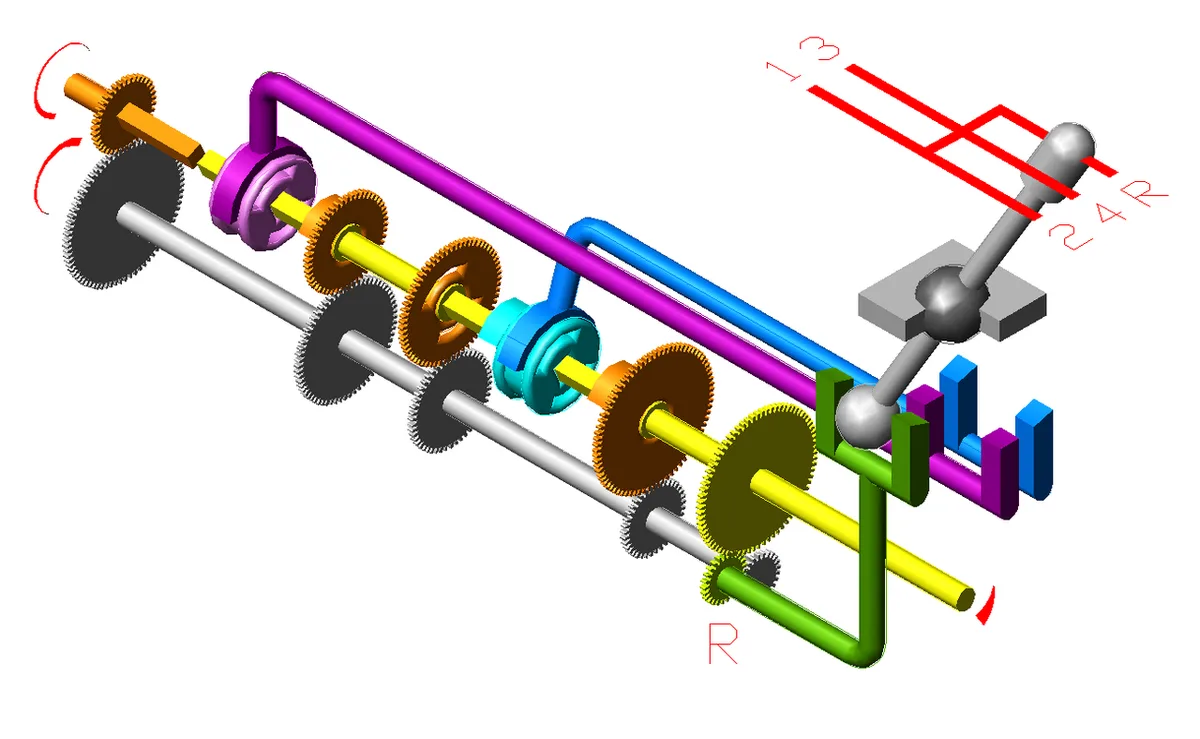
Image source: Wikimedia Commons / World arm lamp at English Wikipedia
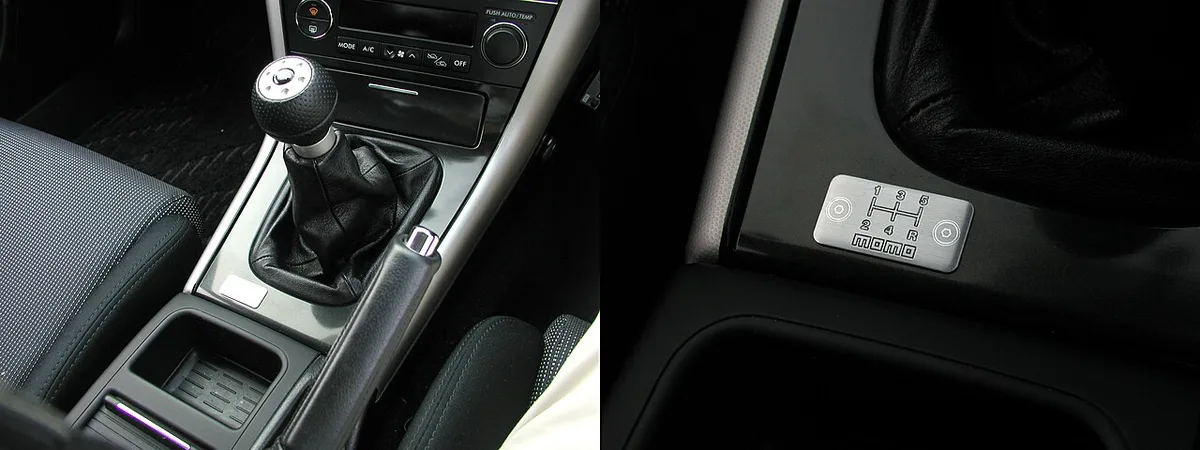
Image source: Wikimedia Commons / Coptic Light (CC BY-SA)
You'll need safe access underneath for the next checks, and safe access underneath matters more than speed. Sturdy ramps and wheel chocks beat a bare jack every time. Guidance from OSHA on supporting a vehicle is blunt for good reason.
Manual Transmission: The Decision Branches
Manual gearboxes fail in patterns, and the pattern points at the part. Match your symptom to a branch below.
Grinding Going Into Gear
Grinding means the gears are moving at different speeds when they meet. Either the clutch isn't fully disengaging or the synchro rings are worn. Grinding in every gear points at the clutch.
Grinding in one gear points at that synchro.
Soft, Spongy, or Pedal-to-the-Floor Clutch
A pedal that sinks and stays down means a hydraulic fault. Check the clutch fluid reservoir first, then look for wetness at the clutch slave cylinder boot. Air in the line feels exactly like a failed cylinder, so bleed the system before buying parts.
Cable-operated cars have their own version of this, usually a stretched cable or a cracked pedal bracket.
Sloppy Shifter, No Resistance, or Stuck in Gear
A lever that flops around is often a $20 problem. Worn shifter bushings and stretched shift cables are the usual culprits on older cars. If the lever moves but the car stays locked in gear, the linkage has come apart underneath.
When It's Only First or Only Reverse
First and reverse take the most load at low speed, and reverse often has no synchro at all. A car that fights you in just these two gears usually has a dragging clutch or a tired first-gear synchro. Try second gear first, then first.
If that trick works, the synchro is worn.
If the car is undrivable, don't drag it home on a strap. A proper recovery point keeps the load where the chassis can handle it.
Automatic Transmission: Why It Won't Leave Park (or Any Gear)
Automatics rarely fail the way people expect. The lever often moves fine while the gearbox refuses to engage, or the lever itself won't leave Park.
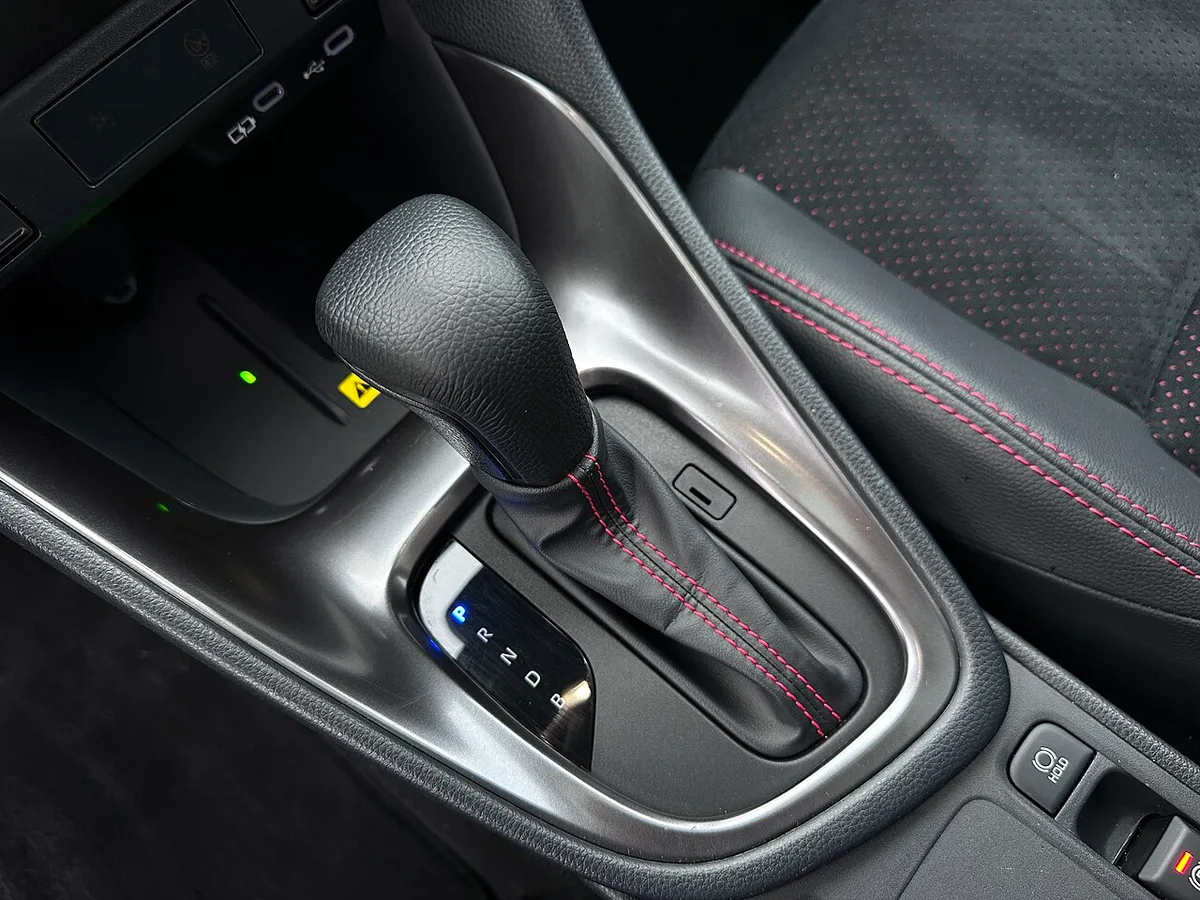
Image source: Wikimedia Commons / Acgskup (CC BY)
Brake-Shift Interlock and Shift Lock Release
If the lever won't budge from Park, press the brake and listen for the click. No click means a bad brake pedal switch or a dead interlock solenoid. Every automatic has a manual override near the shifter, usually a small slot you press with a screwdriver.
Federal safety standards require that interlock and a set shift sequence, and NHTSA publishes the rules behind it.
Range Sensor, Solenoids, and Failsafe Mode
The transmission range sensor tells the computer which gear you picked. When it reports wrong, the car may crank in gear or refuse to start at all. Failsafe mode locks the box into one gear and lights the dash.
That's a job for a capable scan tool before anything gets replaced.
Low or Burnt ATF
Automatic transmission fluid (ATF) is the hydraulic oil that makes every shift happen. Pull the dipstick if your car has one. Dark, burnt-smelling fluid means heat damage.
Low fluid means a leak, and topping up the fluid only buys time until you find it. Many newer automatics have no dipstick, so check the owner's manual first.
What Each Fix Actually Costs
Parts prices vary by region and model, but the gap between a bushing and a rebuild is enormous. Here's what the common fixes run in the US as of 2026.
| Symptom | Likely culprit | Typical parts cost |
|---|---|---|
| Floppy shifter, vague gears | Shifter bushings | $10 to $40 |
| No gear at all, cable shifter | Shift cable or end fitting | $50 to $200 |
| Pedal sinks, clutch won't release | Slave or master cylinder | $30 to $150 |
| Grinding with a normal pedal | Clutch kit | $200 to $500 |
| Grinding in one gear only | Synchro wear, gearbox work | $1,500 to $4,000 |
| Won't shift out of Park | Brake switch or interlock | $20 to $150 |
Two things stand out. A floppy shifter and a dead gearbox feel similar from the driver's seat, and they're two thousand dollars apart. The other pattern is that hydraulic parts stay cheap while anything inside the case gets expensive fast.
Diagnostic fees at an independent shop usually land between $100 and $150, and many shops credit that toward the repair. If you're pricing a fluid service, the fluid filter swap is a reasonable DIY job on plenty of models. Labour is the real cost on clutch work, because the gearbox has to come out either way.
Mistakes That Turn a Cheap Fix Into a Transmission Bill
Forcing the lever tops the list. If a gear won't go in, stop pushing. Shift forks and selector sleeves bend long before the lever breaks, and that swaps a $30 bushing for a $2,000 rebuild.
Clutch habits cost money too. Resting a hand on the shift knob wears the fork pads and bushings. Holding the car on a hill with the clutch instead of the brake cooks the disc.
Most drivers get 50,000 to 100,000 miles out of a clutch, and those habits eat the low end of that range.
Wrong fluid is the quiet one. GL-5 gear oil in a box that calls for GL-4 can attack the synchro rings over time. The owner's manual lists the correct grade for a reason, and it's worth following even when the bottle on the shelf says universal.
Then there's driving on a known fault. A dragging clutch grinds the flywheel and heat-soaks the whole assembly. You end up paying for the clutch kit, the flywheel, and the same labor charge twice.
Last one: never bypass the clutch safety switch or the neutral safety interlock. They're there to stop the car from lurching when you turn the key.
When to Stop and Call a Shop
Stop when the car won't stay put. If it creeps in gear with the parking brake set, or lurches the second you release the pedal, it isn't safe to drive. A tow is cheap next to a crumpled bumper.
Stop when the fluid comes out metallic. Fine grey paste is normal clutch dust on a drain plug magnet. Bright flakes or chunks mean a bearing or gear is coming apart, and no bottle of additive fixes that.
Stop when the pedal won't build pressure after two clean bleeds. A clutch that stays soft usually has a master cylinder leaking internally past its seals. The part is cheap, but the job hides up under the dash on plenty of cars.
Stop when you hear a rumble or whine that follows engine speed in neutral with the clutch out. That noise points at the input shaft bearing, which means the gearbox has to come out.
And stop if you're guessing. A $100 to $150 diagnostic fee buys a real answer. Throwing parts at it usually costs more than the diagnosis did.
Real-World Cases: Cold Mornings, Rust-Belt Linkages, and High-Mileage Clutches
Cold-morning stiffness is usually fluid, not failure. Gear oil thickens fast below freezing, so a 75W-90 fill can make first and second feel notchy until the box warms. If it frees up after ten minutes of driving, you're probably fine.
A fluid change to the grade listed in the manual often sharpens it right up.
Rust-belt cars fail at the linkage. Road salt seizes cables and snaps plastic end fittings, so the lever moves and nothing happens underneath. Aggregate owner reports from northern states put cable and bushing jobs at the top of the list for older manual cars.
That's a $50 to $200 fix, not a gearbox.
High-mileage clutches give warning first. A pedal that engages right at the floor, or a friction point that climbs higher every month, means the disc is thin. One owner-reported case at 140,000 miles went from slight slip on hills to refusing first gear in about three weeks.
Catch it at the slip stage and the flywheel usually survives.
Automatics age differently in hot climates. Heat degrades ATF, and burnt fluid turns into harsh or missing shifts. Checking fluid color is the cheapest early warning you get.
Frequently Asked Questions
Why does my car shift fine with the engine off but not when it's running?
Because the clutch isn't releasing. With the engine off, the input shaft sits still and the gears mesh freely. Start the engine and a dragging clutch keeps that shaft spinning, so the synchros clash.
Check the hydraulics, the cable, or the pressure plate before you blame the gearbox.
Why won't my car go into first gear at a stoplight?
A worn first-gear synchro is the usual cause. Try slipping into second, then first, while the car sits still. If that works, the synchro is tired.
If the pedal also feels low, the clutch is dragging and never fully disengages.
Is it safe to drive if I have to force it into gear?
No. Forcing the lever bends shift forks and finishes off already-worn synchros. It also means the car can stall or lurch in traffic.
Drive it only as far as a safe spot, then get it looked at.
Can low transmission fluid stop a manual from going into gear?
Rarely, but it happens. A manual with a serious leak can lose enough gear oil to make the synchros grab and the lever fight back. Check the level at the fill plug.
Automatics are far more sensitive to low fluid than manuals.
Why is shifting hard only when it's cold outside?
Thick gear oil is the short answer. Cold fluid doesn't reach the synchro assembly quickly, so the first few shifts feel stiff. It should ease within a few minutes of driving.
If it stays stiff once warm, the problem is mechanical.
Does revving the engine help it slide into gear?
No, and it makes the clash worse. Revving spins the input shaft faster. A gear slides in when shaft speeds match, and a dragging clutch keeps them apart no matter how hard you rev.
Fix the release, not your technique.
