
Your car steps sideways on a wet on-ramp, or the rear end goes light on a patch of black ice, and your brain screams at you to stomp the brake. That instinct is exactly wrong, and it's the reason so many single-car crashes start as a small slide. Knowing what to do if a car skids comes down to a short, rehearsed sequence you can run before panic takes the wheel.
The physics leave very little room for improvisation. Tire grip is finite, and most recoveries play out in one to two seconds, roughly the same window as a normal emergency stop. Guidance from NHTSA is consistent on this point: the right inputs are gentle and early, not big and late.
Here's how the sequence actually works, and where most drivers get it wrong.
What to Do If a Car Skids
If your car skids, look where you want to go. Ease off the gas and steer gently toward that path. Skip hard braking until the tires bite again.
Then straighten the wheel and keep both hands ready. Never pump the pedal on a car with ABS.
The First Three Seconds: What to Do When Your Car Skids
A skid is not a single event. It's a conversation between your tires and the road, and by the time your body registers the slide, the car has been losing grip for a beat or two already. That gap between what's happening and what you notice is where most drivers lose the car.
So instructors don't teach tricks. They teach an order of operations you run like a checklist, because in a panic your hands default to whatever you've practiced.
The sequence, in order
- Eyes up. Find the gap you want and look at it. Not the guardrail. Not the car you're trying to miss.
- Ease off the accelerator. Smooth, gradual, deliberate. Do not snap your foot off the pedal, especially in a rear-wheel-drive car.
- Steer where you want the car to go. Small, measured inputs. Most corrections need far less wheel than your hands want to give.
- Brake last, and gently. Once the car is pointed the right way and the tires have reconnected, add pressure progressively.
- Unwind as grip returns. Straighten the wheel the moment you feel the front bite, or you'll start a second slide in the other direction.
| Move | What it looks like from the driver's seat | Why it sits at that point in the order |
|---|---|---|
| Eyes up | Chin lifted, gaze on the escape gap | Hands follow eyes. Fixating on the hazard steers you into it |
| Ease off | Foot rolls back, no stab | Frees up grip at all four corners |
| Steer | Wrists relaxed, small arcs | Sharp inputs use up grip the tires don't have |
| Brake | Progressive pressure, ABS allowed to work | Stopping a sliding tire does nothing useful |
| Unwind | Wheel returns toward center | Prevents the snap-back skid |
Why your eyes come before your hands
Target fixation is real and it's brutal. Drivers who stare at the thing they're about to hit steer straight into it, because the hands track the eyes without asking permission. Aim your vision at the open lane, the shoulder, the gap between the barriers.
The car follows more often than you'd expect.
At dusk in November, that visual window shrinks further. Yellowed, dim headlamps cut the distance at which you can spot a slick patch, which is why a fresh set of bulbs is genuinely a safety item and not just a cosmetic one. If yours are cloudy or dim, swapping them is cheap insurance, and prices for a replacement are lower than most people guess.
Ease off, don't stomp
Hard braking mid-skid is the single most common way a recoverable slide becomes a crash. Braking shifts weight forward, unloads the rear tires, and hands the back of the car a job it can't do. If the rear is already sliding, that's the last thing you want.
Snapping off the throttle has a subtler version of the same problem in rear-wheel-drive cars. An abrupt lift transfers weight forward fast, the rear goes light, and the slide gets sharper. Roll out of the pedal.
Take a full second to do it.
Where your hands belong
Nine and three, or eight and four. Both hands on the rim, thumbs resting on the face of the wheel rather than hooked inside it. That position gives you the most steering range without shuffling, and it keeps your arms clear of the airbag if it fires.
It also matters that your elbows stay slightly bent. Locked arms reduce the feedback you feel through the wheel, and in a skid that feedback is your only instrument. Our breakdown of the best place to put your hands on the rim covers the airbag geometry and the shuffle-steer technique in more detail.
Expect the snap-back
Here's the part nobody warns new drivers about. When the tires regain grip, the car doesn't settle politely. It snaps back the other way, sometimes hard, because the rear end is still carrying momentum.
Be ready to unwind the wheel and catch that second slide with a smaller correction. Watch any amateur dashcam spin and you'll see three or four increasingly violent corrections, each one bigger than the last. The driver is chasing the car instead of leading it.
One line worth memorizing: look where you want to go, and be boring with your hands.
Why "Steer Into the Skid" and "Pump the Brakes" Get People Hurt
Both phrases are old, both are repeated constantly, and both get misapplied in ways that cost people their cars. The problem isn't that the advice is always wrong. It's that it's compressed into a slogan with the critical context stripped out.
What does "steer into the skid" actually mean?
It means point the front wheels where the car is already traveling, so the tires stop fighting the slide and start rolling again. In a rear-wheel skid, the back end swings right, so you steer right. That's the direction of the skid, and it's also where you want the front of the car to point.
Drivers hear the phrase and picture turning toward the obstacle, or turning away from the road they want. That reading is the opposite of the intent, and at 50 mph the misunderstanding is enough to put you in a ditch.
Why "pump the brakes" is a leftover
Pumping made sense on cars with four-wheel drums and no electronics. Locked wheels had to be released and reapplied by hand, and cadence braking was the workaround. On any car sold in the US since model year 2012, anti-lock braking is standard, and pumping actively defeats it.
With ABS, you press hard and hold. The system releases and reapplies pressure at each wheel dozens of times a second, far faster than your foot can. Pedal pulsation and a grinding noise are normal.
They mean the system is working, not failing.
| What people say | Where it came from | What actually works |
|---|---|---|
| "Steer into the skid" | Correct but badly taught | Steer toward where you want the front of the car to go |
| "Pump the brakes" | Pre-ABS drum brake era | Firm, continuous pressure on an ABS car |
| "Always brake hard in an emergency" | True on a straight, dry road | Wrong mid-corner or mid-skid, where it unloads the rear |
| "AWD means you're fine" | Marketing | AWD helps you accelerate, not stop or turn |
| "Grip the wheel tight" | Nervous instinct | Relaxed elbows, loose thumbs, feel the feedback |
| "Throw it in neutral" | Old habit | Kills your throttle control and engine braking |
The AWD myth deserves its own paragraph
All-wheel drive distributes power to four wheels. It does nothing for the total grip available when you're braking or cornering. An AWD SUV on all-season tires slides on ice exactly like a front-wheel-drive sedan on the same tires, except it's heavier and carries more momentum into the slide.
That false confidence is why snow-belt insurers see so many single-vehicle winter claims from newer, larger vehicles. The hardware helps you climb a snowy hill. It won't shorten your stopping distance by a single foot.
You can't react to what you can't see
Half the battle happens before the slide starts. Standing water, black ice, and frost all announce themselves late, and a smeared windshield or tired wipers steals the second or two of warning you needed. Blades that clear the glass in one pass, rather than leaving a film you squint through, are worth replacing before the season turns.
The same logic applies to your lights. In freezing rain and November dusk, the difference between seeing a glossy patch early and seeing it late is often just clean lenses and bright bulbs.
How a Skid Actually Happens: Grip, Weight Transfer, and the Friction Budget
A skid is simple at the physics level. Your tires have a limited supply of grip at any instant, and you asked for more than they had. Everything else is detail.
The friction budget
Think of each tire as having a wallet of grip. Cornering spends from it. Braking spends from it.
Accelerating spends from it. Spend everything on braking and there's nothing left for steering, which is why a car that's stopping hard doesn't want to turn.
Engineers call this the friction circle, sometimes the traction circle. You don't need the math. You need the intuition: every input competes with every other input, and the total is fixed by the road, the tire, and the weight on that corner.
That's also why gentle inputs work. A smooth correction spends less grip than a violent one, leaving margin for the next thing you need to do.
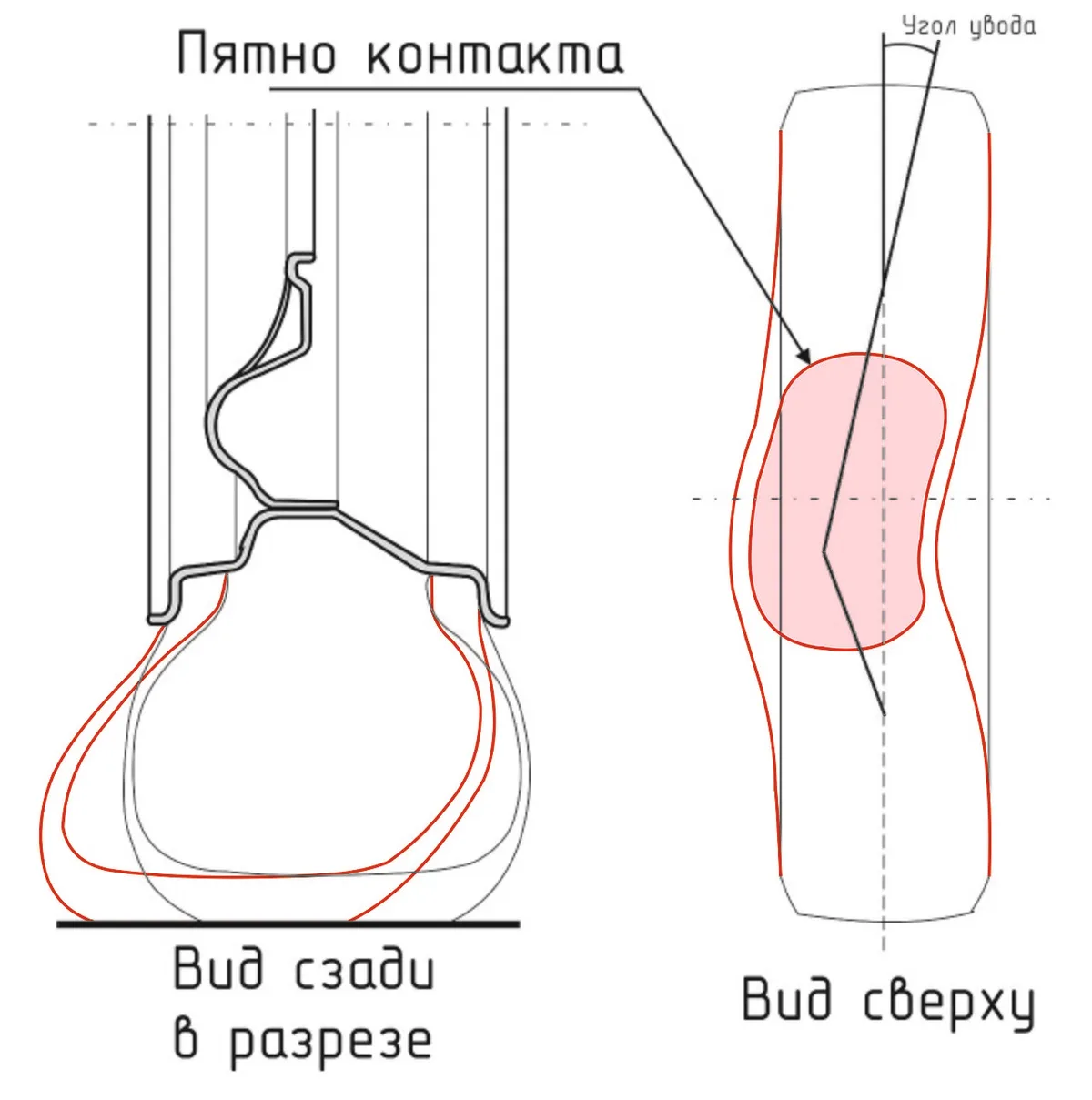
Image source: Wikimedia Commons / DL24
Weight transfer, explained without the equations
Brake and the nose dives, loading the front tires and unloading the rear. Accelerate and the reverse happens, the nose lifts and the rear squats. This shift takes a fraction of a second, and it changes how much grip each end of the car has.
Now picture a rear-end slide. The rear tires are already at their limit. Add braking and you take weight off them, which removes grip from the set that's already failing.
That's the mechanical reason braking mid-skid makes things worse, and it's independent of what your ABS is doing.
How much grip each surface gives you
| Surface | Rough grip available | Typical stopping distance vs dry |
|---|---|---|
| Dry asphalt | Full | 1x |
| Wet asphalt | Roughly half | About 2x |
| Packed snow | A third or less | 3x to 4x |
| Sheet ice | Almost none | Up to 10x |
Those multipliers are approximations from tire and highway safety testing, not exact numbers for your car. They're still the most useful mental model you can carry: ice doesn't double your stopping distance, it can multiply it by ten. IIHS has spent decades documenting what that gap looks like in real crash outcomes.
Temperature is a hidden variable
All-season rubber is a compromise compound. Below roughly 45°F it starts to harden, and a hard tire conforms to the road surface less, which means less mechanical interlock and longer stops. This is why a 40°F rainy morning is slicker than the thermometer suggests, and why winter tires exist as a separate product rather than a marketing gimmick.
As of 2026, the tire industry's own guidance still recommends replacing all-season tires at 4/32 inch for wet grip, even though 2/32 inch remains the legal minimum in most states. For snow, the recommended floor is closer to 6/32 inch.
The contact patch is smaller than you think
Each tire touches the road across an area roughly the size of your palm. That's it. Four palm-sized patches carry the entire car, all its speed, and every steering and braking demand you make.
It also explains why worn suspension and steering parts feel so alarming at the limit. A worn tie rod or tired ball joint lets the wheel move in ways the geometry never intended, and the car wanders under load. If you're weighing whether fresh steering linkage components are worth the money, the answer at highway speed in the rain is usually yes.
Slip angle, in plain terms
Tires generate their best cornering force while sliding very slightly. Racers call this the slip angle. Push past that sweet spot and grip falls off quickly rather than gradually.
That cliff is why skids feel sudden. The car is fine, fine, fine, then gone. There's no gentle warning at the limit, just a step change in behavior that takes experience to recognize.
Understeer: Why the Front Plows Wide (and How to Pull It Back)
Understeer is the most common skid on public roads, and it's the one most drivers cause themselves. You enter a corner a little hot, the front tires max out, and the car keeps going straight while you crank more lock into the wheel.
What understeer feels like
The steering goes light and vague, almost like the wheel has disconnected from the road. You turn more and the car ignores you. The nose pushes toward the outside of the corner, and if there's a curb or a barrier out there, it arrives faster than feels possible.
Front-wheel-drive cars understeer by design, because most of the weight sits over the driven wheels and the front tires are doing double duty. That's a safe default for normal driving. It stops being safe when you run out of road.
Why turning more makes it worse
Extra steering lock past the limit doesn't create grip. It asks the front tires to do more of the thing they've already failed at, and it adds scrub drag that slows you without turning you.
The counterintuitive fix is to unwind slightly. Take a few degrees out of the wheel, let the front tires get back inside their grip range, and the nose will start to come around again. Then you can add steering back, gently.
The correction, step by step
- Look through the corner. Find your exit point and lock your eyes on it.
- Ease off the throttle. No brake stab, just a smooth release that shifts weight forward onto the front tires.
- Unwind a little. Reduce lock until you feel the front respond.
- Wait. Give the tires a moment to recover before asking for more.
- Steer again, smoothly. Small inputs, one at a time.
- Brake only after the nose is pointed. Then progressively, with ABS working if you have it.
If you're running out of road
Sometimes you can't recover the line. In that case, straighten the wheel and brake hard in a straight line, because that's where your tires have the most grip available. Aim for the widest, softest exit you can find rather than sawing at the wheel and arriving sideways.
A glancing impact with a shoulder or a shallow ditch beats a square hit into a barrier. Straight-line braking plus a controlled exit is nearly always the better trade.
Keeping the front end healthy
Understeer gets dramatically worse when tire pressures are uneven, when front tires are worn, or when alignment is off. A slow leak on one front corner will make the car pull and reduce grip on that side without ever tripping a dashboard light.
If you rotate your own tires, check that the fasteners are seated square and torqued evenly before you judge the car's handling. A wheel that isn't sitting flat on the hub produces exactly the kind of vague, wandering front end that makes a wet corner feel dangerous.
Oversteer: Catching a Fishtail With Countersteering
Oversteer is the opposite failure, and it's the one that ends in a spin. The rear tires lose grip first, the back of the car swings out, and you're suddenly looking at the road through the side window.
What oversteer feels like
The car rotates faster than your steering input deserves. The rear steps out, the wheel goes light, and then it loads up hard as the front tires bite. In a rear-wheel-drive car this often happens on corner exit, right when you thought you were clear.
Common causes include too much throttle out of a corner, an abrupt lift off the throttle mid-corner, braking while turning, worn rear tires, and anything slick under the rear wheels. Cold tires on a cold morning will do it too, with no warning at all.
Countersteering, done properly
Countersteering is the technical name for steering into the skid. You turn the wheel in the direction the rear is sliding, which points the front tires along the car's actual direction of travel and stops the rotation from building.
- Look where you want to end up. Not at the slide, not at the mirror, not at the spinning scenery.
- Ease off the throttle in a rear-wheel-drive car. Do not brake hard.
- Countersteer quickly and precisely. Fast hands, accurate aim, no wild swings.
- Hold the correction until the rear stops rotating, then unwind toward center.
- Catch the snap-back with a smaller counter in the other direction if needed.
- Straighten up and resume. Then, and only then, think about braking.
The second skid is the one that gets people
When the rear regains grip, the car swings back through center with real force. Drivers who keep the correction in too long whip the car into a slide the other way, then overcorrect again, each swing wider than the last.
The discipline is to unwind early. Lead the car instead of chasing it. That's a feel skill, and it only comes from repetition in a safe space.
Front, rear, and all-wheel drive behave differently
| Drivetrain | Typical skid tendency | Correction nuance |
|---|---|---|
| Front-wheel drive | Understeer, nose pushes wide | Ease off, unwind, let the front recover |
| Rear-wheel drive | Oversteer, rear steps out | Smooth lift, quick countersteer, no brake stab |
| All-wheel drive | Either end, depending on the system | Same inputs, but grip returns suddenly when it does |
Front-wheel-drive cars have one useful trick in a slide: gentle maintenance throttle can pull the car straight, because the driven wheels are also the steering wheels. It has to be gentle. Stand on it and the front tires spin up and you lose steering entirely.
If the spin is already happening
Once the car is past the point of catching, get both feet in. Clutch and brake together in a manual, brake firmly in an automatic. You're no longer driving, you're minimizing the impact speed and the distance traveled.
Keep your hands on the wheel and your head against the headrest if you can. Then, once you've stopped, check yourself before you check the car.
When you end up in the ditch
It happens. If you've slid off into soft ground or a snowbank, don't let a helpful stranger hook a strap to whatever looks sturdy. Bumpers, plastic trim, and suspension arms are not recovery points, and pulling on them turns a bad afternoon into a body shop bill.
Our guide to the proper tow point explains what's load-rated and what's just cosmetic, which is worth reading before you ever need it. Call for recovery, get the car onto solid ground, and check for damage to the underside and tires before you drive on.
Hydroplaning: What to Do When You're Riding on Water
Hydroplaning happens when water builds up faster than your tread can pump it away. The tire lifts and rides on a thin film instead of touching asphalt. You're not driving anymore, you're skimming, and steering and braking both stop working until the rubber reconnects.
What it feels like from the driver's seat
The steering goes unnaturally light, almost disconnected. The engine note may rise as the driven wheels spin free of the road. In bad cases the rear steps out and the car starts to rotate with no input from you.
There's a sound cue too, or rather the lack of one. Tire roar goes quiet because the tires aren't touching anything. That sudden hush at highway speed is your clearest warning.
When it actually happens
The old rule of thumb puts the threshold near nine times the square root of tire pressure in psi. At 35 psi, that's roughly 53 mph in deep standing water. Worn tires drop that number a lot, and standing water on a crowned road can get a light car floating closer to 35 mph.
Depth matters as much as speed. A film of water is harmless. An inch of water in a rutted lane is a different proposition entirely.
| Tread depth | Realistic wet grip | Hydroplane risk |
|---|---|---|
| 8/32 inch (new) | Strong | Low until speeds climb |
| 6/32 inch | Good | Moderate in heavy rain |
| 4/32 inch | Noticeably weaker | High in standing water |
| 2/32 inch (legal minimum) | Marginal | Very high at highway speed |
The recovery, step by step
- Ease off the accelerator. Gradual, not a snap. You want weight to settle back onto the tires.
- Hold the wheel straight and steady. No corrections while the tires are floating.
- Stay off the brake entirely. Locking a wheel that isn't touching the road does nothing useful.
- Wait for contact. You'll feel it as weight returning through the wheel and a return of tire noise.
- Steer gently once grip is back. Small inputs, one at a time.
- Brake only after the car is settled. Then progressively.
If you're in a curve when it starts
Straighten the wheel slowly and let the car run wide in its lane rather than fighting it. If that means drifting toward a shoulder, take the shoulder over a head-on correction. Sharp steering inputs during a hydroplane are how cars leave the road sideways.
Turn off cruise control in the rain
This one is small and it matters. Cruise control will keep feeding throttle to maintain speed even as the driven wheels lose and regain traction, which is the last thing you want mid-slide. Most owner's manuals say to disable it in rain or snow.
Do it before the weather turns, not during.
Where the water collects
Standing water pools in the low lane, under overpasses, at the bottom of dips, and where the pavement has rutted from truck traffic. Following the tire tracks of the car ahead can help in light rain, because those paths have already shed water. In a genuine downpour, no line is safe at speed.
Slow down.
New rain after a dry spell is its own trap. Oil, dust, and rubber residue lift off the asphalt and float on the water, and the first twenty minutes are the slickest the road will be all week.
Locked Wheels and Wheelspin: Braking Skids and Power Skids
Two more skid types round out the picture, and they don't look anything alike. One comes from asking too much of the brakes. The other comes from asking too much of the throttle.
Braking skids on cars without ABS
A locked wheel stops rotating and starts sliding. Once that happens, the tire has almost no ability to steer, because steering requires a rolling contact patch. You can turn the wheel all you like.
The car plows straight toward whatever is in front of it.
This is the world older drivers learned in. The fix was threshold braking, where you press to the edge of lockup and hold it there, feeling for the moment the wheel stops turning. Skilled drivers could hold that edge within a few percent.
Most people can't, especially while scared.
What to do if you lock them up
If the wheels lock and the car starts to slide, release enough pedal pressure to get them rolling again. Steering comes back the instant the tires rotate. Then reapply pressure more gently than before.
Cadence braking is the fallback, where you pump deliberately to keep some steering available. It's a compromise, not a technique, and it works better than a dead slide. On any car with ABS you should never need it.
Power skids and wheelspin
A power skid starts at the driven wheels. Too much throttle and they break loose, spinning faster than the road is passing beneath them. On a rear-wheel-drive car the back end steps out and you're in oversteer territory.
On a front-wheel-drive car you get torque steer and a numb, pulling wheel as the front tires give up their grip.
Cold tires make this dramatically easier to trigger. So does a light dusting of rain on oil-slick pavement, or the painted arrows at an intersection. Aggregate reports from performance driving schools put cold-tire grip well below what drivers expect, often by a surprising margin.
| Skid type | Trigger | What you feel | Correction |
|---|---|---|---|
| Braking skid | Locked wheels, no ABS | No steering response, straight slide | Release pedal to restore rotation, reapply gently |
| Power skid | Excess throttle at driven wheels | Rear steps out, or front pulls and spins | Ease off progressively, countersteer if the rear is out |
| Combined skid | Braking while cornering at the limit | Vague wheel, car rotating | Release brake, unwind, let grip return |
If you must choose between braking and steering
You can't have both at full strength. If there's a gap to steer into, steer. If there's a wall directly ahead and nowhere to go, brake in a straight line with maximum pressure.
Deciding that early, before the car is committed, is half the skill.
Why low gears can bite back
Engine braking on a slippery surface can lock the driven wheels just like a brake pedal, especially in a manual car with an aggressive downshift. If you're on ice in a low gear and the rear starts to walk, clutch in or shift up smoothly. Avoid downshifting on slick roads altogether.
ABS, ESC, and Traction Control: Working With Your Car's Electronics
Modern cars intervene faster than any human can, and most drivers fight them without meaning to. Knowing what each system does, and what it can't do, changes how you respond when the light flashes.
Image source: Wikimedia Commons / Luigi Antonio Pezone (CC BY)
ABS: Trust the Pulsing Pedal
Anti-lock braking is the system that keeps your wheels rotating under maximum braking. Sensors at each wheel watch for a sudden drop in rotation, then the hydraulic unit releases and reapplies pressure at that corner in milliseconds.
You feel it as a rapid pulsing through the pedal and a grinding or buzzing noise. Both are normal. Neither means anything is broken, and neither is a reason to lift off.
Press hard and hold. Keep steering, because that's the entire point of the system. Pumping the pedal on an ABS car makes the system cycle on and off, which lengthens your stop and reduces steering control.
A few honest caveats. ABS doesn't shorten stopping distances on gravel or deep snow, and it can lengthen them slightly because a locked wheel digs in and builds a wedge. It also can't find grip that isn't there.
If the surface is ice, ABS keeps you steerable while you slide, and that's a real benefit, but it won't perform a miracle.
If the ABS light stays on solid, the system has disabled itself and you're driving a car with conventional brakes. That's a diagnostic job, and a scan tool that reads chassis codes will tell you which wheel sensor or pump fault triggered it. Our guide on choosing a reader that handles ABS codes explains what to look for, since plenty of cheap units only read engine faults.
ESC: What a Flashing Stability Light Really Means
Electronic stability control uses the ABS hardware plus a yaw sensor and steering angle sensor. It compares where you're pointing the wheel with where the car is actually going. When the difference gets large, it brakes individual wheels and cuts throttle to pull the car back in line.
A flashing ESC icon means the system is actively working. That's not a fault. It's the car telling you it just saved you, which is a good moment to slow down.
A steady, solid ESC light means the system is off or faulty. Common causes include a failed wheel speed sensor, a low battery, or a switch you bumped. Some cars also disable ESC when you press the button for a specific reason, like rocking out of snow.
Federal rules made ESC standard on all new US light vehicles from model year 2012 under FMVSS 126. Research from IIHS found the technology cut single-vehicle fatal crash risk roughly in half, which is one of the largest safety gains of the past few decades.
Traction Control: Stopping Wheelspin Before It Starts
Traction control is the acceleration-side cousin. It detects a driven wheel spinning faster than the others and responds by cutting throttle, braking that wheel, or both.
It helps you get moving on snow and wet paint, and it keeps a powerful rear-wheel-drive car from stepping sideways when you're clumsy with the throttle. It does nothing for braking or cornering grip. Those are ABS and ESC's jobs.
There's one situation where you might switch it off, and that's being stuck in deep snow or mud where wheelspin is the only way to dig out. Turn it back on the moment you're moving.
| System | What it does | What you'll notice | What you should do |
|---|---|---|---|
| ABS | Prevents wheel lock under braking | Pedal pulse, grinding noise | Press hard, hold, keep steering |
| ESC | Corrects yaw with individual wheel braking | Flashing stability icon, throttle cut | Ease off, steer where you want to go |
| TCS | Limits driven-wheel spin | Flashing traction icon, power cuts | Stay smooth on the throttle |
The honest framing is this: these systems are excellent at cleaning up small mistakes and utterly unable to beat physics. They buy you margin. They don't replace the technique covered earlier, and they certainly don't make winter tires optional.
What Raises Your Skid Risk: Tread Depth, Speed, and the Surfaces That Bite
Most skids are manufactured before the car ever moves. Tires, speed, and surface conditions decide how much grip you start with, and no amount of skill recovers grip that was never there.
Tires: Where Every Skid Starts
Tread depth is the number that matters most in the wet. The legal minimum in most US states is 2/32 inch, but the safety guidance from tire manufacturers is firmer than the law. Replace all-season tires at 4/32 inch for wet grip, and winter tires at 6/32 inch for snow.
The quarter test is the quick field check. Insert a quarter into a groove with Washington's head down. If the top of his head is visible, you're at or below 4/32 inch and wet grip has fallen off badly.
Pressure matters just as much, and it's free to check. Underinflation lets the tire flex and run hot, and it changes the shape of the contact patch. Overinflation shrinks the patch to a narrow strip.
Both reduce grip, and both make the car feel vague long before anything dramatic happens.
Compound is the variable drivers underestimate most. All-season rubber starts to harden around 45°F, and a hard tire conforms to the road less. That's why winter tires exist as a separate category, not as a marketing upsell.
Age counts too. A tire with plenty of tread but six or more years on it has aged rubber that grips like a much older tire. Check the DOT date code on the sidewall, four digits for the week and year of manufacture.
Standing Water, Black Ice, and Freeze-Thaw Traps
Black ice isn't black. It's clear, and it takes on the color of whatever is underneath, which is why it reads as wet pavement right up until your tires let go. It forms when the surface temperature drops to freezing while moisture is still present, most often at dawn, after sunset, and during freeze-thaw cycles in late fall and early spring.
Bridges and overpasses freeze first. Cold air moves under them as well as over, so they can ice while the road either side is still wet. Shaded curves, tunnel exits, and tree-lined stretches behave the same way.
Freezing rain is the worst case. It lays a glaze on everything, including your windshield, and it can arrive with no visible warning at all. If the forecast mentions it, staying home is a legitimate plan.
| Surface condition | What to watch for | Skid risk |
|---|---|---|
| Standing water | Spray from trucks, pooled water in low lanes | High above 45 mph |
| Black ice | Glossy sheen, silence from tires, cold bridges | Very high, no warning |
| Packed snow | White glaze polished by traffic | High, steering feels vague |
| Wet leaves | Brown patches under trees after rain | High, grip like grease |
| Painted lines and metal grates | Slick when wet, especially at crossings | Moderate, localized |
| Loose gravel | Reduced grip, longer stops | Moderate, unpredictable |
Visibility is part of risk, not separate from it. You can't avoid a glossy patch you spot two seconds late, and a smeared windshield steals exactly the seconds you need. Blades that clear the glass in one sweep, sized correctly for your windshield, are cheap insurance, and our notes on matching blade length to your vehicle walk through the fitment side.
If you're weighing upgrades, this look at whether hybrid blades earn their price covers the trade-offs honestly.
Lights belong in the same conversation. Yellowed lenses and tired bulbs shorten the distance at which you can read a wet patch, and replacement is cheaper than most drivers assume. Here's what a fresh set of bulbs actually costs at a typical parts counter.
The Mistakes That Turn a Slide Into a Crash
Nearly every single-vehicle winter crash is a small slide plus one bad decision. The slide itself is usually survivable. The correction is what puts the car in a ditch or across the centerline.
Here are the errors that show up again and again in crash narratives and instructor accounts.
- Slamming the brakes. This unloads the rear tires, which is the opposite of what a sliding car needs. Roll off the throttle instead.
- Overcorrecting. A big steering input creates a second, bigger slide in the other direction. Small inputs, repeated, beat one dramatic save.
- Target fixation. Staring at the guardrail or the car you're trying to miss steers you directly into it. Look at the gap.
- Keeping the correction in too long. Hold the countersteer past the moment the rear catches, and the car whips back the other way.
- Pumping ABS brakes. Turns a controlled stop into a longer, less steerable one.
- Braking mid-corner. Splits the available grip between turning and stopping, and usually loses both.
- Leaving cruise control on. The car keeps adding throttle while the wheels hunt for grip.
- Trusting AWD. It helps you accelerate. It does nothing for stopping or cornering.
- Driving the posted limit in bad conditions. "Too fast for conditions" citations are issued below the speed limit, and they're common.
- Ignoring a warning light. A solid ABS or ESC lamp means you've lost a safety net you were counting on.
- Coasting in neutral to "stay smooth." This kills throttle control and engine braking, which are your two best tools.
The pattern behind most of them is panic. Under stress, people grip harder, brake harder, and steer more, all of which spend grip the car doesn't have. The trained response feels wrong precisely because it's so undramatic.
One more mistake deserves a note, and it's about ego. Drivers who've watched a lot of rally footage believe they can catch anything. Catching a slide on a closed stage in a prepared car with hot tires is a different activity from catching one on a wet roundabout in a family sedan with cold all-seasons.
Respect the difference.
The good news is that these errors are trainable out of you. A few sessions in an empty, snow-covered parking lot at low speed will do more for your reflexes than any amount of reading. Start at 15 mph, induce a slide deliberately, and practice the eyes-up, ease-off, steer-then-brake order until it's boring.
Boring is exactly what you want when the real thing happens.
Who Needs This Most: Teen Drivers, Snow-Belt Commuters, and Older Cars Without ESC
Some drivers meet their first slide with a decade of instinct behind them. Others meet it at 45 mph with the radio on and a coffee in the cupholder. The difference isn't talent.
It's exposure, and a few groups get far too little of it before the stakes climb.
New drivers who never practiced a slide
No standard US road test includes skid recovery. You can pass with tidy parking and perfect mirror checks, then hit black ice in November having never felt a tire let go.
Crash research from the AAA Foundation for Traffic Safety has shown for years that the first year of solo driving is the riskiest of a person's life. A car-control clinic does more for a teenager than any number of warnings from a parent.
If you're teaching a teen, start in an empty lot at walking pace. Let them feel a slide on purpose, at a speed where nothing can break. That single afternoon does more than a hundred conversations.
Snow-belt commuters and the first-snow problem
The first real snow of the season reliably spikes single-vehicle crashes. Drivers haven't recalibrated yet, and habits built on dry pavement carry straight into conditions that punish them.
The same thing happens in shoulder months. A late-fall freeze after a mild week catches everyone out, and so does the first freezing morning in spring when the tires are still warm-weather rubber.
If you live where the roads ice, treat the first snow as a training day, not a commute. Leave early, add distance, and expect the drivers around you to be worse than usual.
Drivers in cars built before 2012
Electronic stability control became standard on all new US light vehicles from model year 2012, following FMVSS 126. Plenty of cars still on the road predate that rule, and many have ABS without any stability system at all.
A 2007 sedan with working ABS is still a safe car. It just won't brake individual wheels to straighten you out, which means the driver has to supply every correction. Know which one you own before winter, not during.
A quick check: start the car and watch the dash. An ABS icon that flashes briefly and disappears means the system self-tested fine. No icon at all usually means the car was never fitted with it.
| Driver group | Why the risk runs higher | First move |
|---|---|---|
| Drivers under 20 | Least seat time, highest crash rate, no skid training in licensing | Empty-lot practice with a parent, then a car-control course |
| First-snow commuters | Habits tuned to dry grip, no recent feedback | Slow 10 mph, add following distance, test grip gently |
| Pre-2012 vehicles | No ESC, sometimes no ABS | Learn threshold braking, service brakes and tires |
| Rideshare and delivery drivers | Dawn and dusk shifts, mileage on worn tires | Replace tires at 4/32 inch, keep the tank above half |
| Towing and hauling | Extra mass, longer stops, trailer push in a slide | Reduce speed sharply, avoid panic steering |
| Tall SUVs and lifted trucks | Higher center of gravity, rollover risk if a slide hooks up | Smooth inputs, no abrupt steering at speed |
| Rural and gravel-road drivers | Loose surface grip is unpredictable | Lower speed, brake earlier, expect a loose tail |
| Warm-climate transplants | No ice experience at all | Practice first, commute second |
The driver who thinks the car will save them
This one deserves a line of its own. AWD, ESC, and winter tires add margin, not immunity. Aggregate insurance claims data keeps showing winter losses spread across new and old vehicles alike.
The car can catch a small mistake. It cannot catch a big one made at speed. Assume you're the only system paying attention.
Prevention Beats Recovery: Car Prep, Following Distance, and Practice Drills
Every technique in this guide is a backup plan. The better outcome is never needing it, and that comes down to what you drive, how much room you leave, and whether your hands have done this before.
Pre-Season Prep: Tires, Pressure, Wipers, and Washer Fluid
An hour in October is worth more than an hour of panic in January. Work through the list below once, then keep the quick checks going through the season.
- Tread depth. Measure all four tires with a gauge, not a guess. Replace all-seasons at 4/32 inch for wet grip and winters at 6/32 inch for snow.
- Tire age. Find the DOT code on the sidewall, four digits for week and year. Past six years, grip fades even with tread left.
- Pressure. Check cold, against the door jamb placard, not the number molded on the sidewall. Pressure drops roughly 1 psi per 10°F of temperature fall.
- Wheel fasteners. Confirm every nut is seated and torqued to spec, especially after a tire swap. Loose ones produce a wandering front end that reads like a handling problem.
- Wipers. Replace blades that leave a film or chatter. Correct length matters more than brand.
- Washer fluid. Drain summer bug wash and refill with a winter blend rated to at least -20°F. Summer fluid freezes on the glass and blinds you at the worst moment.
- Battery. Cold cranking amps drop in freezing weather, and a weak battery that started fine in September may not in January.
- Brakes and fluid. Pads with life left and fresh fluid matter more than most drivers think. Old fluid absorbs moisture and fades earlier.
- Lights. Check every bulb, clean the lenses, and confirm the rear lights work. You need to be seen as much as you need to see.
- Winter kit. Blanket, gloves, small shovel, bag of sand or kitty litter, jumper cables, torch, phone cable, water.
The fastener check catches more problems than people expect, and it's cheap to fix. If you've just had wheels off, our breakdown of what a fresh set of nuts should cost is a useful sanity check before a shop quotes you.
How much following distance is enough?
Three to four seconds on dry pavement, six in rain, eight on packed snow, and ten or more on ice. Pick a fixed object ahead and count as the car in front passes it.
Most drivers run at two seconds on a good day. On ice, that's a fraction of what you need, because stopping distances can stretch to ten times the dry figure.
The habits that quietly raise your margin
- Turn cruise control off in rain, snow, or anything wet.
- Brake earlier and lighter, and finish your braking before the corner.
- Use gentle inputs on the pedals, as if there's an egg under your foot.
- Look further ahead than usual, scanning for gloss and spray.
- Slow before the bridge, not on it.
- Keep the fuel tank above half in winter, both for weight and for unexpected closures.
- Clear the whole car of snow, including the roof and lights. A sheet of ice off the roof is a hazard to whoever is behind you.
Check the forecast before a long winter run, and treat a freezing-rain warning from the National Weather Service as a reason to delay rather than risk. No appointment is worth a highway glaze.
Empty-Lot Practice: Building Muscle Memory Before You Need It
Skill under panic comes from repetition, not reading. The good news is that a supermarket car park on a snowy Sunday gives you everything you need, as long as it's empty and legal to use.
Ask permission if it's private property, keep speeds under 20 mph, and never practice near parked cars, kerbs, or light poles. Take a passenger who can watch behind you.
Start with these drills, in order:
- Hard braking in a straight line. From 20 mph, brake firmly and feel how ABS pulses. Learn the noise now so it doesn't panic you later.
- Threshold braking without ABS. If your car is older, find the point just before lockup and hold it.
- Deliberate understeer. At low speed, add a little throttle in a turn until the nose pushes, then ease off and unwind.
- Deliberate oversteer. In a rear-wheel-drive car, a gentle throttle nudge in a turn will step the tail out. Practice the countersteer and the unwind.
- Emergency lane change. Set two markers and swerve between them, then straighten. Feel how much body roll and grip you actually have.
If your car has a stability control button, some instructors suggest switching it off for a few runs so you can feel the raw car. Turn it straight back on before you leave the lot, every time.
Twenty minutes is plenty. Fatigue sets in fast, and so does overconfidence. End each session on a clean, boring run.
If you want structured coaching, look for a car-control or winter driving course run by a local club, a motorsport school, or a state highway safety program. Half a day there is worth a season of guesswork.
After the Slide: Post-Recovery Checklist, Legal Duties, and When to Get Help
You caught it. The car is straight, your heart is hammering, and the temptation is to keep driving and pretend it didn't happen. Don't.
A slide puts loads on parts that don't normally see them.
The Two-Minute Post-Skid Checklist
Pull somewhere safe first, well off the traveled way, with hazards on. Then work through this in order.
- Breathe. Two slow breaths before you do anything else. Adrenaline makes your hands shake and your judgment worse.
- Check yourself. Neck, shoulders, wrists, and knees. If anything hurts sharply, stop and call for help.
- Look at the tires. Sidewalls for bulges or cuts, tread for damage, and any wheel that looks out of line with the body.
- Check the wheels and fasteners. A hard hit on a curb or a pothole can bend a rim or loosen a nut.
- Walk the car. Look for fluid drips under the engine bay and near the wheels. Clear liquid with a sweet smell is usually coolant.
- Test the steering and brakes at walking pace in the empty space. Listen for a new noise, and feel for a pull to one side.
- Check the lights. A slide into a bank or barrier often cracks a lens without obvious body damage.
- Restart the car and watch the dash. A solid ABS, ESC, or tire pressure light changes your plan.
If you get vibration through the wheel, a pull under braking, smoke, or a fluid leak, stop driving. Call for recovery and get it looked at properly.
If everything feels normal, drive slowly for the first few minutes and listen. Most post-slide damage announces itself as a new noise long before it becomes a failure.
When a Skid Becomes a Crash: Insurance, Liability, and Next Steps
A skid that ends in contact brings legal duties, and getting them wrong costs far more than the repair. Every US state requires you to stop after a collision involving injury, another vehicle, or damaged property.
Leaving the scene is a criminal matter, not a paperwork slip. Penalties range from a misdemeanor to a felony depending on injury and state law, so stop and stay.
Report it if anyone is hurt, if another vehicle or public property is involved, or if the damage crosses your state's reporting threshold. Many states set that threshold low, and some require a written report within a few days regardless of fault.
Then document everything:
- Photographs of both vehicles, the road, the surface condition, and any skid marks or debris.
- Contact details for witnesses and the other driver, plus their insurance information.
- The police report number, if an officer attends.
- Weather and temperature notes. These matter for a "too fast for conditions" finding.
A single-vehicle slide into a ditch is still a collision in the eyes of your insurer. Collision coverage pays for your own car, liability pays for what you hit, and neither is automatic if you drive away and report it a week later.
Expect fault to land on you in most single-vehicle cases. That means points, a premium increase at renewal, and a claim on your record for several years. A defensive driving course sometimes offsets part of that, and it's worth asking your insurer directly.
Don't skip the mechanical follow-up either. An alignment check, a tire inspection, and a look at the suspension are cheap compared with a hidden bent component wearing out a tire in three months. If you want to inspect the underside yourself, raising the car safely at home covers the basics of doing it without a lift.
One last straightforward point. If a slide scared you badly, treat it as information. Something in the setup was wrong, whether that's speed, tires, or attention.
Fix the cause before the next wet morning.
FAQs: The Skid Questions Drivers Actually Ask
What is the first thing you should do if your car skids?
Look where you want the car to go, then ease off the accelerator. Your hands follow your eyes, and lifting gently frees grip at all four corners. Braking comes last, once the tires have reconnected with the road.
Should you brake during a skid?
Generally no, at least not at first. Hard braking unloads the rear tires and makes a slide worse. Once the car is pointed the right way and rolling again, add brake pressure progressively, letting ABS do its job.
Does "steer into the skid" mean turning toward the slide?
Yes, but the goal is the reason. You steer in the direction the rear end is sliding so the front tires line up with the car's actual travel. That stops the rotation and lets you aim where you want to end up.
What do you do if your car skids on ice?
Do almost nothing, and do it gently. Ease off the gas, hold the wheel steady, and make tiny corrections while you wait for grip to return. Ice gives almost no warning and can multiply stopping distances by ten.
Should you pump the brakes on a car with ABS?
No. Press hard and hold, and keep steering. Pumping defeats a system that cycles pressure many times a second.
Pedal pulsing and a grinding noise are normal signs the ABS is working.
Can you practice skid recovery safely?
Yes, in an empty lot with permission, at speeds under 20 mph, with nothing solid nearby. Snow-covered car parks are ideal because slides happen at low speed. Keep sessions short and stop while you're still calm.
The Bottom Line: Your Verified Skid Playbook
A skid is a grip problem, and your only real tools are your eyes, your right foot, and a small amount of steering. Everything useful fits into one order: look where you want to go, ease off smoothly, correct with small inputs, unwind as grip returns, brake last.
The type of skid decides the details. Front tires sliding means unwinding slightly and letting the nose recover. Rear tires sliding means quick, precise countersteering and an early unwind.
Hydroplaning means hands still and feet off everything until the tires reconnect.
Your car's electronics are teammates, not substitutes. ABS keeps you steerable under braking, ESC quietly pulls the car back in line, and traction control guards against wheelspin. None of them beat ice, and none of them replace winter tires or a sensible speed.
The part most drivers miss is the boring part. Check tread and pressure before the season turns. Leave eight to ten seconds behind the car ahead on snow and ice.
Turn cruise control off. Practice a few slides in an empty lot until the correction feels routine.
Do that, and the moment your car steps sideways stops being a crisis. It becomes a thing you've done before, at 15 mph, with nothing to hit. That's exactly how you want to meet it at 50.
